China Best Botticino Marble Tile Supplier and Price
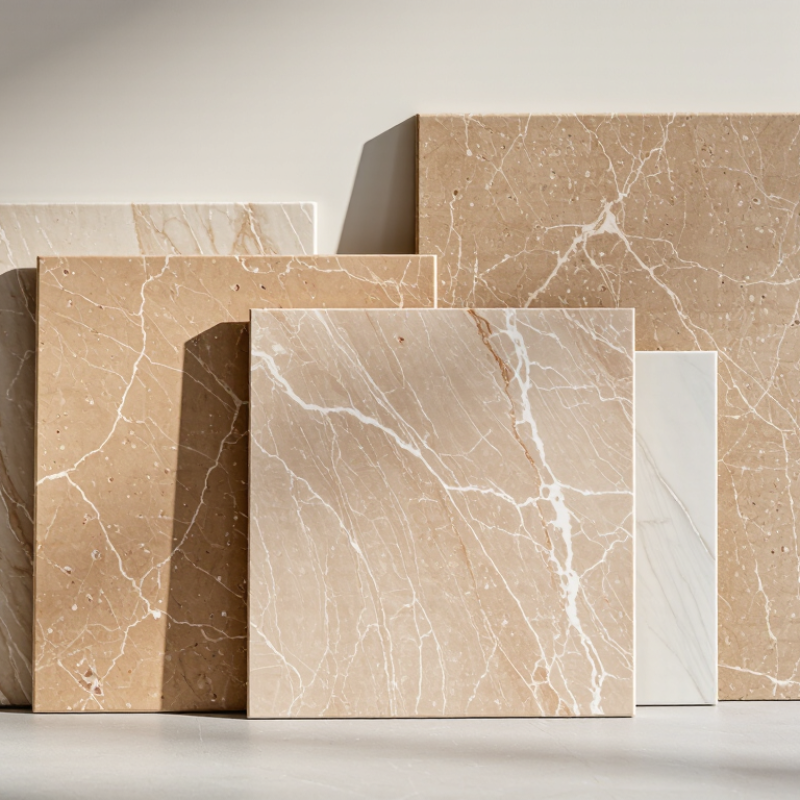
Botticino Marble Tile is valued for its warm beige background, soft ivory veining, and calm, classic appearance. It can bring gentle warmth to floors, bathrooms, and interior walls. Yet natural stone is never perfectly uniform. Shade, veining, and small mineral marks may vary between pieces, even within one shipment. That is part of its character.
China-based suppliers may offer cutting, polishing, size selection, and export packing for Botticino projects. The quoted price depends on more than the tile itself. Thickness, dimensions, surface finish, stone grade, order quantity, packaging, and freight all affect the final cost. A useful comparison should include these details, not just a price per square metre. Ask for current product photos, written specifications, and a sample from the intended batch where possible. Check edge quality and finish under natural light.
A sample helps, but it cannot show every piece. Still, it is easy to overestimate how closely a large installation will match one small tile. Buyers should confirm acceptable color variation and inspection arrangements before ordering. This guide explores how to assess a China Botticino Marble Tile supplier, understand price factors, and make a more informed choice.
Botticino Marble: Italian Limestone Composition and Key Varieties
Botticino is a commercial Italian limestone, not a single uniform recipe. Its pale beige body is mainly calcite, with fossil fragments, veins, and occasional dolomite influencing appearance and performance. Close inspection matters. Small shell traces may appear as warm flecks; thin veins can interrupt an otherwise quiet surface. “Classico,” “Fiorito,” and “Semiclassico” describe common visual groupings, but grading can vary between quarries and suppliers.
The USGS Mineral Commodity Summaries 2024 estimated U.S. dimension-stone production at about 2.3 million metric tons in 2023. That figure covers many stone types, not Botticino alone, so it cannot establish a Botticino price or supply level. For technical comparison, EN 12407 sets out petrographic examination methods for natural stone. A useful specification should also request absorption, density, and flexural-strength test results for the actual lot. Beige is not a performance rating.
For flooring, polished Botticino reflects light and shows its fossil pattern clearly; honed finishes soften glare and can make surface variation less obvious. Ask for slabs or tiles from one production batch, then check samples in the room’s lighting. Color names help, but they can conceal real variation. That distinction is easy to miss.
| China Best Botticino Marble Tile Supplier and Price - Botticino Marble: Italian Limestone Composition and Key Varieties | ||
|---|---|---|
| Category | Data Point | Details |
| Stone overview | Commercial name and rock type | Botticino marble is a beige ornamental stone from the Botticino area of Brescia, Lombardy, Italy. Geologically, it is a sedimentary limestone, although it is commonly sold as marble in the stone trade. |
| Geology | Composition | The stone is predominantly calcite-based limestone. Its natural appearance can include fossil fragments, subtle veins, and mineral variations; exact composition and pattern vary by block and quarry lot. |
| Appearance | Color and pattern | Typical colors range from ivory and warm cream to light beige. Veining and fossil markings range from restrained to more pronounced, depending on the selection. |
| Varieties | Botticino Classico | Generally selected for a relatively consistent beige ground and a more restrained overall appearance. Natural variation remains present. |
| Varieties | Botticino Fiorito | Typically features more visible fossil or flower-like markings across the surface. The amount and distribution of markings vary from piece to piece. |
| Varieties | Botticino Semiclassico | A commercial selection commonly described as having an appearance between the more uniform Classico and the more visibly patterned Fiorito. Naming and grading conventions can differ among suppliers. |
| Common tile formats | Typical market sizes | Common cut-to-size formats include 300 × 300 mm, 400 × 400 mm, 600 × 300 mm, and 600 × 600 mm. Availability depends on the processor, block yield, and project specification. |
| Tile specification | Common thicknesses | A thickness of 10–12 mm is commonly used for interior floor and wall tiles; 18–20 mm is also available for applications requiring a thicker tile. Confirm suitability against the installation design and local standards. |
| Finishes | Available surface treatments | Common options include polished, honed, brushed, and tumbled finishes. Polished and honed surfaces are frequently specified for interior applications; wet-area use requires appropriate slip and maintenance considerations. |
| Indicative price | Standard finished tiles | Budgetary planning range: approximately US$45–100 per m² for standard-format Botticino tiles. This is a non-binding estimate, not a live supplier quotation; origin, grade, thickness, finish, order volume, and shipping terms can change the price substantially. |
| Indicative price | Premium selection or custom processing | Higher-grade selections, larger formats, special finishes, and custom fabrication may exceed US$100 per m². Request a quotation specifying the stone selection, dimensions, thickness, finish, quantity, packaging, and delivery terms. |
| Price factors | What affects the final cost? | Key factors include block selection, color and pattern consistency, tile size, thickness, finish, edge work, inspection requirements, order quantity, packaging, freight, insurance, duties, and delivery location. |
| Supplier checks | Before placing an order | Ask for current lot photographs or samples, confirm country and quarry-area documentation, agree on size and thickness tolerances, check shade variation, and clarify inspection, breakage, packaging, and replacement terms. |
| Care and use | Maintenance note | As a calcite-rich limestone, Botticino can be affected by acidic substances. Use a stone-compatible cleaner, wipe spills promptly, and consult the installer about sealing and maintenance for the intended application. |
Price figures are indicative budgeting ranges only and should be verified with a current written quotation.
FAQS
The cited benchmarks are a specific gravity of at least 2.55 and water absorption no higher than 0.20%.
No. Ask for recent reports showing the tested stone, method, and results. Confirm they match the quarry lot and finish being quoted.
Request several pieces from the available batch, not just one polished sample. Compare them in daylight. Small differences show up.
Grade, thickness, finish, size, quantity, packaging, and freight all affect cost. Color consistency and visible repairs can also change the price.
They use more material and weigh more. That can increase cutting, packing, and freight costs.
Under FOB, the buyer generally arranges main freight. Under CIF, freight and insurance to the named port are included. Check local charges after arrival.
The article mentions polished, honed, and brushed finishes, but does not name one best option. Match the finish to the space and follow care guidance.
Allow extra tiles for selection and cuts. Natural marble varies, and one sample may not represent a full order.
Confirm what the quote includes, including freight, crate weight, and port charges. Ask whether batch-specific test documents are available.
Conclusion
Botticino marble is a natural Italian limestone valued for its warm beige tones, subtle veining, and range of varieties. When assessing Botticino Marble Tile, buyers should consider the stone’s composition, color consistency, and intended application. ASTM C503 benchmarks cited for this material include a specific gravity of 2.55 and maximum water absorption of 0.20%; test reports can help confirm that a shipment meets the required specifications. Tiles are available in different grades and finishes, with common thicknesses around 18–20 mm, so selections should match the project’s design and installation needs.
Evaluating a China-based supplier involves checking quarry and material traceability, reviewing quality-control and test procedures, and confirming packing and export capacity. Pricing varies with grade, thickness, finish, order volume, and the agreed Incoterms, which determine how transport costs, insurance, and delivery responsibilities are allocated. Comparing quotations alongside samples, specifications, and shipping terms can help buyers make a clearer purchasing decision.