Primary Yellow & Companion Granite Selections for Osaka Developments
Direct quarry-cut dimensional granite engineered for structural facade dry-hanging, high-traffic commercial ground paving, and heavy urban transport hubs across the Kansai metropolitan sector.
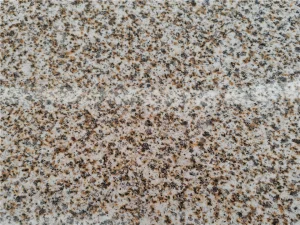
G682 Yellow Rust Granite (Osaka Paving Grade)
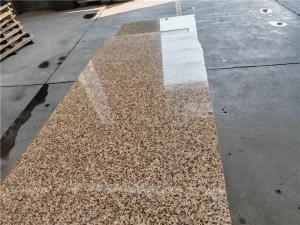
A1684 Golden Hemp Granite (Architectural Cladding)
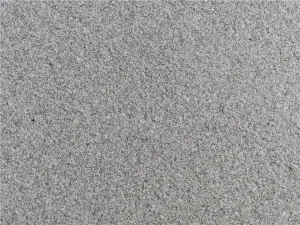
G614 Sesame Grey Granite (Subway & Transit Grade)
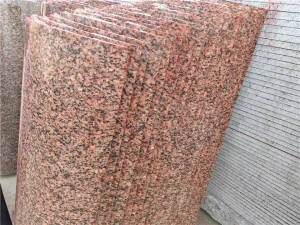
G352 General Red Granite (Seismic Curtain Wall)
Osaka Commercial Landscape: Strategic Demand for Yellow Granite Architecture
From the extensive revitalization of the Umeda North Yard (Grand Green Osaka) to the urban infrastructure around Yumeshima Island and Namba transit corridors, the Greater Osaka construction ecosystem requires stone materials combining warm chromatic aesthetics with structural longevity.
Mitigating the Urban Heat Island
Osaka’s dense commercial districts face severe summer thermal loads. Light-toned Yellow Granite (such as A1684 Golden Hemp and G682 Rust) exhibits an elevated Solar Reflectance Index (SRI > 58), significantly reducing surface thermal retention along expansive public promenades compared to dark asphalt or artificial cast pavers.
Maritime Salt Spray & Bay Area Resilience
Developments situated within the Port of Osaka, Sakishima, and Yumeshima waterfront zones endure persistent coastal aerosol salinity. Haichen Stone’s yellow granites, characterized by high quartz and microcline feldspar content, resist halite crystallisation damage, acid rain decomposition, and maritime spalling.
Biophilic & Warm Cultural Aesthetics
Japanese architectural master plans in Kansai increasingly integrate natural stone that softens high-density glass and steel envelopes. The golden-honey rust tones of quarry-selected G682 harmonize with traditional Kansai masonry aesthetics while satisfying the strict technical parameters of modern general contractors.
Rigorous Localized Compliance: JIS A 5003 & MLIT Verification
Japanese Super General Contractors (Taisei, Obayashi, Takenaka, Kajima, Shimizu) impose some of the world's most stringent quality assurance protocols. Our dedicated export manufacturing facility in Rizhao operates certified physical and chemical laboratories providing verifiable test sheets for every quarry block batch.
| Physical / Mechanical Property | Test Methodology Standard | Japanese Code Mandate (JIS A 5003) | Haichen Yellow Granite Value | Compliance Status |
|---|---|---|---|---|
| Apparent Density (Bulk Specific Gravity) | JIS A 5003 / ASTM C97 | ≥ 2.50 g/cm³ | 2.66 – 2.72 g/cm³ | Certified Pass |
| Water Absorption by Weight | JIS A 5003 / ASTM C97 | ≤ 0.50% | 0.16% – 0.28% | Superior Durability |
| Compressive Crushing Strength | JIS A 5003 / ASTM C170 | ≥ 100 MPa | 168 – 185 MPa | High Load Rating |
| Flexural Strength (Modulus of Rupture) | ASTM C99 / JIS Standard | ≥ 10.0 MPa | 14.2 – 16.8 MPa | Seismic Dry-Hang Safe |
| Freeze-Thaw Resistance (Rokko Mtn. Cycle) | JIS A 1148 (300 Rapid Cycles) | Mass loss < 1.0% | 0.04% mass loss, No Cleavage | Severe Climate Grade |
| Slip Resistance Index (C.S.R. Coefficient) | JIS A 1454 (Flamed / Bush-Hammered) | C.S.R. ≥ 0.40 (Barrier-Free Law) | 0.62 – 0.74 (Wet Conditions) | Anti-Slip Municipal Spec |
Seismic Dry-Hanging Engineering for Kansai's Tectonic Environment
Osaka sits within active tectonic proximity (Arima-Takatsuki Tectonic Line and the Uemachi Fault Zone). Exterior cladding specifications reject adhesive mortar bonding in favor of undercut anchor seismic clip-hanging systems (SUS304 / SUS316 stainless brackets).
Our computer-controlled 5-axis CNC equipment mills rear anchor kerfs, back-drilled undercut expansion cavities, and edge slots with ±0.3mm mechanical precision, preventing point-stress fractures during seismic sway events up to Intensity 7 (JMA Scale).
Barrier-Free Pedestrian Safety (Japan Act No. 91 Standards)
Japan's demographic landscape requires stringent compliance with Universal Design mandates. For Osaka public plazas and subway station concourses, exterior stone surfaces must balance non-slip friction with smooth rolling for wheeled mobility.
Haichen Stone executes high-precision multi-head gas thermal flaming followed by automated steel-wire brush texturing, yielding a velvety, non-reflective slip-resistant finish (C.S.R. 0.68) that prevents pedestrian slipping during Kansai's rainy seasons (Tsuyu) and typhoons.
Direct Quarry-to-Port Supply Chain: Rizhao to Port of Osaka
Bypassing multi-tier domestic stone brokers (Tonya) reduces overall procurement expenditures by 25% to 38% while guaranteeing absolute chromatic consistency and strict shipping milestones directly to Hanshin Port facilities.
Quarry-Direct Reserve Control
Operating dedicated block quarries in Shandong and strategic partnerships across Fujian allows us to isolate uniform stone seams. For multi-phase municipal projects spanning 3 to 5 years, we reserve designated block veins, eliminating the visible tonal variations common in third-party sourcing.
Rapid Direct Shipping to Hanshin Ports
Situated within rapid logistics proximity to Rizhao Port and Qingdao Port, containerized stone cargo boards regular short-sea container lines directly targeting the Port of Osaka (Nanko Container Terminal) and Port of Kobe. Direct maritime voyage time is merely 48 to 72 hours, ensuring rapid customs staging.
Full Japanese Documentation Support
Every consignment arrives accompanied by Mill Test Certificates, Japanese-standard dimension tolerance inspection sheets, ISPM-15 compliant heat-treated fumigated wooden crating with heavy internal reinforcement, and detailed bilingual packing lists indexed to shop installation drawings.
Looking to streamline procurement for an upcoming Osaka architectural bid?
Our technical estimators calculate precise material volume, container load optimization, and deliver CFR/CIF Port of Osaka quotations within 24 hours.
Engineered Applications Across Osaka Urban Environments
Yellow granite provides versatile performance across both heavy load-bearing structural pavements and refined luxury interior finishes throughout Kansai's premier developments.
Public Realm, Plazas & Rail Concourse Paving
Heavy pedestrian traffic at stations such as JR Osaka, Shin-Osaka, and Namba requires pavement pavers that resist high cyclic impact and surface scuffing without polished slickness.
- Material Choice: G682 Yellow Rust Granite or Golden Hemp A1684.
- Surface Texture: Heavy Flamed ± Waterjet or Coarse Bush-Hammered.
- Dimensions: 600×300×50mm or 300×300×60mm vehicular grade pavers.
- Performance: High flexural resistance against delivery truck drive-overs.
Commercial Office Facades & High-End Hotels
High-rise commercial podiums along Midosuji Boulevard and Nakanoshima utilize warm yellow granite cladding to project corporate permanence and refined architectural grandeur.
- Material Choice: A1684 Golden Hemp and Shandong Fine-Grain Yellow Granite.
- Surface Texture: Honed (Matte 400#) or Satin Leathered Finish.
- Dimensions: 1200×600×30mm, 900×600×30mm calibrated panels.
- Seismic Fixture: Pre-drilled rear undercut slots matching Japanese clip anchors.
Waterfront Promenades & Port Retaining Kerbs
Bay area developments bordering Osaka Harbor and Osaka Bay require stone retaining walls, water edges, and kerbstones capable of enduring marine submersion and salt spray.
- Material Choice: Heavy-density G682 Rust paired with G654 Sesame Black kerbs.
- Surface Texture: Natural split face, fine-axed, or rustic bush-hammered.
- Dimensions: Massive section kerbstones (150×200×1000mm) and radius copings.
- Performance: Impermeable to coastal chloride ingress and wet efflorescence.
Heritage Gardens & Traditional Kansai Landscape
Park developments surrounding Osaka Castle and historic temples throughout Kyoto and Nara require natural stone with warm, aged textures that respect historical aesthetics.
- Material Choice: G682 Rust Granite & Chinese Cultural Sculpture Stone.
- Surface Texture: Antique tumbled, chiseled, rock-faced, and hand-tooled.
- Dimensions: Custom curved steps, stone lanterns, paving cobbles (100×100×100mm).
- Performance: Seamlessly matches native Japanese granite historical patina.
Technological Advancements in Granite Fabrication & BIM
Modern Japanese architectural procurement prioritizes BIM-ready fabrication, automated stone dry-laying via optical photogrammetry, and closed-loop environmental stewardship.
Optical Digital Dry-Lay Technology
Prior to container loading, large facade cladding sections are laid out horizontally in our specialized inspection warehouse. High-resolution optical scanning captures the grain, color gradient, and vein continuity of every single slab. Panels receive numerical tagging mapped directly to client 3D BIM models (Revit/ArchiCAD).
Low-Carbon Embodied Energy (LCA)
Compared to energy-intensive porcelain tiles or artificial engineered quartz requiring high-temperature furnace sintering, natural Chinese granite possesses an extremely low embodied carbon footprint. Sourced directly from our quarries with 100% water recirculation diamond wire-saw cutting, our products assist projects pursuing LEED Platinum and CASBEE Kansai certification.
Multi-Axis Diamond Wire Saw Profiling
Complex radial curb lines, monolithic stone benches, and sculpted water features destined for modern landscape gardens in Osaka are fabricated via programmable 5-axis wire saws. Complex geometric profiles maintain razor tolerances (±0.5mm), eliminating expensive on-site corrective cutting at Japanese job sites.
Extended Architectural Palette for Kansai Construction Projects
Combining yellow granite with tonal contrast elements, basalt curbs, and cultural stone carvings provides comprehensive material coordination for large-scale Japanese mixed-use developments.
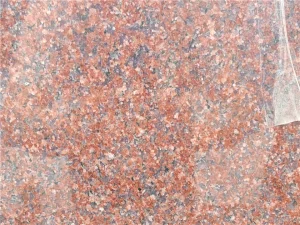
G386 Shidiao Red Granite (Osaka Civic Square Tiles)
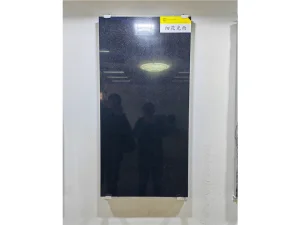
G3401 Shanxi Black Granite (Kansai Premium Slabs)
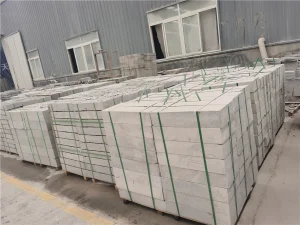
Limestone Granite Hybrid (Osaka Urban Landscaping)
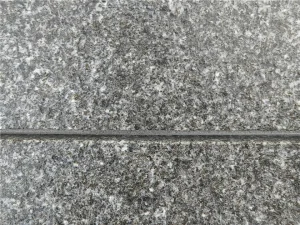
G3701 Binzhou Blue Granite (Osaka Bay Commercial Paving)
G654 Sesame Black Granite (Hanshin Standard Paver)
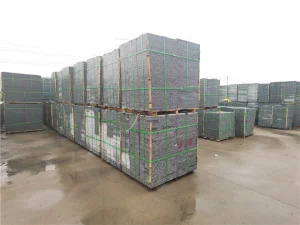
G3702 Snowflake Blue Granite (Osaka Luxury Facades)
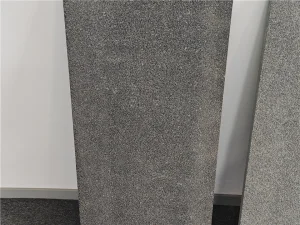
G684 Fuding Black Granite (Osaka Roadway Curbstones)
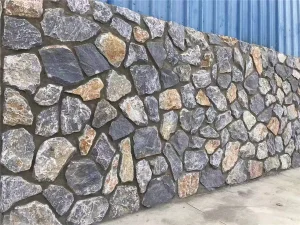
Chinese Culture Granite (Osaka Cultural Landmark Elements)
Frequently Asked Questions: China to Osaka Granite Sourcing
In-depth technical clarifications for general contractors, architectural specifiers, and procurement officers operating across Osaka and the greater Kansai region.
How does Haichen Stone ensure chromatic uniformity for large G682 Yellow Granite orders in Osaka?
Natural G682 Rust Granite naturally contains variations in iron oxide distribution. For large projects (10,000 m² to 50,000+ m²), we isolate specific, geologically homogeneous layers within our Shandong and Fujian quarry reserves. Raw blocks are graded into chromatic sub-bins (Light Yellow, Golden Rust, Medium Golden). Slabs are sawn, visually dry-laid, and categorized using automated color-grading spectrophotometers. Every crate is numbered and grouped by color tonality, guaranteeing that adjacent panels on site maintain seamless chromatic harmony.
What is the standard shipping turnaround time from your factory to the Port of Osaka?
Our fabrication headquarters in the Rizhao Stone Industrial Park maintains direct container drayage to Rizhao Port and Qingdao Port (1.5 to 3 hours). Direct maritime shipping lines connect to the Port of Osaka (Nanko Container Terminal) and Kobe in just 48 to 72 hours sailing time. Standard fabrication lead time for a 10-container parcel (approx. 5,000 m² of 30mm tiles) is 15 working days. Consequently, total turnaround from shop drawing sign-off to port clearance in Osaka regularly executes within 22 to 28 calendar days.
Can your factory provide pre-machined seismic fixing kerfs compatible with Japanese curtain wall standards?
Yes. Japanese seismic design codes mandate specific undercut anchorage or continuous edge-kerf slotting to house stainless steel clips (SUS304 / SUS316). We utilize automated multi-head CNC slotting lines to mill continuous or localized kerfs, bevels, and anchor pin cavities with dimensional tolerances within ±0.3mm. Every anchor pocket is inspected for micro-fractures, ensuring zero stone failure under dynamic building drift during earthquake tremors.
What documentation accompanies granite shipments for Japanese customs and MLIT site submittals?
Every shipment includes an authenticated Factory Mill Test Certificate demonstrating compliance with JIS A 5003 (density, water absorption, compressive crushing, flexural strength), third-party SGS or Intertek inspection dossiers upon request, Certificate of Origin (RCEP tariff reduction eligible), phytosanitary ISPM-15 heat-treatment certifications for wooden packaging, and barcode-indexed packing lists matching CAD grid tags for fast site installation.
How does Yellow Granite endure the rainy seasons (Tsuyu) and typhoons typical of the Kansai climate?
Kansai experiences heavy summer precipitation and high humidity. Low-grade stones with high porosity absorb moisture, triggering mineral rust-bleeding or unsightly surface efflorescence. Haichen Stone selects ultra-dense granites with water absorption below 0.25%. Furthermore, blocks undergo an advanced vacuum impregnation process with breathable fluoropolymer sealers upon request, protecting internal iron minerals while allowing water vapor release, preserving the pristine golden appearance for decades.
Can we appoint third-party inspection firms (e.g., SGS, BV, or Japanese agents) to your factory before dispatch?
Absolutely. We regularly host Japanese engineering delegations, general contractor site directors, and international inspection agencies at our Rizhao fabrication workshops. We provide complete facilities for piece-by-piece calibration, color checks under daylight D65 lamps, tensile anchor testing, and packaging integrity verification prior to container stuffing.