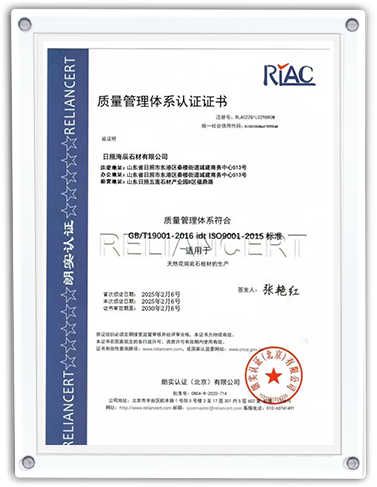
High-Yield Grey Granite Formats for Portuguese Engineering
Direct quarry-calibrated grey granites engineered for exterior urban paving, heavy-load kerb perimeters, ventilated facades, and heritage infrastructure.
-
 Explore Specifications
China G614 Sesame Grey Granite Slabs & Tiles
-
 Explore Specifications
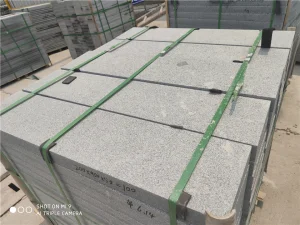
China G654 Sesame Grey Granite Flamed Finish
-
 Explore Specifications
China G3743 Lu Grey Granite Building Stone
-
 Explore Specifications
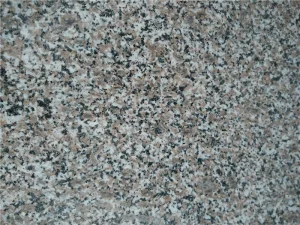
China Other Colours Granite – Custom Orders
Portugal's Architectural Stone Dynamics & Global Sourcing Realities
Evaluating the integration of high-volume Shandong grey granite into the Portuguese construction matrix under European Union structural initiatives.
Portugal stands as an epicentre of natural stone tradition within the Iberian Peninsula. From the iconic limestone and basalt compositions of Calçada Portuguesa (Portuguese mosaic paving) to the storied Hercynian granites quarried across the northern and central regions (such as Granito Cinzento Alpalhão or Pedras Salgadas), stone is an intrinsic cultural and infrastructural medium. However, the contemporary Portuguese civil engineering landscape is experiencing an unprecedented structural pivot. Accelerated by the Plano de Recuperação e Resiliência (PRR), major transport decarbonisation initiatives (including the Lisbon Metro expansion, Porto Metro line extensions, and high-speed rail corridor preparations), and extensive urban regeneration programs across Cascais, Sintra, Braga, and Coimbra, the demand for dimension stone has outgrown the physical extraction capacities and cost structures of local artisanal quarries.
In municipal public tenders governed by the Código dos Contratos Públicos (CCP), municipal authorities and private concessionaires face a dual dilemma: the necessity to respect rigorous architectural heritage standards while conforming to strict fiscal envelopes and tight delivery deadlines. Domestic Iberian quarries often encounter stringent environmental extraction quotas, high processing energy costs, and fractured supply lines that produce unpredictable colour drift across multi-hectare projects. This is where our integrated quarrying and processing hub in Rizhao, Shandong Province, provides an indispensable macro-solution.
Supply Scalability & Vein Uniformity
Unlike small-scale local pits subject to regional seams, our self-owned reserves guarantee massive mono-block consistency. Large-scale public developments across Lisbon's waterfront and Porto's arterial avenues require tens of thousands of square metres of grey granite without the abrupt chromatic variation or structural micro-fissuring that can compromise commercial installations.
Atlantic Salinity & Weathering Resilience
Portugal’s extensive coastline subjects facades and coastal promenades to unrelenting airborne marine salts (aerosol marinho), high humidity, and cyclical solar thermal loading. Our G654, G614, and Lu Grey granites boast exceptional chemical stability, silica contents exceeding 68%, and water absorption coefficients well under 0.35%, effectively eliminating spalling, efflorescence, and salt crystallisation distress.
Direct Maritime Route into Sines & Leixões
By leveraging direct port-factory synchronisation between Rizhao/Qingdao and Portugal’s primary deep-water transshipment hubs (Porto de Sines and Porto de Leixões), we deliver freight-optimised, factory-palletised container bundles. This cuts secondary handling damage by 99% and maintains landed unit costs well below regional European processors.
Strategic Alignment with the Portuguese Architectural Register
Portuguese masterplanners frequently specify granite for urban kerbing (lancil), calibrated paving slabs (lajes), and cubed sets (paralelepípedos). Our Rizhao production line maintains strict European dimensional tolerances (±1mm on calibrated cut-to-size paving), allowing seamless integration with traditional Portuguese streetscapes while delivering superior compressive strength and skid-resistance ratings (SRV > 65 wet).
European Compliance & Portuguese Engineering Baselines
Comprehensive physical, mechanical, and mineralogical performance data validated for Portuguese civil contractors and specifiers.
Procuring natural stone for institutional or public commercial developments within the EU requires uncompromising adherence to the Construction Products Regulation (CPR, EU Regulation No 305/2011). In Portugal, projects overseen by Infraestruturas de Portugal (IP), municipal councils (Câmaras Municipais), and tier-1 contractors such as Mota-Engil, Teixeira Duarte, or Casais require comprehensive Declarations of Performance (DoP), factory production control (FPC) audit trails, and third-party laboratory verification before material unloading.
Haichen Stone fabricates strictly in alignment with these European harmonised standards. Below is the technical performance baseline of our flagship grey granite varieties supplied directly into Portuguese commercial ports:
| Physical / Mechanical Property | Test Standard | China G654 (Fine Sesame Grey) | China G614 (Sesame Light Grey) | China G3743 (Lu Grey Industrial) | Portuguese Regulatory Minimum |
|---|---|---|---|---|---|
| Apparent Density | EN 1936 | 2,710 kg/m³ | 2,650 kg/m³ | 2,680 kg/m³ | ≥ 2,550 kg/m³ |
| Open Porosity / Absorption | EN 13755 | 0.18 % | 0.24 % | 0.21 % | ≤ 0.60 % |
| Compressive Strength | EN 1926 | 198.4 MPa | 164.2 MPa | 182.0 MPa | ≥ 110 MPa |
| Flexural Strength (Under Load) | EN 12372 | 16.8 MPa | 14.2 MPa | 15.5 MPa | ≥ 10.0 MPa |
| Freeze-Thaw Resistance (56 Cycles) | EN 12371 | ΔRtf < 4.2% (No Degradation) | ΔRtf < 5.0% (Sound) | ΔRtf < 3.8% (Sound) | ≤ 20% Reduction |
| Slip Resistance (Flamed Finish, Wet) | EN 14231 | 68 SRV (Low Slip Risk) | 64 SRV (Low Slip Risk) | 66 SRV (Low Slip Risk) | ≥ 45 SRV |
| Abrasion Resistance (Capon Test) | EN 14157 | 15.2 mm groove | 16.0 mm groove | 15.8 mm groove | ≤ 20.0 mm |
Beyond raw laboratory metrics, our production protocol guarantees that every batch is accompanied by Declaration of Performance (DoP) documents conforming to EN 1341 (Granite Slabs for External Paving), EN 1342 (Setts of Natural Stone for External Paving), EN 1343 (Kerbs of Natural Stone for External Paving), and EN 1469 (Slabs for Cladding). This documentation allows local architectural engineering teams to submit compliance files effortlessly to municipal planning departments (Câmaras) and fire-safety certifiers.
Localized Application Scenarios Across Portugal
Engineered grey granite solutions tailored for distinct architectural and environmental zones across the Portuguese mainland and islands.
Coastal Waterfronts & Promenades
Locations: Algarve, Cascais, Matosinhos, Funchal (Madeira).
Application: Flamed and bush-hammered heavy paving slabs (50mm–80mm), anti-wave splash copings, sea-wall cladding.
Technical Value: Extreme resistance to coastal sodium chloride penetration and tidal wear, preventing unsightly salt blooming and structural pitting while maintaining high wet-skid grip.
Transit Hubs & Intermodal Terminals
Locations: Lisbon Metro expansions (Linha Circular), Porto Metro extensions, rail stations.
Application: Calibrated tactile indicator tiles (piso táctil), flamed heavy-duty step treads with sandblasted anti-slip bands, wall plinths.
Technical Value: Ultra-dense quartz structure withstands continuous pedestrian footfall exceeding tens of thousands of cycles daily without polish loss or structural fracture.
Ventilated Architectural Facades
Locations: Corporate headquarters, luxury hotels in central Lisbon (Avenida da Liberdade), Porto tech hubs.
Application: Kerf-cut, calibrated 30mm granite cladding panels fixed to stainless-steel undercut subframes.
Technical Value: Non-combustible (Euroclass A1 flammability rating), exceptional UV colorfastness against intense southern European solar irradiation, and minimal thermal expansion.
In addition to contemporary commercial formats, our CNC wire-cutting workshop manufactures radius kerb stones (guias curvas) engineered to match historic Portuguese municipal road profiles. Whether matching Lisbon's historic Pombaline street grids or creating sleek linear borders in contemporary Parque das Nações public squares, our stones arrive cut, chamfered, and numbered precisely to your site CAD layout drawings.
Precision Fabrication Roadmap & Sustainability Protocols
How artificial intelligence, digital diamond multi-wires, and circular processing optimize our natural stone production chain.
Modern dimensional stone fabrication has evolved from heavy industrial cutting into a high-precision, digitalised process. Serving the European Union’s forward-thinking construction community requires reducing both dimensional variances and embedded carbon emissions. At our Rizhao processing base, we have deployed advanced Industry 4.0 infrastructure to support Portuguese and global engineering partners:
AI Optical Vein & Defect Scanning
Every rough block processed through our multi-wire saws undergoes automated optical scanning. High-resolution computer vision algorithms detect internal micro-fractures, excessive biotite clustering, and colour deviations before finish grinding, ensuring only 100% structurally sound, uniform-grade material is prepared for export to Europe.
BIM & Parametric CNC Integration
We work directly with architects' IFC and Revit CAD models. Our automated 5-axis CNC routers slice, bevel, drill undercut anchor holes, and sculpt radius kerbs directly from digital shop drawings. This ensures that every pallet unloaded at Portuguese construction sites is coded for rapid assembly, eliminating costly manual cutting on site.
Closed-Loop Zero-Waste Hydrology
Environmental governance is paramount. Our factory operates a closed-circuit 5-stage filter-press water filtration plant that recycles 95% of industrial process water. Solid stone slurry is dehydrated and repurposed into structural backfill and eco-aggregates, reducing the environmental footprint of each cubic metre produced.
As the European Union moves toward mandatory carbon border assessments and comprehensive Environmental Product Declarations (EPD), our factory leads the quarrying sector by measuring lifecycle primary energy consumption. Natural granite inherently carries a fraction of the embodied carbon seen in artificial ceramics, porcelain tiles, or cast concrete, making it the premier choice for architects striving for BREEAM or LEED Gold ratings in modern Portuguese urban developments.
Frequently Asked Questions for Portuguese Buyers
Addressing engineering specifications, logistics frameworks, payment terms, and installation criteria.
How does Chinese Grey Granite compare with Portuguese Cinzento Alpalhão or Pedras Salgadas?
What are the typical transit times and logistics routes from your factory to Portugal?
Which surface finish is recommended for public pedestrian zones under Portuguese municipal guidelines?
How do you ensure export wooden crates comply with Portuguese and EU biosecurity rules?
Can you manufacture non-standard radius kerbs, angled drop-kerbs, and tactile paving?
What quality control mechanisms prevent broken or chipped slabs during ocean freight?
Comprehensive Natural Stone Selections for European Projects
Expand your project palette with our complementary architectural granites, dark plutonic basalts, and warm decorative stones.
-
 Explore Specifications
G654 Sesame Black Granite Polished Slabs
-
 Explore Specifications
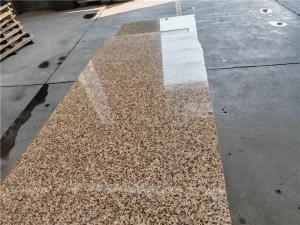
China A1684 Golden Hemp Granite Countertops
-
 Explore Specifications
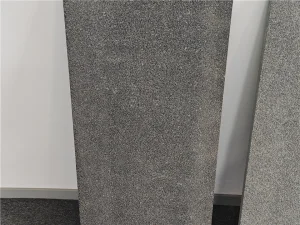
Wholesale G684 Fuding Black Granite
-
 Explore Specifications
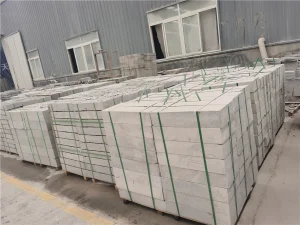
Wholesale Limestone Granite: Nature's Dual Gift
-
 Explore Specifications
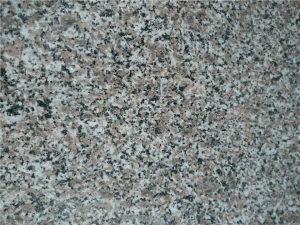
China G6361 Wulianhua Granite for Landscaping
-
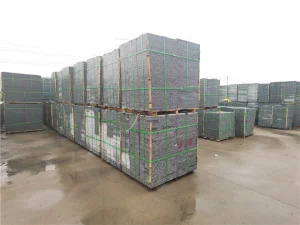 Explore Specifications
China G3702 Snowflake Blue Granite
-
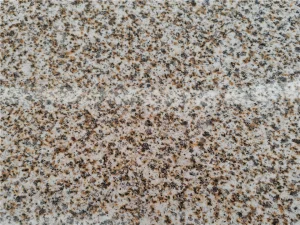 Explore Specifications
Wholesale G682 Yellow Rust Granite for Paving
-
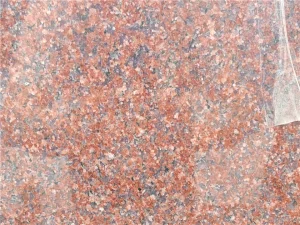 Explore Specifications
Wholesale G386 Shidiao Red Granite Tiles
Direct Factory Pricing for Your Portuguese Development
Whether you require tender-ready bill of quantities (BOQ) costings, physical laboratory samples delivered to Lisbon or Porto, or full shop-drawing coordination, our technical export team is ready to assist.