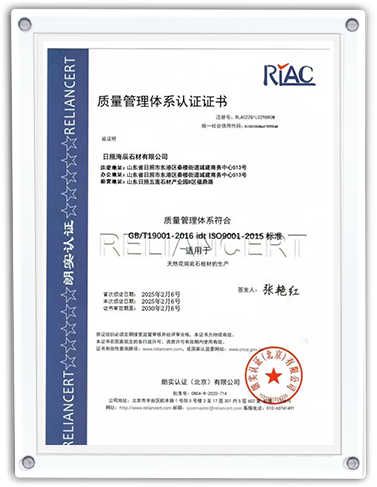
High-Performance Structural & Building Solutions
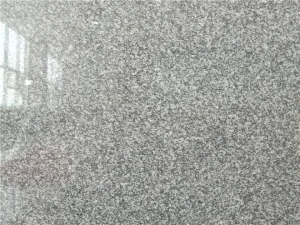
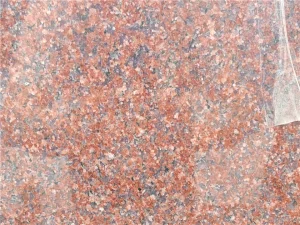
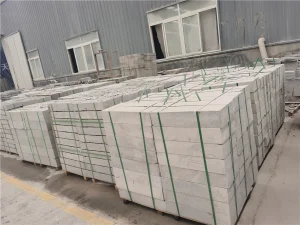
Explore our certified manufacturing line including premium laminated glass components, architectural stone veneer, and structural enclosure systems.
Engineering Standards of Modern Clear Laminated Glass Procurement
A comprehensive examination of polymer interlayers, optical purity, structural load resistance, and cleanroom manufacturing dynamics in Chinese export processing zones.
Clear laminated glass represents a quintessential leap in architectural safety and optical engineering, serving as the foundational envelope material for modern skyscrapers, structural glass fins, glass canopies, and blast-resistant facade assemblies. Engineered by permanently bonding two or more lites of glass with an elastomeric polymer interlayer—such as Polyvinyl Butyral (PVB), SentryGlas® Ionoplast (SGP), or Ethylene Vinyl Acetate (EVA)—under controlled thermal elevation and extreme pneumatic pressure inside industrial autoclaves, clear laminated glass balances maximum light transmittance with post-breakage structural integrity.
When selecting a premier China Clear Laminated Glass Manufacturer or Factory, global engineering firms, façade consultants, and commercial procurement directors must look beyond basic dimensions to evaluate deep technical parameters: Yellowness Index (YI), shear modulus ($G$), moisture absorption kinetics, edge delamination resistance, and compliance with stringent international building codes (including EN 14449, ANSI Z97.1, ASTM C1172, and AS/NZS 2208).
Comparative Performance: PVB vs. SGP Ionoplast vs. EVA Interlayers
Understanding the viscoelastic properties and structural load transfer of structural interlayers for tailored engineering specifications.
| Performance Metric | Architectural PVB | SGP Ionoplast (Kuraray) | High-Clarity EVA |
|---|---|---|---|
| Young's Modulus ($E$) at 20°C | ~ 18 MPa (Viscoelastic) | ~ 300 MPa (Rigid) | ~ 25 MPa (Flexible) |
| Post-Breakage Behavior | Flexible sag, hangs on support | Stiff freestanding barrier | Moderate integrity, moisture barrier |
| Open Edge Weatherability | Requires edge sealing in moist climates | Exceptional (No delamination) | High resistance to humidity |
| Shear Modulus ($G$) Retention | Drops significantly above 30°C | Maintains structural stiffness up to 50°C | Moderate loss at elevated temp |
| Primary Application Target | Standard facades, windows, acoustic units | Glass fins, structural floors, balustrades | Interior decorative, smart glass integration |
Structural Glass Fin Security
Utilizing SGP Ionoplast interlayers allows structural engineers to design load-bearing glass fins that maintain 100% design capacity even after an outer lite suffers fracture, preventing catastrophic structural collapse.
Optical Neutrality & Low-Iron Glass
By pairing low-iron substrates (iron content < 100 ppm) with high-clarity PVB or SGP, factories eliminate the greenish tint typical of thick laminated stacks, achieving pristine light transmission >90%.
Acoustic Attenuation (STC / Rw)
Specialized acoustic PVB interlayers damp sound wave vibrations between 100 Hz and 5000 Hz, achieving Sound Transmission Class (STC) ratings exceeding 42 dB for airport and urban infrastructure installations.
China Factory 4.0: Supply Chain Resilience, Automation & Scale
Inside China's advanced glass production clusters: From float glass kilns to fully automated cleanroom lamination and smart autoclave dwell controls.
The global dominance of China clear laminated glass manufacturers stems from vertical industrial consolidation and advanced Industry 4.0 automation. Leading production hubs across Shandong, Guangdong, and Jiangsu leverage fully integrated supply chains where raw silica melting, float glass ribbon forming, precision CNC edge fabrication, tempering, and lamination occur within single manufacturing zones.
1. Automated Cleanroom Assembly (ISO Class 7 / Class 10,000)
Optical purity requires absolute elimination of airborne particulates. Chinese processing facilities utilize humidity-controlled (<25% RH) and temperature-stabilized (18°C - 22°C) ISO Class 7 cleanrooms for interlayer lay-up. Automated robotic arms position glass sheets onto conveyor beds, minimizing manual contact and preventing dust entrapment that causes visual distortion or localized delamination spots.
2. Precision De-Airing & Pre-Heating Lines
Before autoclave processing, trapped air pockets between glass lites must be thoroughly purged. Continuous nip-roller systems or vacuum ring chambers pull negative pressure (down to -0.095 MPa) while applying infrared pre-heating (80°C - 110°C). This achieves edge sealing and creates a temporary mechanical bond, ensuring zero air entrapment prior to final polymerization.
3. Computerized Autoclave Polymerization Sequences
The ultimate structural bond is formed inside massive industrial autoclaves spanning up to 3.5 meters in diameter and 12 meters in length. Digital PLC units execute exact temperature-pressure-time curves: ramping up to 135°C–145°C under 1.2–1.4 MPa of pneumatic pressure, dwelling for 4 to 6 hours depending on stack thickness, and controlled cooling down to 40°C to prevent thermal stress cracking.
Macro Industry Solutions: Targeted Building Envelope Systems
Deploying specialized laminated glass configurations across structural, security, and environmental architectural demands.
Structural Glass Fin Walls
Designed for ultra-clear building lobbies and automotive showrooms. Utilizing triple-ply low-iron glass bonded with SGP interlayers to carry massive wind pressure and deadweight loads without vertical metal mullions.
Hurricane & Blast Mitigation
Engineered to resist coastal typhoons and explosive overpressures. Tested according to ASTM E1996 large missile impact standards and ISO 16933 blast criteria to safeguard critical government and financial assets.
Walkable Floors & Skylights
Multi-layered laminated security glass with anti-slip ceramic fritting. Ensures that even if the top surface layer experiences mechanical shock damage, the structural sub-layers maintain zero deflection failures.
Enterprise Procurement & Vendor Qualification Standards
A structured auditing framework for global facade contractors, EPC entities, and importers to guarantee zero defect delivery.
Direct sourcing from China clear laminated glass factories yields dramatic Total Cost of Ownership (TCO) savings, yet rigorous quality verification protocols are non-negotiable. Leading tier-1 Chinese manufacturers comply with a multi-stage Quality Assurance (QA) control gate strategy:
1. Mechanical & Optical Factory Acceptance Testing (FAT)
- Pummel Test: Evaluates adhesion strength between glass and interlayer at -18°C; requires a target Pummel Value between 6 and 8.
- Boil & High-Humidity Testing: Samples are immersed in boiling water for 2 hours to confirm zero bubble formation or edge delamination per EN ISO 12543.
- Ball Drop Impact Test: Dropping a 2.26 kg steel ball from heights up to 4 meters to test penetration resistance under ANSI Z97.1 impact parameters.
- Zebra Strip Distortion Analysis: Optical verification ensuring distortion does not exceed 0.05 millidiopters for distortion-free exterior views.
2. Export Packaging & Ocean Logistics Engineering
Laminated glass is sensitive to edge moisture exposure during transoceanic transit. Top Chinese exporters execute heavy-duty end-cap wooden crate packaging featuring moisture-proof vacuum sealing, vapor-barrier foil wrapping, and desiccant packs. Custom steel A-frame containers are deployed for oversized sheets (up to 3.3m × 12m), ensuring zero edge chipping or sea-fog degradation upon port arrival.
Localization Support, Regulatory Standards & Certifications
Meeting global building codes across Europe, North America, Oceania, and the Middle East.
North American Standards (SGCC / IGCC / ANSI)
Full compliance with ANSI Z97.1-2015 (Safety Glazing Materials) and CPSC 16 CFR 1201. Certified by the Safety Glazing Certification Council (SGCC) with periodic third-party lab audits conducted by Intertek or SGS.
European Union Standards (CE / EN 14449)
Mandatory CE Marking compliance under Factory Production Control (FPC) audit standards. Meets EN 14449 (Laminated Safety Glass), EN 12600 (Pendulum Impact Test), and EN 356 (Security Resistance against manual attack).
Australian & New Zealand Codes (AS/NZS 2208)
Certified for structural glass installations in accordance with AS/NZS 2208:1996 for safety glazing materials in buildings, supported by traceable batch testing numbers etched directly onto glass corners.
Middle East & Gulf Standards (GCC / Civil Defense)
Engineered for extreme solar radiation and thermal shock ($T > 50^\circ\text{C}$). Approved by Dubai Municipality and Civil Defense bodies for high-rise acoustic and thermal insulating glass units (IGU).
Technical Roadmap: The Future of Clear Laminated Glass
Exploring smart glazing integrations, ultra-thin flexible interlayers, and sustainable net-zero manufacturing carbon footprints.
The clear laminated glass industry in China is undergoing a massive transformation driven by smart building technology and aggressive carbon-neutrality targets. The next decade will see rapid adoption across three core technological fronts:
1. Electrochromic & PDLC Smart Glass Integration
Laminating Switchable Polymer Dispersed Liquid Crystal (PDLC) or electrochromic films directly between clear float glass layers enables instantaneous transition from clear transparency to opaque privacy upon electrical voltage application. Chinese manufacturers are scaling roll-to-roll cleanroom lamination processes for large-format smart glass panels.
2. Building Integrated Photovoltaics (BIPV)
By sandwiching transparent solar cells or micro-perforated photovoltaic films into clear laminated double-glazing, building facades are converted into active clean energy generators without sacrificing natural daylighting or structural aesthetic integrity.
3. Low-Carbon Recycled Glass & Hydrogen-Fired Kilns
Leading Chinese factories are transitioning float glass melting furnaces to green hydrogen blends and increasing post-industrial cullet content to over 30%, dramatically lowering the embedded carbon footprint ($kg\text{ CO}_2/\text{m}^2$) of architectural clear laminated glass.
Frequently Asked Questions (FAQ)
Expert engineering answers to common procurement, structural, and quality questions.
What causes edge delamination in clear laminated glass and how is it prevented?
Why is low-iron glass strongly recommended for thick laminated assemblies?
What is the lead time and minimum order quantity (MOQ) for Chinese factory direct orders?
Can laminated clear glass be cut or drilled after the autoclave process?
Architectural Materials & Cladding Systems
Explore our complete product suite engineered to complement modern facade and landscape designs worldwide.