Engineered Architectural Products & Enclosure Materials
Standard, jumbo-format, and custom precision-cut building elements fabricated under strict mechanical tolerances for facade, flooring, and structural assemblies.
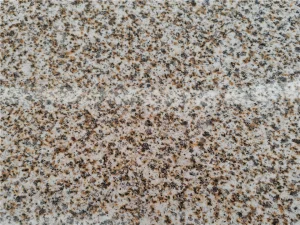
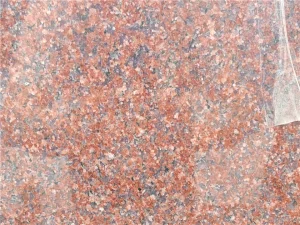
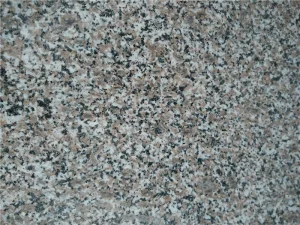
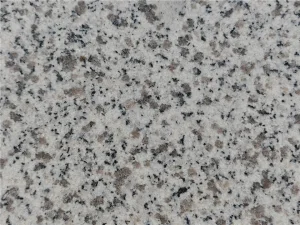
Architectural Glass Engineering: Toughened & Laminated Systems
A deep dive into fracture mechanics, viscoelastic interlayer shear transfer, and structural performance parameters governing safety glazing across high-rise curtain walls, impact envelopes, and frameless systems.
Fully tempered glass rating according to ASTM C1048 & EN 12150 parameters.
Higher structural coupling stiffness compared to conventional PVB interlayers.
Post-heat soak testing (HST) to DIN EN 14179 eliminating active NiS inclusions.
Minimizing optical distortion and roller wave marks across oversized glass spans.
Thermal Tempering Mechanics
Toughened (tempered) glass is produced by heating float glass past its softening point (approximately 620°C to 680°C) in a horizontal convection furnace, followed immediately by controlled high-pressure air quenching. This thermodynamic cycle forces the outer surfaces into extreme compression (≥69 MPa for heat-strengthened, ≥90-120 MPa for fully tempered) while balancing the internal core under severe tension. This internal stress state grants 4 to 5 times greater flexural resistance than annealed float glass, ensuring safe dicing into blunt granules upon rupture.
Lamination & Composite Shear
Laminated safety glass fuses two or more lites using polymeric interlayers—primarily Polyvinyl Butyral (PVB), Ethylene-Vinyl Acetate (EVA), or SentryGlas® (SGP ionoplast). Under dynamic loads, the viscoelastic polymer provides crucial shear coupling: at room temperature, SGP delivers nearly 100 times the stiffness of PVB, allowing the laminated sheet to behave as an monolithic structural member under wind gust pressures, while maintaining post-breakage barrier protection and preventing fallout.
NiS Mitigation & Heat Soak Testing
A primary failure mode in toughened facade glass is spontaneous breakage triggered by microscopic Nickel Sulfide (NiS) inclusions expanding during phase transition (alpha to beta phase at ambient temperatures). Certified Chinese manufacturing facilities utilize full-scale Heat Soak Testing (HST) calibrated to DIN EN 14179. Glass is held at 290°C ± 10°C for a minimum dwelling period of 2 hours, intentionally triggering destructive expansion in contaminated lites before crating and job-site installation.
Global Industrial Landscape & Architectural Demands
From structural blast resistance in North American civic hubs to hyper-insulated solar control envelopes in the Middle East and Oceania's strict balustrade standards.
North America: ASTM & Blast Codes
Procurement in the United States and Canada is defined by ASTM C1048 (Heat-Treated Flat Glass), ASTM C1172 (Laminated Architectural Glass), and ANSI Z97.1 impact criteria. Key coastal jurisdictions enforce high-velocity hurricane zone (HVHZ) requirements via Miami-Dade Notice of Acceptance (NOA) testing, requiring laminated glass assemblies to withstand massive air cannon missile impacts followed by 9,000 cycles of positive and negative wind loading without perimeter frame detachment.
Europe: EN Norms & Low-Carbon Mandates
European Union specifications operate under CE Marking per EN 12150-1 (Thermally toughened soda lime silicate safety glass) and EN 14449 (Laminated glass). Driven by the Energy Performance of Buildings Directive (EPBD), specifiers integrate triple-glazed laminated insulated glass units (IGUs) combining Low-E magnetron sputtering with warm-edge spacers, demanding thermal transmission values (Ug) below 0.6 W/(m²·K) alongside third-party verified Environmental Product Declarations (EPDs).
Australia & Middle East: Climatic Extremes
In Australia and New Zealand, AS/NZS 2208 and AS 1288 mandate strict fracture patterns and post-breakage retention for frameless glass pool fencing and structural balustrades. Conversely, the Gulf Cooperation Council (GCC) region experiences ambient temperatures exceeding 50°C, requiring high-performance toughened double-laminated IGUs with low Solar Heat Gain Coefficients (SHGC ≤ 0.22) to prevent thermal fracture under uneven shadow gradients.
Localized Architectural Scenarios & Installation Methods
Tailoring glass compositions, structural fittings, and perimeter fixings to precise engineering challenges in the field.
Unitized Curtain Walls
Pre-glazed, factory-assembled unitized panels require tempered laminated glass to resist cyclic wind flutter and floor-to-floor seismic drift. Glass must interface flawlessly with structural silicone sealants and extruded aluminum sub-frames.
Structural Balustrades
Frameless glass railings require SGP ionoplast laminated compositions. Should one lite shatter under impact, the rigid interlayer prevents total barrier collapse, maintaining critical crowd containment without continuous handrails.
Acoustic Enclosures
For airport facades, hospitality corridors, and urban residential developments, multi-layer acoustic PVB reduces high-frequency traffic and jet engine noise, delivering sound transmission loss indices up to Rw 42-45 dB.
Floors & Overhead Canopies
Triple-ply tempered laminated structures engineered for heavy foot traffic and maintenance loads. Upper lites incorporate ceramic frit anti-slip patterns while bottom lites provide fail-safe redundant support.
| Glazing System | Typical Configuration | Interlayer Type | Target Mechanical Standard | Primary Structural Function |
|---|---|---|---|---|
| Hurricane Impact Facade | 6mm FT + 1.52mm SGP + 6mm FT | SentryGlas® Ionoplast | ASTM E1886 / E1996, TAS 201 | High-velocity projectile resistance & air-pressure retention |
| Frameless Cantilever Railing | 10mm FT + 1.52mm SGP + 10mm FT | Structural Ionoplast | AS/NZS 2208, IBC Table 1607.1 | Post-failure residual stiffness without continuous top rail |
| Commercial Double Glazed IGU | 6mm Low-E FT + 16A + (4mm FT + 0.76 PVB + 4mm FT) | Standard Acoustic PVB | EN 1279 / EN 12150 | Thermal insulation (U-value ≤ 1.1) combined with fall prevention |
| Overhead Walkable Skylight | 8mm FT (Fritted) + 1.52 PVB + 8mm FT + 1.52 PVB + 8mm FT | Multi-layer Structural PVB | ASTM C1048 / DIN 18008-6 | Redundant structural load bearing under maintenance live loads |
| Security & Cashier Partition | 5mm Ann + 2.28 PVB + 5mm Ann + 2.28 PVB + 4mm Polycarbonate | High-Impact PVB / TPU | UL 752 Level 3 / EN 1063 BR4 | Ballistic penetration resistance without interior spalling fragments |
Chinese Factory Precision & Port-Integrated Supply Chain
End-to-end integration across float production, automated CNC edging, continuous tempering lines, and multi-port deepwater logistics corridors.
Upstream Float Capitalization
China accounts for over 50% of the world's high-grade architectural float glass capacity. Manufacturing clusters in Shandong and adjacent coastal industrial corridors partner directly with ultra-clear low-iron float lines (iron content ≤ 100 ppm, visual transmittance ≥ 91%). This immediate raw stock access eliminates maritime transport delays for base float sheets, reducing procurement lead times by weeks compared to non-integrated European and American fabricators.
Automated Factory Processing
Processing facilities deploy automated CNC bilateral waterjet edgers, laser-guided drilling machines, and intelligent convection tempering furnaces equipped with air-cushion technology. This eliminates roller wave distortion and localized optical anisotropy. Lamination cleanrooms operate under ISO Class 7 atmospheric standards with strictly controlled relative humidity (18-22%) and temperature (20-22°C), eliminating delamination risk and bubble formation in long-term service.
Dual-Port Strategic Logistics
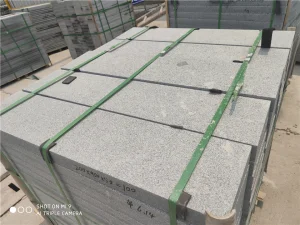
Positioned close to Rizhao Port and Qingdao Port, shipments bypass congested internal transport routes. Direct factory-to-quay container stuffing uses fumigated timber crates, steel A-frames, and desiccant-packed moisture barriers designed for long ocean crossings. Direct vessel sailings reach West Coast North American hubs in 14-18 days and European main ports in 28-32 days, complete with digital batch inspection reports.
Frontier Glass Technologies: Vacuum, BIPV & AI Analytics
Pioneering the next decade of architectural glazing through vacuum insulation, electrochromic dynamic solar control, and inline AI optical scanning.
Tempered Vacuum Insulated Glass (VIG)
Combining the thermal insulation of a thermos flask with the safety of tempered glass, hybrid VIG assemblies incorporate micro-support pillars spaced across an evacuated vacuum cavity (< 0.001 Pa). This achieves a thermal center-of-glass U-value down to 0.40 W/(m²·K) in an ultra-slim 10.3mm profile, providing an ideal retrofit solution for energy-intensive curtain walls without requiring structural frame redesigns.
Electrochromic & BIPV Lamination
Advanced autoclave lamination cycles embed crystalline silicon photovoltaic cells or tungsten oxide (WO3) electrochromic films directly between toughened glass lites. This allows dynamic modulation of visible light transmission (from 60% down to 1%) through low-voltage DC signals, generating clean on-site solar power while reducing HVAC chilling demand across high-exposure facades.
AI-Powered Anisotropy Scanning
Eliminating polarization coloration and haze ("leopard spots") under natural daylight, production lines integrate 100% online polariscopic scanning. High-speed multi-channel cameras measure stress birefringence in real time during air quenching, using closed-loop neural networks to dynamically adjust furnace nozzle pressures and eliminate visual anisotropy.
International Code Certification & Testing Protocols
Rigorous laboratory verification ensuring every crated glass bundle delivers traceable compliance for architects, facade consultants, and general contractors.
Impact & Drop Ball
Tested under ANSI Z97.1 Class A and EN 12600 Class 1B1 via 45kg twin-tire pendulum drops and 2.27kg steel ball gravity drops from heights up to 3 meters, ensuring zero penetrative teardown.
Autoclave Boiling Bake
Laminated samples undergo a 2-hour water boil test at 100°C and a 16-hour bake test at 120°C without evidence of bubbles, haze, or interlayer delamination extending beyond 6mm from exposed edges.
Edge & Roller Flatness
Optical gauge testing measuring roller wave distortion below 0.05 mm and edge lift within 0.20 mm per 300 mm span, guaranteeing zero optical distortion in reflected cityscapes.
Full Code Compliance
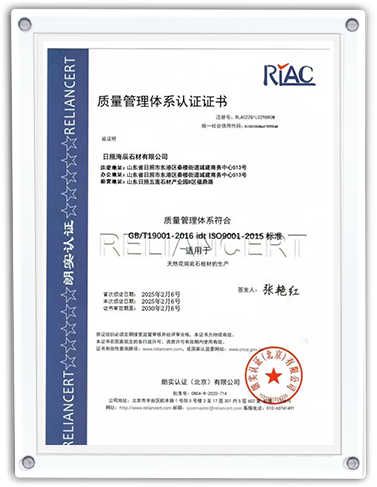
Certified to North American SGCC (ANSI Z97.1 / ASTM C1048), European CE Mark (EN 12150 / EN 14449), Australian Standards (AS/NZS 2208:1996), and ISO 9001 quality management systems.
Dimensional Architectural Supply & Global Export Lines
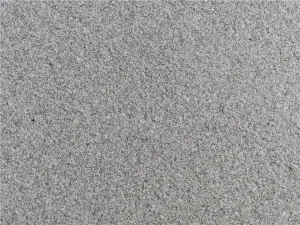
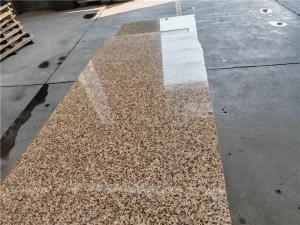
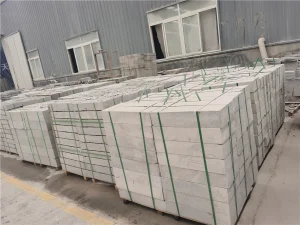
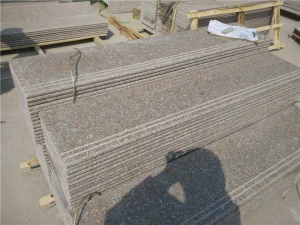
Quarry-direct dimensional stone, engineered facades, and structural envelope solutions ready for unified sea-container shipping alongside glass packages.
Technical Engineering & Sourcing Inquiries
Precise technical guidance answering common structural queries from facade engineers, architects, and international project buyers.