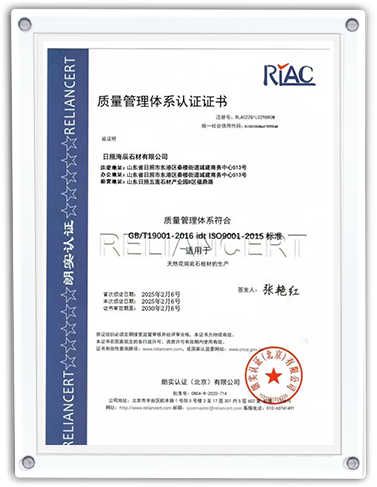
Featured Exterior Architectural Stone & Panels
Factory-direct granite and natural split-face stone inventory ready for cut-to-size cladding, municipal paving, and custom ledgestone configurations.
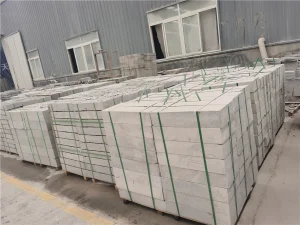
Wholesale Limestone Granite: Nature's Dual Gift
Explore Specification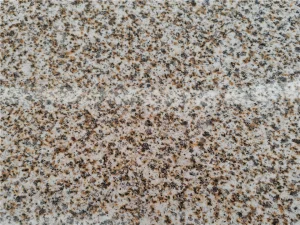
Wholesale G682 Yellow Rust Granite for Paving
Explore Specification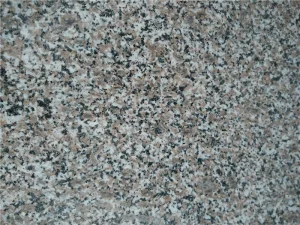
China Other Colours Granite – Custom Orders
Explore Specification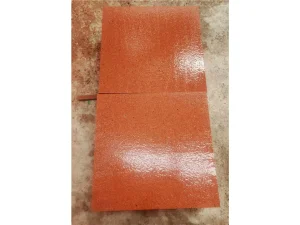
Premium Chinese Red Granite Blocks
Explore Specification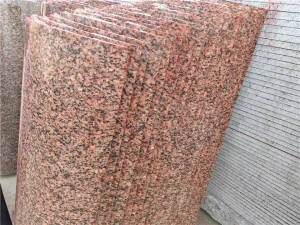
Wholesale G352 General Red Granite Cladding
Explore Specification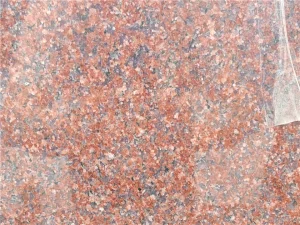
Wholesale G386 Shidiao Red Granite Tiles
Explore Specification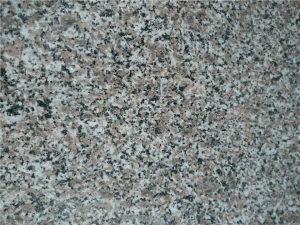
China G6361 Wulianhua Granite Landscaping
Explore Specification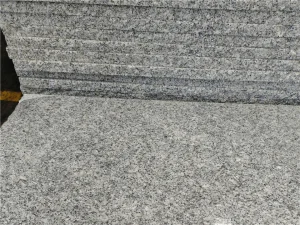
Wholesale G602 Sesame White Granite
Explore SpecificationWhy Direct-from-China Factory Sourcing Defines Structural Reliability
Operating inside the world's dense stone fabrication hubs in Rizhao, Shandong, Haichen Stone establishes new standards in raw extraction, dimensional tolerance, and cost control.
Self-Sustaining Quarry Monopolies
Unlike third-party exporters reliant on spot block trading, our direct quarry reserves in Shandong guarantee unbroken stratigraphic color conformity. For mega-scale architectural complexes requiring 50,000+ m² of uniform tone across phase 1 through phase 3, quarry ownership eliminates batch chromatic disparity and quarry depletion bottlenecks.
Color Consistency GuaranteedCNC Robotic Split-Face Production
Fabricating exterior natural ledgestone panels demands balanced surface topography. Utilizing computerized multi-blade diamond gang saws and automated hydraulic guillotine splitters, our ledgestone modules maintain flat sawn backs with calibrated ±1.0 mm thickness alongside sharp, three-dimensional fractured faces that maximize exterior light diffraction.
Calibrated ±1.0mm ToleranceDual-Port Strategic Outlets
Haichen Stone operates directly adjacent to Rizhao Port and within short freight distance to Qingdao Port. This port-factory cluster minimizes inland container transfer expenditures by up to 30%, streamlines multi-modal ocean bill of lading transfers, and provides direct bulk container routes to Europe, North America, the Middle East, and Oceania.
FOB Rizhao & Qingdao AccessThe Evolution of Exterior Ledgestone: Engineering Natural Stone for Ventilated Rainscreens & High-Exposure Facades
Historically, exterior stone masonry relied on heavy, full-bed load-bearing stone units ranging from 100 mm to 150 mm in structural depth. While visually striking, conventional full-depth ashlar stone places severe structural dead-load demands on foundational pilings, restricts building elevation heights, and creates thermal bridges that compromise building envelope energy targets. The emergence of modern thin ledgestone veneer systems—specifically engineered interlocking Z-profile and modular corner units manufactured from dense metamorphic and igneous Chinese granite—has fundamentally shifted exterior facade engineering.
1. Interlocking Z-Panel Geometry & Modular Joint Concealment
State-of-the-art ledgestone manufacturing replaces traditional random dimensional flagstone with digitally profiled interlocking "Z-shaped" panels (standardized at 600×150 mm, 600×200 mm, or custom architect scales). By stepping the vertical joints, the visual seams between adjacent modules are completely disguised under natural shadow lines. Individual ledgestone strips (varying in thickness between 15 mm and 35 mm) are permanently adhered to a mesh backing using polymer-modified structural epoxy or cast with a lightweight fiber-reinforced concrete matrix. The outcome is a structural veneer weighing under 45 kg/m² that can be installed three times faster than field-cut stone masonry, slashing total jobsite craft labor expenditure by 40% to 60%.
2. Thermal Expansion Coefficient & Extreme Weather Defense
Exterior facades undergo intense thermodynamic cycles. When subjected to solar radiation followed by abrupt precipitation, exterior stone veneers experience intense thermal shock. Standard Chinese granites like G602 Sesame White, G654 Sesame Black, and G682 Rust possess a remarkably low coefficient of thermal expansion (typically between 6.5 × 10⁻⁶ K⁻¹ and 8.2 × 10⁻⁶ K⁻¹). When matched with flexible polymer-modified thin-set mortars (meeting ISO 13007 C2TES1 or C2TES2 designations) or mechanical undercut anchors for ventilated curtain walls, the stone expands and contracts without internal micro-fissuring, delamination, or adhesive bond fatigue.
3. Moisture Permeation Dynamics & Anti-Efflorescence Control
A frequent point of failure in poorly engineered ledgestone facades is efflorescence—the migration of soluble mineral salts through the masonry substrate, resulting in disfiguring white deposits on the exterior stone face. Haichen Stone mitigates this through factory-controlled back-surface sealing and high-pressure washing that removes quarry salts and fine stone slimes before packing. Because granite's water absorption benchmark remains consistently below 0.3% (surpassing the ASTM C615 limit of 0.4%), moisture cannot penetrate the stone body. When paired with back-ventilated cavity configurations (drainage mats or rainscreen substructures), trapped interior water vapor escapes freely through weep holes without saturating the stone face.
Standard Architectural Engineering Benchmarks
| Physical Property | Testing Standard | ASTM C615 Granite Minimum | Haichen Stone Measured Value | Engineering Significance |
|---|---|---|---|---|
| Bulk Density | ASTM C97 / EN 1936 | ≥ 2,560 kg/m³ | 2,650 – 2,740 kg/m³ | Guarantees structural solidity & resistance to wind abrasion |
| Water Absorption | ASTM C97 / EN 13755 | ≤ 0.40 % | 0.18 % – 0.28 % | Critical for sub-zero freeze-thaw cycles without spalling |
| Compressive Strength | ASTM C170 / EN 1926 | ≥ 131 MPa | 145 – 185 MPa | Resists seismic crushing, point loads, and structural settlement |
| Flexural Strength | ASTM C880 / EN 12372 | ≥ 8.27 MPa | 11.5 – 16.2 MPa | Withstands extreme wind pressure in tall commercial elevations |
| Freeze-Thaw Resistance | EN 12371 (56 Cycles) | Loss < 20% | < 2.5% Loss / Zero Flaking | Proven integrity in Nordic, Alpine, and North American climates |
Architectural Scenarios & Commercial Solutions
From luxury mountain retreats to dense urban mixed-use envelopes, our ledgestone delivers low-maintenance biophilic tactile aesthetics that outlive manufactured concrete substitutes.
Commercial Retail & Corporate Plazas
High-footfall ground-level exteriors require high impact resistance. In contrast to thin stucco or fiber-cement cladding that gouges easily upon contact, flamed, cleft, and stacked granite ledgestone absorbs abrasive urban wear, resists tagging or graffiti removal chemicals, and retains architectural dignity over decades of building operations.
Impact-Resistant Podium FacadesHospitality & Luxury Residential Estates
Architects specifying five-star ski resorts, coastal villas, and high-end residential communities demand visual warmth that harmonizes with raw landscapes. Natural cleft ledgestone panels deliver rich textural layering, profound shadowed depth, and organic color gradients that manufactured faux-stone cannot replicate without repeating patterns.
Authentic Biophilic ArchitectureRetaining Walls & Landscape Infrastructure
For municipal roadways, boundary enclosures, and multi-tier terracing, ledgestone exterior panels serve as the decorative face for reinforced concrete masonry unit (CMU) retaining walls. It delivers the rustic gravitas of dry-stacked river or mountain boulders while ensuring engineered geotechnical drainage behind the wall envelope.
Heavy Civil & Retaining EnvelopesSolving Global Enterprise Procurement Challenges
How Haichen Stone systematically overcomes international stone trade challenges including chromatic variance, transit breakage, dimensional deviations, and customs clearance.
Factory Dry-Lay Inspection
Prior to crating, random panels from every production run undergo an in-house dry-lay inspection under natural daylight simulators. Our QA technicians arrange panels across 50 m² floor plots to verify tonal grading, locking tolerances, and seam concealment before dispatch.
ISPM-15 Fumigated Packaging
Export crating uses solid treated timber with corner steel reinforcement, interior pearl-cotton dampening sheets, and waterproof plastic shrink-wrap. Crates are sized to load seamlessly into 20-foot GP containers, preventing in-transit rolling or crushing during rough sea voyages.
Complete Project Shop Drawings
For large-scale facades requiring bespoke corner pieces, window returns, and sill flashings, our engineering department produces detailed CAD fabrication schedules. Every custom profile is numbered, keyed to the architectural elevations, and packed by building zone for fast site erection.
Rapid Lead Time & Inventory
With hundreds of cubic meters of raw granite blocks in reserve and dedicated split-face cutting lines, standard ledgestone orders ship within 14 to 21 days from purchase order confirmation, shielding overseas contractors from costly site work stoppages.
Dimensional Stone, Slabs & Engineered Cladding
Discover our wide portfolio of Chinese granites, cultural feature stones, and specialized wall panels engineered for global project exports.
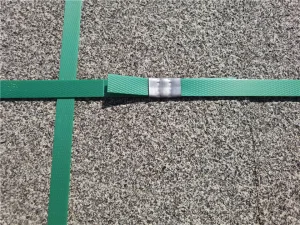
Wholesale G654 Sesame Black Granite Polished Slabs
Explore Specification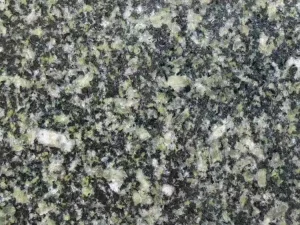
China G4101 Forest Green Granite Veneer Panels
Explore Specification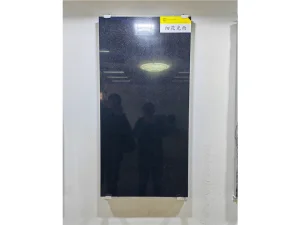
China G3401 Shanxi Black Granite Manufacturer
Explore Specification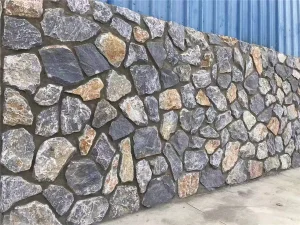
Wholesale Chinese Culture Granite Stone
Explore Specification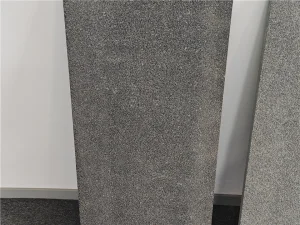
Wholesale G684 Fuding Black Granite Factory
Explore Specification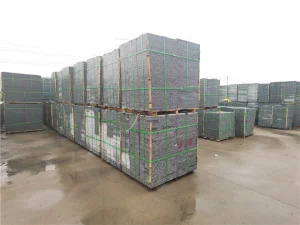
China G3702 Snowflake Blue Granite
Explore Specification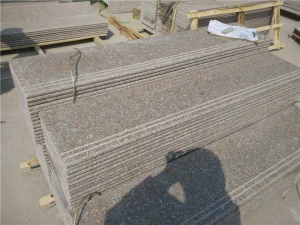
Wholesale G368 Wulian Red Granite Paving
Explore Specification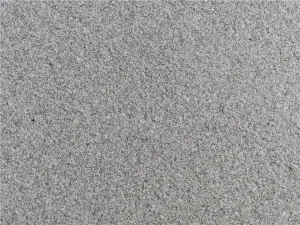
China G614 Sesame Grey Granite Slabs & Tiles
Explore SpecificationFrequently Asked Architectural & Procurement Questions
Authoritative guidance direct from our chief stone fabrication engineers and logistics department.