China Premium Chinese Red Granite Blocks Supplier, Suppliers
Product Description
Product Overview
- Product Name: Chinese Red Granite
- Core Production Areas: Primary production zones are concentrated in Shandong (Tai'an, Rongcheng, Liubu in Jinan) and Fujian. Shandong serves as the primary extraction and fabrication hub for northern premium red granite, anchored by Mount Tai and the Jiaodong Peninsula reserves. Fujian, supported by extensive port infrastructure, serves as the main international shipping center, leading granite and related stone export volumes.
- Ore Deposit Resources: Deposits show concentrated distribution with vast reserves. The General Red quarry area in Tai'an alone holds over 2.5 billion cubic meters of verified reserves. Tectonic plate activity and potassium alteration have yielded consistently vivid red rock formations , providing dependable long-term batch consistency for high-volume overseas architectural projects.
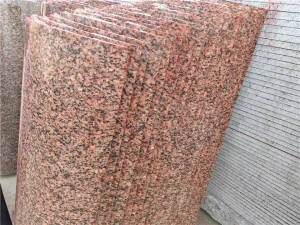
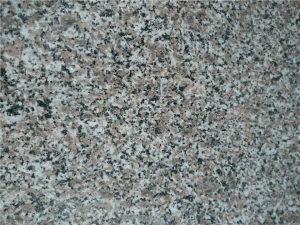
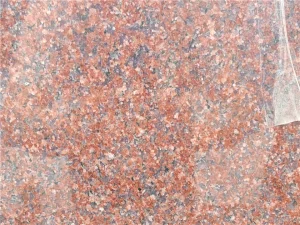
- Colour and Texture: Base tones span true red, deep red, scarlet, and date-red, delivering dense, saturated visual weight. Stone surfaces exhibit uniformly distributed microcrystals (golden, silver-white) without chaotic veining. Inter-batch chromatic tolerance remains within ≤0.8 grade, exceeding comparable imported natural granites in color uniformity.
- Mineral Composition: Dominated by quartz (>65%), potassium feldspar, and plagioclase feldspar, with minor biotite traces. The compact fine-to-medium grain matrix provides an unyielding structure free of natural cleavage fissures. Surface processing yields high gloss (110–120 degrees mirror finish on select types) with exceptional resistance to chemical degradation and abrasive wear.
- Global Positioning: A cornerstone export material among natural architectural stones, favored for municipal memorials, luxury exterior cladding, and commercial developments requiring lasting structural integrity and rich visual depth.
Technical Specifications & Engineering Metrics
| Performance Indicator | Standard Metric Range | Engineering Significance |
|---|---|---|
| Bulk Density | 2.65 – 2.85 g/cm³ | High-density structure ensuring structural stability in ventilated dry-hung facades, structural columns, and load-bearing applications. Certain variations achieve 2.67 g/cm³. |
| Water Absorption | ≤ 0.15% | Impervious to fluid penetration; prevents frost heave and spalling in sub-zero or high-humidity regions. Selected premium cuts record values under 0.10%. |
| Mohs Hardness | 6.5 – 8.0 | High scratch and gouge resistance suitable for heavy pedestrian foot traffic, commercial interiors, and civic spaces. Reduces site maintenance overhead. |
| Compressive Strength | 200 – 360 MPa | High load thresholds accommodate major curtain wall designs, bridge abutments, monument structures, and transport hub terminals. |
| Flexural Strength | 22 – 32 MPa | Resists horizontal shear loads, seismic vibration, and wind pressure on expansive exterior panels. Dry flexural readings reach up to 9.8 MPa on specific cuts. |
| Abrasion Resistance | < 0.25 g/cm² | Exhibits low material loss under traffic friction, maintaining textural surface properties for decades across busy urban locations. |
| Acid Resistance | ≥ 97.5% | Unaffected by environmental acid precipitation, industrial air pollutants, or coastal sea spray conditions. |
| Alkali Resistance | ≥ 99.0% | Chemically inert against cement mortar mixtures and external chemical cleaners, preventing efflorescence or superficial discoloration. |
| Weather Resistance | Thermal Range -45°C to 75°C | Maintains integrity across sub-arctic and equatorial settings. Demonstrates no thermal distortion or color fade across continuous field installations. |
| Radioactivity Safety | Class A (Universal Compliant) | Meets unrestricted indoor/outdoor safety standards globally, including ASTM C615 (US), JIS A 5201 (Japan), and SASO requirements. |
Primary Stone Varieties
G352 General Red
Quarried in Tai'an, Shandong. Distinguished by a deep imperial red field embedded with light gold crystalline nodes. Featuring a Mohs hardness of 7.0–8.0, it serves as the benchmark material for civic squares, monolithic monuments, and historical structures requiring significant mass and permanence.
G6386 Shidao Red
Originating from the coastal quarries of Rongcheng, Shandong. Displays an even, warm carmine-to-jujube hue with micro-fine silver crystal flecks. Takes an exceptional polish, making it a preferred material for high-end hospitality interiors, luxury apartment lobbies, and polished architectural skins.
Liubu Red
Extracted from Liubu, Jinan. Formed along geological suture zones, this stone presents rich, vibrant crimson tones with a tight crystalline matrix. Its high compressive tolerance makes it ideal for landscape architecture, thermal flagstone paving, and outdoor structural water elements.
Fabrication Specs & Surface Textures
Standard Fabrication Dimensions
- Gang Saw Slabs: 2400×1200×20/30mm, 3000×1500×20/30mm, 3200×1600×20/30mm, 3500×1800×30mm. Optimized for structural curtain walls, large floor designs, and custom cut-to-size interior features.
- Modular Architectural Tiles: 600×600×10/15mm, 800×800×10/15mm, 1000×1000×15mm. Dimensional formats for commercial interior floors, raised pedestals, and weight-sensitive installations.
- Custom CNC Fabrication: Precision-cut components processed via digital automated bridge saws, maintaining strict mechanical tolerances within ≤±0.4mm across complex technical profiles.
Available Surface Finishes
- Polished: High-gloss finish (≥90°, achieving 110–120° on specialized varieties), emphasizing depth of color and mineral grain for interior focal surfaces and entry portals.
- Flamed: High-temperature thermal treatment creates an anti-slip texture (friction coefficient ≥0.75), lightens base tones slightly, and provides an ideal surface for exterior plazas and civic sidewalks.
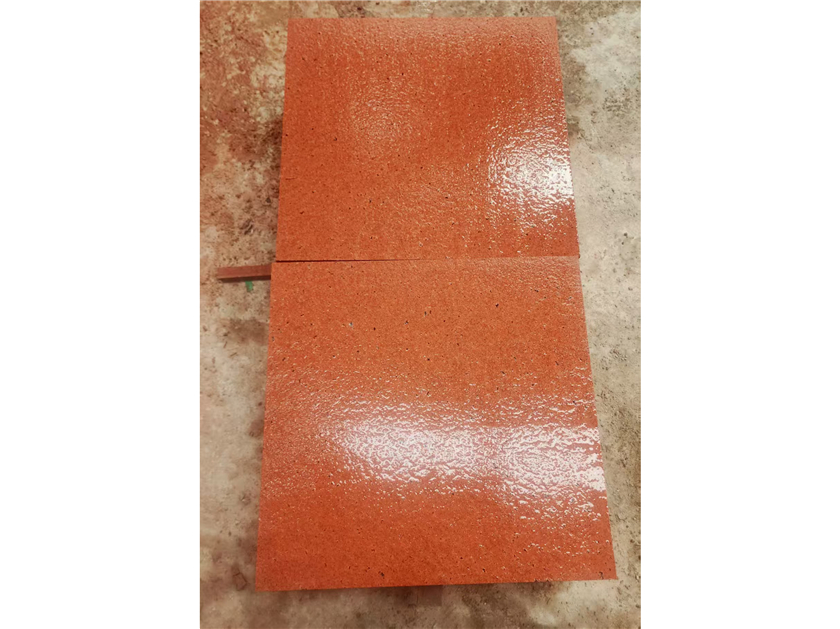
- Bush-Hammered: Mechanically textured to create a uniform, pitted surface relief. Excellent for tactile indicators, massive building bases, retention walls, and outdoor landscape safety treads.
- Honed: Smooth, matte finish devoid of specular reflection, highlighting uniform natural tones. Widely specified for commercial corridors, interior staircases, and executive surfaces.
- Sandblasted: Fine, uniform, micro-textured finish providing reliable grip and muted visual reflection for contemporary exterior facade elements.
- Natural Split: Hand- or hydraulic-split surfaces presenting raw geological texture. Suited for rustic masonry, perimeter landscape retaining walls, and traditional stone treatments.
Custom Architectural Profiles
- Infrastructure Elements: Precision curb units, tree grates, water channels, chamfered stair nosings, and tactile warning pavers.
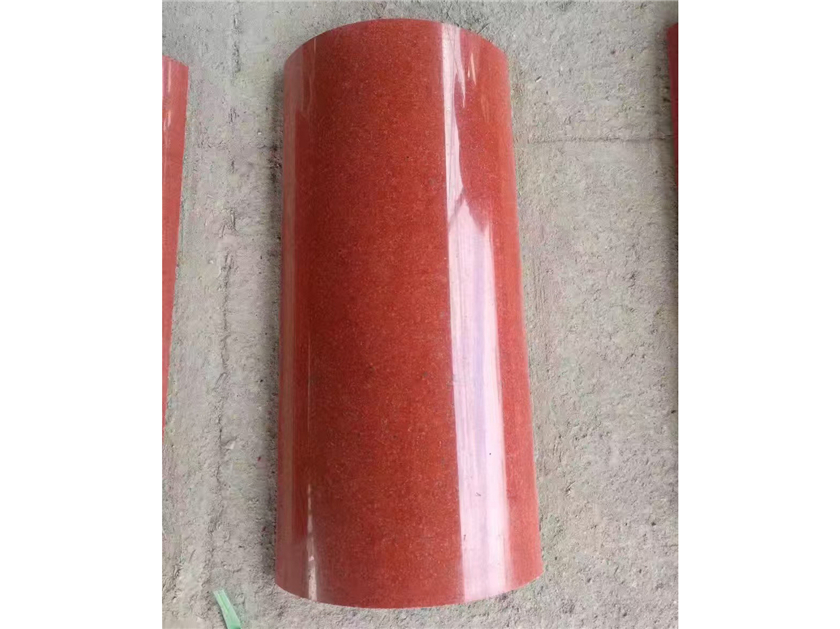
- Architectural Stonework: Radius curved facade cladding, relief carvings, classical round or square columns, door and window surrounds, and deep-reveal profile moldings.
- Landscape & Memorial Works: Carved balustrades, monolithic garden boulders, park furnishings, stone markers, memorial bases, and cemetery monuments.
Primary Applications
Commercial & Residential Envelopes
Standard material choice for ventilated rainscreen systems, large curtain walls, and grand hotel or office facades. The uniform color profile supports visual continuity across large-scale building perimeters.
High-Traffic Interior Surfaces
Applied extensively in transit halls, airports, retail atriums, and hospitality spaces. High flexural and compressive capacity prevents damage from equipment and continuous foot traffic.
Civic & Memorial Architecture
Specified for regional monuments, plazas, and public venues where the red color palette carries symbolic, stately, or commemorative value, supported by extreme resistance to outdoor weathering.
Landscape & Industrial Applications
Utilized for resilient hardscaping, water basins, and heavy-duty industrial floor systems requiring tested acid-alkali durability and low porosity under demanding chemical conditions.
Packaging, Logistics & Sourcing
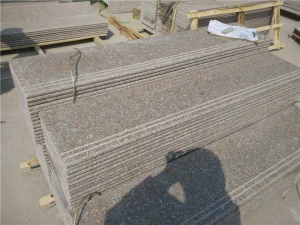
- Protective Packaging: Solid seaworthy treated-wood crates or reinforced A-frames. Slabs and tiles are separated by non-staining foam protectors, fully enclosed with vapor-barrier wrapping, and secured via reinforced heavy-gauge steel bands (gross weight capped ≤1.8 metric tons per pallet/crate).
- Global Freight Integration: Convenient transportation directly via major coastal freight ports including Qingdao, Rizhao, and Xiamen. Shipments move in 20-foot GP standard containers (payload capacity 22–28 metric tons based on port weight restrictions) or 40-foot HQ containers.
- Order Flexibility: Minimum order starting at 1×20' FCL. Consolidated mixed loading is supported across different dimensional sizes, finishes, and stone varieties to streamline project budgets.
Frequently Asked Questions
G352 General Red features a deeper tone and exceptional density, making it a standard choice for public monuments and exterior cladding. G6386 Shidao Red exhibits higher reflectivity and warmer red notes suited for fine interior finishes, whereas Liubu Red is predominantly utilized for hardscapes, curbs, and heavy outdoor architectural masonry.
Yes. With an ultra-low water absorption rate (≤0.15%), Chinese Red Granite easily withstands over 50 harsh freeze-thaw cycles down to -45°C without surface pitting or micro-fracturing. Its high acid/alkali resistance (>97%) also keeps it impervious to salt-spray erosion in maritime locations.
No. Formed primarily of silica, quartz, and potassium feldspar, its coloration is an inherent property of the natural rock rather than secondary chemical staining. Accelerated aging and field tests confirm color differential metrics remain at ΔE < 0.8 across decades of strong UV exposure.
Yes, it qualifies fully under Class A environmental and radiation safety standards, placing no restrictions on where it can be installed. It complies with ASTM C615, Japanese JIS A 5201, and European CE stone fabrication protocols.
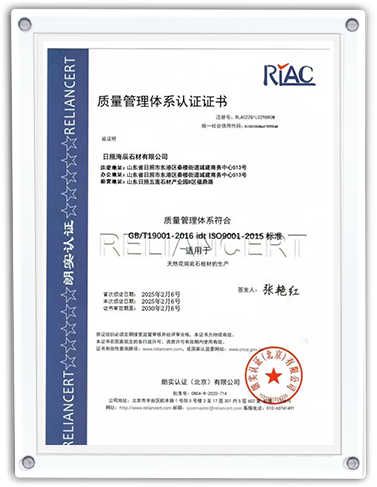
Every shipment can be paired with official third-party physical parameter testing certificates, Class A radiological evaluation reports, Certificates of Origin (CO/Form series), and precise packing lists formatted to smooth clearance through foreign ports.
Key advantages include massive quarry reserves ensuring zero batch variation over multi-year projects, automated CNC fabrication maintaining tolerances within ±0.4mm, and deep-water container port access that reduces ocean freight turnaround times.