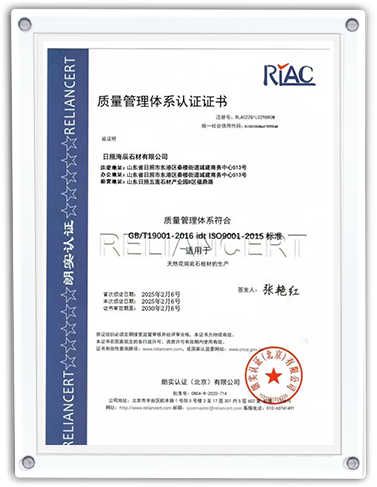
Engineered Architectural Solutions: Phase I Production Batch
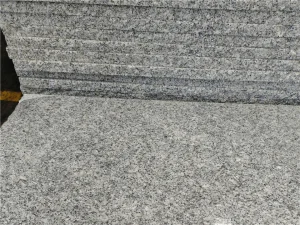
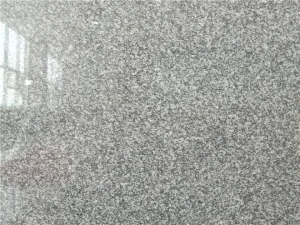
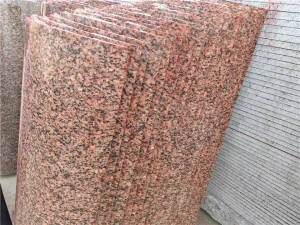
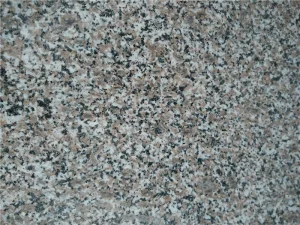
Rigid industrial fabrication certified to global structural standards. Explore key dimensional cut-to-size items engineered with high edge-compression tolerance and surface integrity.
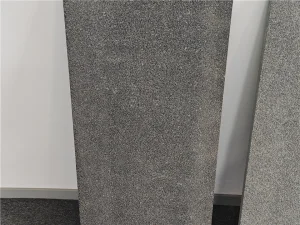
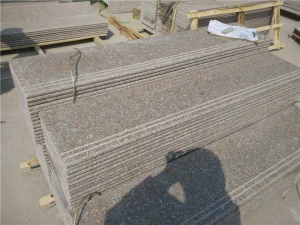
China Factory 4.0: Supply Chain Resilience, Vertical Integration & Scalability
The contemporary architectural landscape requires high precision, non-stop production cycles, and absolute batch homogeneity. Modern China-based tempered safety glass manufacturing has transformed from labor-intensive factories into automated, Industry 4.0 smart clusters that handle complex raw material preparation, ultra-precise thermal tempering, and automated quality diagnostics.
Intelligent Float Matrix Integration
By leveraging direct pipeline access to top-tier float glass furnaces, factories eliminate optical distortion and micro-inclusions at the melt stage, securing uniform thickness tolerances within ±0.1mm before tempering begins.
Continuous Radiation Toughening
Advanced convection heating beds feature multi-zone independent thermal modulation, ensuring consistent core-to-surface heat balance. This eliminates bow, warp, and local roller wave distortion on jumbo-sized architectural lites up to 18 meters.
Inline Automated Stress Birefringence
Every tempered pane passes real-time polarized stress analyzers to quantify surface compressive stress (exceeding 90-120 MPa) and edge compression, preventing premature catastrophic failure and ensuring full compliance with international building codes.
Engineering Whitepaper: Technical Roadmap & Future Outlook
Thermal toughening operates by inducing balanced compressive stress on external glass surfaces countered by internal tensile stress. Achieving high-performance safety glazing requires precise thermodynamic equilibrium across complex glass compositions, multi-laminate configurations, and performance coatings.
| Performance Parameter | Monolithic Tempered Glass | Heat-Strengthened Glass | Tempered Laminated Safety Glass |
|---|---|---|---|
| Surface Compressive Stress | ≥ 69 MPa (Commercial) / ≥ 90–120 MPa (Structural) | 24 MPa to 52 MPa | Outer plies ≥ 90 MPa (variable combinations) |
| Thermal Shock Resistance | ΔT up to 200°C–250°C | ΔT up to 100°C | Dependent on interlayer thermal tolerance (PVB/SentryGlas) |
| Breakage Particle Geometry | Small, blunt, dice-shaped fragments (>40 particles / 50x50mm) | Large, radial shards extending to perimeter | Fragments firmly bonded to structural elastomeric interlayer |
| Structural Residual Capacity | Zero load-bearing capability post-shatter | High residual membrane stiffness while frame-retained | High to ultra-high (SGP ionoplast sustains dead loads post-fracture) |
| Target Engineering Application | Shower enclosures, interior partitions, retail storefronts | High-rise curtain walls (prevents fallout, thermal stress) | Structural balustrades, glass fins, skylights, hurricane zones |
Mitigating Nickel Sulfide (NiS) Inclusions
Microscopic Nickel Sulfide crystals can expand over years, triggering spontaneous fracture. Tier-1 Chinese suppliers mitigate this through full-furnace calibrated Heat Soak Testing (EN 14179-1), simulating 290°C holding environments to eliminate high-risk panes prior to containerization.
Low-E Coating Compatibility
Modern architectural codes demand hard-coat and soft-coat double/triple-silver Low-E glazings. Modern tempering furnaces use dynamic air convection blowers to prevent coating oxidation and hazing, preserving emissivity down to 0.02 and high Solar Heat Gain Coefficient (SHGC) efficiency.
Ion-Exchange Chemical Fortification
For ultra-thin safety glazing or extreme pressure applications, chemical tempering routes utilize molten potassium salt baths (KNO₃) at 400°C. Larger potassium ions displace sodium ions at the surface, achieving up to 600+ MPa compressive stress without optical bow.
Macro-Industry Solutions: Multi-Sector Glazing Blueprints
From structural architectural envelopes to railway transit and renewable energy, tempered safety glass serves as a foundation of global decarbonization, physical safety, and advanced engineering.
Structural Façade Envelopes & Glass Fins
Demanding point-supported spider systems and heavy wind-load facades rely on custom-drilled, chamfered tempered lites that withstand positive and negative cyclone wind pressures up to 5.5 kPa without perimeter deflection.
Overhead Canopies & Skylights
Combining fully tempered safety lites with high-tack laminated multi-layers prevents glass fallout under snow drift accumulation, thermal breakage, and seismic structural rack movements.
Commercial Shower Enclosures & Balustrades
Precision CNC edgework (flat grind, pencil edge, ogee, and mitre polishes) ensures smooth perimeters, while nano-scale hydrophobic easy-clean coatings reduce scale buildup and post-installation maintenance overhead.
Localized Support, Regulatory Compliance & Quality Governance
Supplying international construction tenders requires adherence to local building codes, statutory life-safety mandates, and third-party laboratory accreditations.
ANSI Z97.1 & CPSC 16 CFR 1201
North American compliance for human impact safety performance in hazardous architectural locations, verified via drop-bag impact tests.
EN 12150-1 & EN 14449
European Union harmonized CE standards governing fragmentation densities, flatness tolerances, edge work quality, and laminated safety criteria.
AS/NZS 2208:1996
Strict Australian and New Zealand certification protocols for architectural safety glazing, verified by continuous SAI Global audit benchmarks.
ISO 9001 & ISO 14001
Factory-level enterprise management ensuring calibrated equipment maintenance, raw glass batch consistency, and low-carbon emission workflows.
Enterprise Procurement Strategy: Mitigating Risk from Quoting to Unloading
Sourcing tempered and safety glass directly from Chinese industrial fabrication lines requires technical due diligence, moisture-controlled crate design, and clear quality criteria.
1. Technical Specification Alignment
Clarify exact edgework requirements, hole tolerances, radius cutout profiles, Low-E solar properties, and Heat Soak Testing (HST) mandates early in the RFQ stage to prevent manufacturing revisions.
2. Ocean-Ready Packaging Logistics
Specify fumigated A-frame steel racks or heavy-duty plywood crates with mildew-resistant separation powder or EVA corner protectors, engineered to prevent maritime transit impact and humidity damage.
3. Factory Audits & Digital QA
Utilize real-time digital factory tours, third-party pre-shipment inspections, laser-scanned dimensional certificates, and glass polariscope inspections to verify batch consistency prior to container dispatch.
Frequently Asked Questions: Technical Engineering & Sourcing
Practical answers to standard questions encountered by façade engineers, quantity surveyors, and project directors when sourcing tempered safety glass from China.
What is the difference between Heat-Strengthened and Fully Tempered safety glass?
Why is the Heat Soak Test (HST) mandatory for critical structural glazing projects?
Can tempered safety glass be cut, drilled, or altered after thermal processing?
What are typical roller wave and bow/warp tolerances from Tier-1 Chinese suppliers?
How do Chinese manufacturers safeguard shipments against maritime moisture and glass corrosion?
Custom Commercial Inventory: Phase II Fabrication Lots
Explore additional precision-fabricated structural building elements, dimensional tiles, and specialized components available for high-volume containerized procurement.