High-Spec Structural Systems & Architectural Substrates
Combining heavy-duty natural stone cladding, tempered glass envelopes, and precision clamp assemblies for enterprise construction packages.

Engineering White Laminate Glass: Precision, Opacity & Structural Tenacity
A technical deconstruction of multi-layer polymer bonding, translucent opacity dispersion, and dynamic acoustic dampening in enterprise architectural openings.
Controlled Diffuse Transmittance
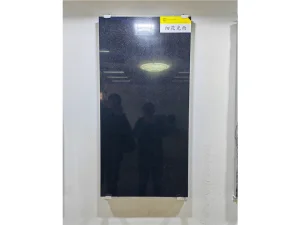
White laminated glass doors utilize advanced interlayers—predominantly Polyvinyl Butyral (PVB) or Ethylene Vinyl Acetate (EVA) loaded with nanoscale titanium dioxide (TiO₂) particles. This achieves tailored visual light transmittance (VLT) between 12% and 65%, guaranteeing absolute visual privacy while sustaining light permeation without hotspot glares.
Post-Breakage Structural Retention
Unlike standard monolithic tempered glass doors that spontaneously evacuate the frame upon rare nickel sulfide inclusion failure, white laminate assemblies ensure glass fragments adhere firmly to the interlayer under EN 12600 Class 1(B)1 standards. This eliminates projectile hazards across high-traffic commercial spaces.
Acoustic Resonance Attenuation
By pairing varying glass substrate thicknesses (e.g., 5mm outer + 0.76mm acoustic white PVB + 6mm inner), the composite dampens the critical frequency drop (coincidence dip). Acoustic transmission loss surpasses Rw 38dB to 42dB, critical for corporate boardrooms and healthcare consultation suites.
Enterprise Sourcing: Managing Multi-Package Material Risk
Architects, Tier-1 contractors, and global distributors demand seamless material integration between heavy structural envelopes and high-performance fenestration.
Consolidated Specification & Bill of Quantities (BOQ)
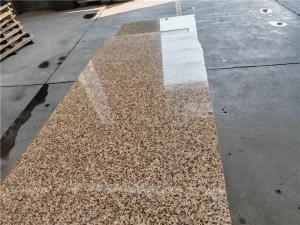
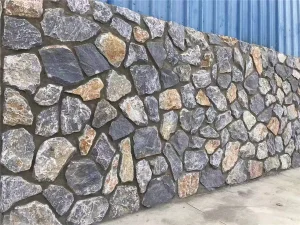
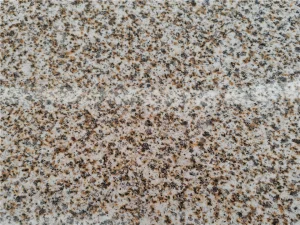
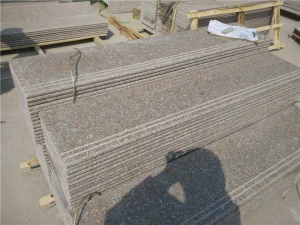
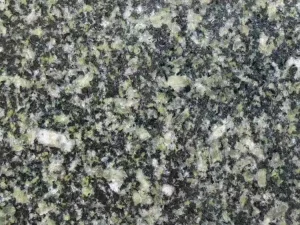
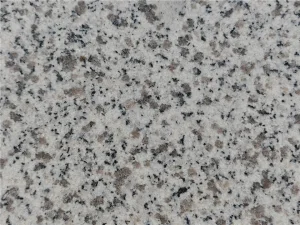
Global procurement teams struggle with fragmented supplier bases where stonework, glass partitions, and sub-frames are sourced from isolated vendors. Haichen Stone's consolidated approach brings facade granite cladding, stainless steel glass clamps, and laminated door assemblies under unified QA oversight, reducing procurement overhead by 22%.
Tolerances, Thermal Expansion & Joint Compatibility
Interfacing white laminate doors with heavy natural stone portals demands strict thermal-movement engineering. Differential coefficients of linear thermal expansion (granite: ~6-8 x 10⁻⁶/K vs. float glass: ~9 x 10⁻⁶/K) require shop-drawing coordination, silicone elastomer selection, and pre-engineered anchor spacing to prevent stress concentrations.
Export Crating & Micro-Environment Stability
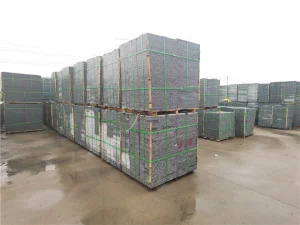
Moisture ingression during oceanic transit causes PVB edge delamination and clouding ("milky edges"). Haichen's packaging standard mandates desiccated, edge-sealed film wraps within heavy fumigated IPPC wooden crates, protecting both fine-honed granite and polished laminated glass across extreme maritime humidity zones.
China Factory 4.0: Supply Chain Resilience & Cleanroom Precision
Combining automated CNC waterjet cutting, cleanroom autoclaves, and localized sea-freight hubs for frictionless international trade.
Automated Lamination Autoclaves
Our Shandong-based production clusters utilize continuous horizontal convection heating and high-pressure autoclaving (12–14 bar at 135°C–145°C) to eliminate micro-bubbles, yielding flawless interlayer clarity and lifelong anti-delamination performance.
5-Axis CNC Waterjet Profiling
Precision hardware cutouts for patch fittings, lock sets, and floor springs are executed prior to tempering using 5-axis CNC equipment. Positional tolerances are controlled within ±0.3mm to ensure flawless alignment with stainless steel architectural hardware.
Direct Port-Factory Synergy
Situated in the Rizhao stone and industrial manufacturing corridor with Qingdao Port access, shipments bypass long inland transit lanes. Reduced transfer touchpoints preserve fragile glass edges and polished finishes, accelerating sailing departures.
Macro Industry Solutions: Commercial, Healthcare & Infrastructure
Purpose-engineered door systems tailored to rigorous fire codes, acoustic dampening specifications, and heavy pedestrian duty cycles.
Corporate Office Partitions & Executive Portals
Combining acoustic-rated white milky laminated doors (Rw 39dB) with minimal matte-black powder-coated aluminum framing. Solves the contemporary open-plan paradox by admitting natural corridor daylight while preserving confidentiality for HR and boardroom functions.
Healthcare & Clinical Cleanroom Doors
Sterile spaces mandate completely non-porous surfaces. White laminate doors provide uniform opacity that will not peel, scratch, or harbor microbes—unlike vinyl adhesive films or surface paints. Fully compatible with stringent chemical wash-down and disinfectants.
Hospitality & Wet Area Fenestration
Engineered with hydrophobic edge-sealing treatments and structural EVA interlayers that resist moisture intrusion in high-humidity zones such as luxury hotel en-suite washrooms, wellness centers, and spa dividers without the risk of yellowing or delamination.
Technical Roadmap & Future Outlook: The Next Decade in Glass Engineering
Forward-looking advancements integrating switchable electrochromics, structural ionoplasts, and automated carbon tracking.
Hybrid PDLC Smart Dynamic Glazing
Integrating polymer-dispersed liquid crystal (PDLC) conductive films between white translucent EVA interlayers allows doors to toggle from standard milk-white privacy to clear transparency in <100 milliseconds via building management systems (BMS) or smart sensors.
Rigid SentryGlas® (SGP) Interlayers
Transitioning from conventional PVB to ionoplast polymer interlayers delivers up to 5x the tear strength and 100x the rigidity. This enables frameless, ultra-tall white laminate pivot doors up to 3.8 meters in height without flexing or sagging under dynamic hinge loads.
Embodied Carbon & Life Cycle Tracking
Developing verified Environmental Product Declarations (EPDs) with electric-arc furnace recycling loops and renewable solar-powered manufacturing lines, cutting the embodied carbon of architectural glass doors by up to 28% to support LEED and BREEAM Gold projects.
Engineering Specifications: White Laminate Glass Door Assemblies
Verified laboratory benchmarks for architects, facade consultants, and general contractors.
| Configuration | Total Nominal Thickness | Interlayer Type & Color | Acoustic Rating (Rw) | Visible Light Transmittance (VLT) | Applicable Standards |
|---|---|---|---|---|---|
| 5mm Tempered + Interlayer + 5mm Tempered | 10.76 mm / 11.52 mm | 0.76mm / 1.52mm Milky White PVB | 36 dB | 32% - 48% | EN 14449, ANSI Z97.1, AS/NZS 2208 |
| 6mm Tempered + Interlayer + 6mm Tempered | 12.76 mm / 13.52 mm | 0.76mm / 1.52mm Super White PVB | 38 dB | 18% - 35% | ASTM C1172, EN 12600 Class 1(B)1 |
| 8mm Tempered + Interlayer + 8mm Tempered | 17.52 mm | 1.52mm Acoustic White PVB | 41 dB | 14% - 28% | ISO 12543, BS 6206 |
| 10mm Low-Iron + SGP + 10mm Low-Iron | 21.52 mm | 1.52mm Structural SGP + White Film | 43 dB | 12% - 25% | Miami-Dade NOA, EN 356 P2A |
Localized Support, Testing & Global Compliance Framework
Comprehensive third-party validation ensuring flawless installation sign-offs across North America, Europe, Australia, and the Middle East.
International Safety Certifications
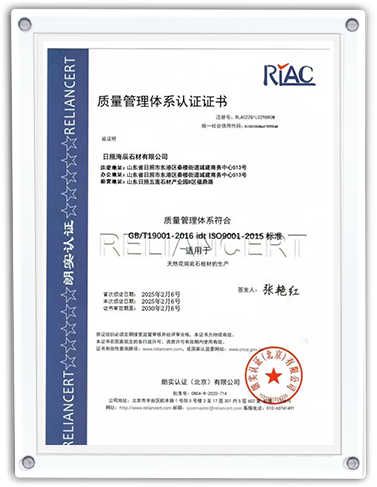
Our architectural glass series carries valid testing documentation for SGCC (ANSI Z97.1-2015, USA), CE mark (EN 14449 / EN 12150, EU), CSI benchmark (AS/NZS 2208:1996, Australasia), and 3C (China Compulsory Certification), ensuring immediate clearance by local building authorities.
Comprehensive Pre-Shipment Dry-Lay & Inspection
To eliminate site rework, every custom batch undergoes factory dry-lay matching. Edge alignments, drill-hole bevels, PVB margin integrity, and optical haze values are audited piece-by-piece under standardized lighting benches prior to crating.
Bilingual Shop Drawings & Installation Kits
Global contractors receive CAD and BIM families (Revit/IFC) detailing exact floor-spring pocket depths, transom clamp allowances, and structural fastener schedules. Each glass panel is laser-etched with trace batch codes matching project elevation drawings.
Frequently Asked Questions: White Laminate Glass Doors
In-depth responses to critical commercial and architectural engineering queries.
What is the difference between white laminated glass and frosted/acid-etched glass doors?
Can white laminate glass doors be customized with lock cutouts, patch fittings, and handle holes?
How does white laminate glass perform under prolonged ultraviolet (UV) solar exposure?
What is the difference between standard white PVB and low-iron white laminate glass?
Can project buyers consolidate stone cladding and glass door packages into single sea containers?
Comprehensive Exterior & Interior Surface Envelopes
Engineered stone and hardware systems direct from Rizhao industrial fabrication lines to global ports.