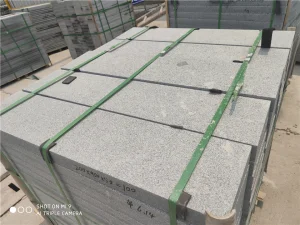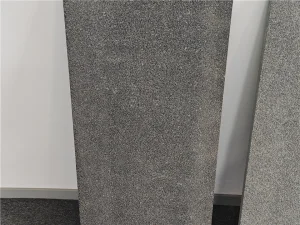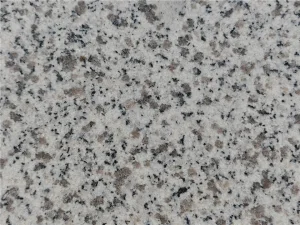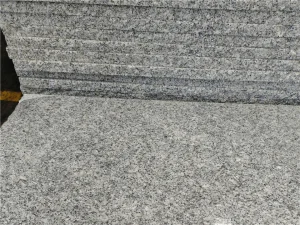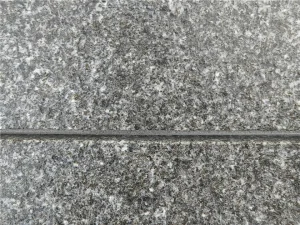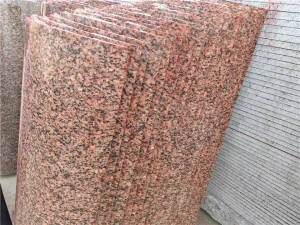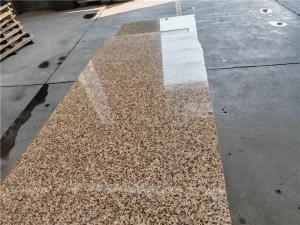
Featured Project & Architectural Supply Selection
Consolidated procurement for international project contractors: high-performance float substrates, specialized cladding panels, precision fittings, and structural infrastructure components.

Global Commercial & Industrial Landscape of Annealed Laminated Glass
Why precision-annealed composite glazing remains the irreplaceable cornerstone of high-specification architectural engineering, acoustic isolation, and secondary fabrication logistics.
Absolute Optical Flatness & Zero Anisotropy
Unlike fully tempered (toughened) glass that is subjected to high-temperature thermal quenching (~650°C) followed by rapid forced-air chilling, annealed laminated glass undergoes slow, controlled lehr cooling. This process preserves the intrinsic float-bath flatness, totally eliminating roller waves, edge lift, dish warpage, and photoelastic stress patterns (quench leopard spots) visible under polarized natural sky light. For ultra-premium commercial facades, storefront vitrines, and museum display cases, annealed laminated units deliver undistorted reflection and crisp visual transmission.
Post-Breakage Structural Cohesion & Retention
When tempered glass ruptures, it abruptly shatters into thousands of miniature dice-like fragments, losing systemic stiffness and frequently slumping out of perimeter framing pockets. In contrast, broken annealed laminated glass fractured plies form large interlocking tectonic plates that bond adamantly to the visco-elastic Polyvinyl Butyral (PVB) or SentryGlas (SGP) interlayer. The laminated panel stays upright in the frame, maintaining an intact building envelope and weather seal until scheduled replacement can be safely executed.
Secondary Cutting, Scoring & Stock Distribution
A monumental commercial advantage for wholesale distributors, regional fenestration fabricators, and emergency glazing companies is that annealed laminated glass can be cut, scored, trimmed, and edge-worked after lamination. Utilizing computerized dual-bridge automated cutting tables with infrared quartz heating blades, jumbo stock sheets (e.g., 3300 × 2140 mm, 3660 × 2440 mm) can be precisely subdivided to order, eliminating the weeks-long lead times inherent to custom tempered lamination cycles.
| Performance Dimension | Annealed Laminated Glass | Tempered Laminated Glass | Monolithic Float Glass | Architectural Engineering Implication |
|---|---|---|---|---|
| Optical Distortion (Roller Wave) | Zero (0.00 mm) | 0.08 mm – 0.15 mm typical | Zero (0.00 mm) | Crucial for high-end vision glass, luxury retail facades, and art vitrines. |
| Post-Fracture Integrity | High (Interlocking Cling) | Low-Medium (Pellet sagging) | Zero (Lethal Daggers) | Annealed laminates remain securely within the rebate channel upon cracking. |
| Spontaneous Fracture Risk | 0% (No NiS Inclusions) | Present without Heat Soaking | 0% (No Quench Stress) | Eliminates catastrophic nickel sulfide expansion failures in high-rise envelopes. |
| Acoustic Coincidence Dip | Damped (32–44 dB Rw) | Moderate Damping | Severe dip at 1200–2500 Hz | Superior sound insulation against airport, railway, and urban traffic harmonics. |
| Secondary Cutability | Yes (On-site / In-shop) | Impossible (Explodes) | Yes (Monolithic only) | Enables rapid turnaround for wholesale stock sheets and custom glazing outfits. |
Key Technological Trends Driving the Lamination Sector
Technological evolution across chemical interlayer formulation, multi-spectral solar control, and smart polymer integration is broadening the envelope of annealed safety glazing.
Next-Gen Tri-Layer Acoustic PVB Formulations
Standard acoustic glazing historically struggled with high-frequency shear waves. The industry has rapidly pivoted to tri-layer acoustic interlayers featuring a low-durometer visco-elastic core encased by two high-stiffness PVB outer skins. This molecular matrix converts mechanical sound vibrations into microscopic thermal dissipation, achieving laboratory sound transmission class (STC) ratings above 42 dB while preserving full optical clarity and laminated shear resistance.
Low-Iron Float & Spectrally Selective Interlayers
Architectural demand for true color fidelity has triggered an unprecedented migration toward extra-clear low-iron float glass substrates (Fe2O3 < 0.01%). When paired with heat-absorbing or infrared-reflective nanoparticle interlayers, annealed laminated configurations deliver low solar heat gain coefficients (SHGC < 0.38) and ultra-high visible light transmission (VLT > 78%) without requiring external pyrolytic or magnetron sputtered coatings prone to edge oxidation.
Structural Ionoplast (SGP) Annealed Hybrids
While ionoplast interlayers (Kuraray SentryGlas) were originally specified for tempered glass, advanced engineering demonstrates that annealed glass laminated with 0.89 mm to 2.28 mm SGP exhibits five times the tear strength and one hundred times the shear stiffness of traditional PVB. In overhead framed applications, an annealed-SGP composite prevents post-breakage canopy collapse under snow and wind load, solving the brittle failure vulnerability of tempered canopies.
Embodied Carbon & Life-Cycle Assessment Optimization
Tempering furnaces consume massive electrical energy (typically 3 to 6 kWh per square meter depending on thickness). By utilizing high-yield annealed laminated glass in fully supported rebate frameworks, architectural specifiers cut the manufacturing energy phase carbon expenditure by up to 35%. Furthermore, annealed lamination allows cullet recycling back into float batch mixers without the thermal stress complications found in quenched scrap.
Localized Application Scenarios & Deployment Criteria
Engineering case analyses demonstrating where annealed laminated glass fundamentally outperforms tempered alternatives in high-stakes architectural, commercial, and institutional assemblies.
1. Museum Display Cases & High-End Heritage Vitrines
Museum conservators and luxury boutique display engineers mandate low-iron annealed laminated glass (typically 44.2 or 55.2 with anti-reflective magnetron coatings). Tempered glass introduces optical birefringence that creates rainbow fringes under high-CRI halogen or LED spot track lighting. Annealed laminates provide pristine optical neutral transparency, zero distortion, and 99.9% ultraviolet blocking to preserve fragile oil pigments, silk artifacts, and parchment from photochemical degradation.
2. Airport & Transit Hub Acoustic Fenestration
Structures adjacent to airport flight corridors, rail switches, and inner-city expressways require high acoustic dampening across the critical 125 Hz to 4000 Hz broadband spectrum. Monolithic and tempered glass exhibit severe sound dip transmission losses due to structural stiffness coincidence. By specifying asymmetrical annealed laminated combinations (e.g., 6 mm Annealed + 0.76 mm Acoustic PVB + 4 mm Annealed), the differing natural resonant frequencies of each lite cancel out sound waves, attenuating roar and rumble efficiently.
3. Historical Building Retrofits & Landmark Conservation
Municipal heritage preservation boards across Europe and North America enforce strict visual authenticity standards for landmark facade restorations. Modern tempered glass reflects warped building silhouettes that clash with traditional architecture. Thin annealed laminated glass (33.1 or 33.2 with specialized drawn or cylinder-look float) satisfies contemporary life-safety and energy performance codes while preserving the flat historical aesthetic of 19th and 20th-century fenestration.
4. Sloped Overhead Glazing & Four-Side Supported Skylights
International building codes (such as IBC Chapter 24) dictate strict post-breakage criteria for sloped and skylight glazing. If a monolithic tempered or tempered/tempered unit fractures due to thermal stress or impact, it can evacuate the frame in a mass of gravel-like shards, endangering building occupants below. A hybrid assembly featuring an exterior heat-strengthened lite and an interior four-side framed annealed laminated bottom lite ensures the pane remains structurally bridged even upon rupture.
5. Multi-Layer Bullet & Forced-Entry Resistant Glazing Substrates
High-security ballistic glazing (compliant with UL 752 and EN 1063) utilizes multiple laminated layers of thick annealed float glass interleaved with heavy gauge PVB and polycarbonate spall-shields. Annealed glass is consciously chosen over tempered glass in internal ballistic plies because it absorbs and dissipates projectile kinetic energy layer-by-layer through progressive conical crack propagation, avoiding instantaneous catastrophic fragmentation across the entire viewing area.
Industrial Autoclave Processing & Quality Control Protocol
A systematic, multi-tiered manufacturing methodology ensuring zero bubble formation, zero edge delamination, and absolute environmental durability under extreme weather conditions.
Substrate Selection & Precision CNC Pre-Washing
Float glass batches undergo laser-spectroscopy inspection to ensure chemical purity and uniform tin-side distribution. Plies are washed using 6-stage demineralized reverse osmosis water (< 5 µS/cm conductivity) at 45°C to strip all microscopic organic residue before entering cleanrooms.
ISO Class 7 (Class 10,000) Cleanroom Assembly
PVB/SGP interlayers are unrolled and conditioned in strictly regulated cleanroom environments maintained at 20°C ± 2°C with relative humidity capped at 26%–30% RH. This tight humidity control prevents plasticizer moisture saturation that can lead to delayed autoclave bubbling and edge haze.
Automated Roller Pre-Lamination & Vacuum Squeeze
Assembled glass sandwiches pass through multi-stage radiant electric pre-heating ovens and mechanical rubber nipper rollers at 0.4–0.6 MPa mechanical pressure, expelling trapped air pockets between plies and sealing panel perimeter edges to prepare for autoclave pressurization.
Thermo-Baric Autoclave Polymerization
Glass packs are loaded into computerized autoclaves operating at 135°C–145°C under 12.5 to 13.5 bar (180–195 psi) hydrostatic pressure for 4 to 6 hours. This intense heat and pressure dissolves residual trapped air into the polymer matrix, yielding total optical cross-linking and permanent bonding.
Continuous AI Vision Defect Scanning & Pummel Testing
Finished laminated lites pass high-resolution telecentric optical scanners that analyze distortion down to 0.05 mm, identifying inclusions, bubbles, or edge misalignment. Sacrificial batch samples undergo cryogenic pummel testing (-18°C) to verify PVB-to-glass interfacial adhesion ratings of Pummel 8–9.
Edge Seal Integrity & Open-Atmosphere Durability
A primary failure mode in substandard laminated glass is edge delamination and moisture blush caused by acid cure silicones or trapped environmental humidity. Haichen utilizes prime-grade pure unplasticized resin PVB with neutral-cure structural glazing compatibility, successfully passing 2,000-hour extreme humidity chamber tests (50°C, 95% RH) and accelerated Xenon arc UV weatherometer exposure without discoloration or border separation.
Macro Commercial Strategy & Global Procurement Optimization
Mitigating international supply chain risk, controlling landed costs, and expediting critical-path construction schedules through vertically integrated engineering partnerships.
Direct Ocean Freight Consolidation & Dual-Port Logistics
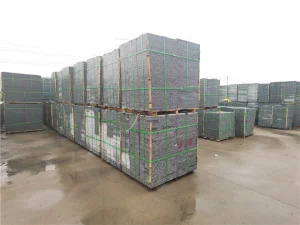
Operating manufacturing and export nodes proximate to Rizhao Port and Qingdao Port enables seamless containerized transport for heavy open-top, flat-rack, and standard dry box shipments. By combining ocean freight logistics with moisture-barrier vacuum packaging and certified fumigated timber A-frames, glass transit breakage rates are kept below 0.05% across transatlantic and transpacific trade lanes.
Integrated Envelope Packages: Glass, Stone & Metal Systems
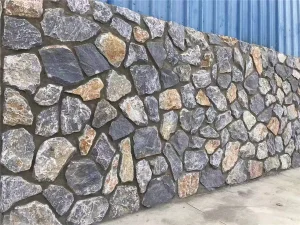
Large mixed-use developments typically suffer project delays caused by mismatched deliveries from disparate specialty subcontractors. Rizhao Haichen Stone bridges this divide by providing bundled architectural envelope packages: factory-direct annealed and tempered laminated safety glass, custom stone facade cladding panels, stainless steel glass spider clamp fittings, and precision-engineered building envelope sub-frames.
Wholesale Stock-Sheet Programs for Local Fabricators
Rather than ordering fabricated panels on a project-by-project basis, regional glass processors maintain wholesale standing container contracts for raw annealed laminated stock sheets (e.g., 6.38 mm [33.1], 8.38 mm [44.1], 10.76 mm [55.2], 12.76 mm [66.2]). This strategic supply chain model optimizes container weight capacity (up to 27,000 kg payload), minimizes per-square-meter freight overhead, and buffers downstream glass shops against float price volatility.
Architectural Specifier & Buyer Questions
Direct, engineering-backed answers addressing the practical, technical, and regulatory considerations of sourcing wholesale annealed laminated glass.
Why choose annealed laminated glass over tempered laminated glass for high-rise acoustic fenestration?
Can annealed laminated glass be cut, scored, or drilled on-site or after manufacturing?
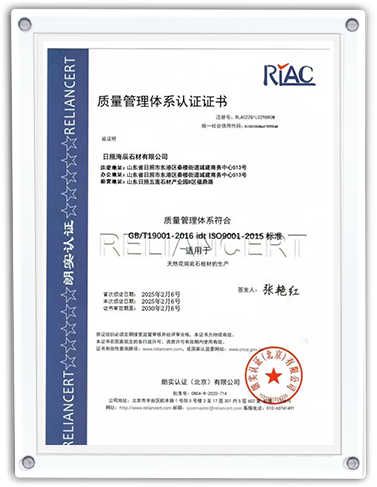
What international quality and safety certifications apply to your laminated glass products?
How do you prevent edge delamination, moisture blush, and haze in humid coastal climates?
What are the standard configurations, sheet sizes, and container loading capacities?
How does Haichen Stone integrate glass and natural stone supply for commercial projects?
Architectural Cladding & Stone Engineering Catalogue
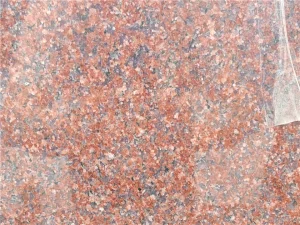
Explore companion exterior granite veneers, flamed paving systems, and structural framing components to complete your comprehensive architectural procurement package.