

Direct Factory Sourcing
Integrated Project Materials: Architectural Subsurface & Surrounds
Precision-milled civil structural cladding, driveway foundational stone, and heavy-duty granite pavers engineered to integrate alongside flush-mounted electric driveway bollard housings.
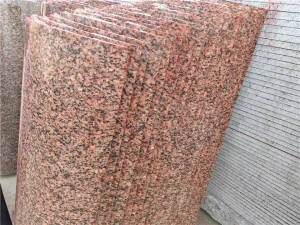
Wholesale G352 General Red Granite Cladding Panels
View Specifications
China Other Colours Granite – Custom Engineering Orders
View Specifications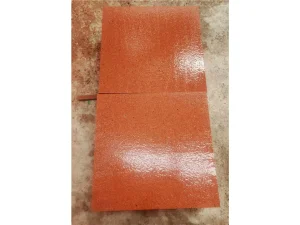
China Premium Chinese Red Granite Raw Structural Blocks
View Specifications
China G6361 Wulianhua Granite for Civil Landscaping
View Specifications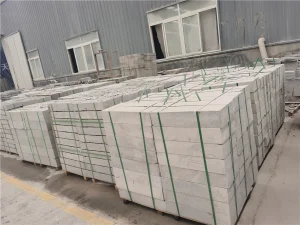
Wholesale Dense Limestone Granite Driveway Surrounds
View Specifications
China G614 Sesame Grey Granite High-Load Slabs & Tiles
View Specifications
Wholesale G386 Shidiao Red Granite Driveway Paver Tiles
View Specifications
Industry Intelligence 2026+
Evolution of Electric Bollard Systems: From Hydraulic Reliance to Electromechanical Precision
Modern driveway perimeter protection has transitioned into a highly synchronized domain combining IoT logic, smart grid micro-actuators, and advanced crash-rated civil metallurgy.
Brushless DC & Direct-Drive Servo Actuation
The global access management sector has predominantly shifted away from legacy hydraulic power units (HPUs) toward integrated 24V/230V brushless DC (BLDC) electro-mechanical drives. These self-contained actuators remove underground hydraulic piping, eliminate ecological fluid leak risks, and deliver ultra-smooth cycles exceeding 1.2 million continuous operations without fluid rebalancing.
- Sub-3.5 second deployment speeds with programmable ramp profiles
- Built-in supercapacitor backup allowing auto-descent during total grid collapse
Civil Engineering: Sub-Grade Foundation & Impact Dissipation
An electric driveway bollard's performance in anti-ram mitigation relies entirely on sub-surface mechanics. Certified impact standards (ASTM F2656, IWA 14-1, and PAS 68) mandate that dynamic kinetic forces transfer seamlessly into reinforced concrete footer slabs rather than shearing the mechanical rising cylinder.
- C30/37 MPa reinforced concrete pads with multi-layered rebar cradles
- Non-shrinking architectural perimeter joints to isolate driveway vibration
IoT Protocol Integration & Edge Security Telemetry
Enterprise procurement now dictates that automatic driveway bollards interface directly with Building Management Systems (BMS). Using encrypted RS-485, CAN-Bus, or IP-based Wiegand controllers, installations natively coordinate with ANPR (Automatic Number Plate Recognition) cameras, inductive vehicle loops, and biometric perimeter access points.
- Real-time telemetry measuring current draw, motor heat, and cycle count
- Over-The-Air (OTA) firmware updating for perimeter control protocols
Smart Manufacturing Ecosystem
China Industry 4.0: Supply Chain Resilience, Scalability & Engineering Agility
The manufacturing infrastructure of China provides unmatched supply chain elasticity. By combining laser-guided precision robotic welding, automated metal finishing, and synchronized stone fabrication, projects achieve cost-efficiencies without compromising micro-tolerances.
End-to-End Vertical Integration: The Cluster Advantage
Specialized industrial clusters in Shandong and coastal economic zones allow component sourcing—from high-tensile 304/316 grade stainless steel seamless tubing to PLC control motherboards and precision stone housings—to occur within a concentrated radius. This geographical synergy eliminates multi-tiered markups, ensures unified batch testing, and reduces delivery lead times by 35% compared to fragmented western supply chains.
Automated fiber-laser cutting stations process bollard wall thicknesses ranging from 6mm up to 25mm with +/-0.1mm dimensional precision. Electrophoretic surface treatments, shot-peening, and fluorocarbon powder-coating facilities operate in compliance with rigorous environmental standards, safeguarding units against soil salinity, cathodic reactions, and sub-surface moisture oxidation.
Technical Specification Matrix
Technical Benchmark: Electric vs. Hydraulic vs. Pneumatic Systems
A specifier’s deep dive into key performance variables to guide procurement directors, urban architects, and physical security engineers across worldwide jurisdictions.
| Evaluation Parameter | Electromechanical Servo (Next-Gen) | Hydraulic Integrated / External HPU | Pneumatic Compressed Air Line |
|---|---|---|---|
| Operating Mechanism | Brushless Motor + Planetary Ball Screw | Hydraulic Pump, Solenoid Valves, Mineral Oil | Central Air Compressor, Piston Cylinders |
| Environmental Risk | Zero Risk (100% Oil-Free Design) | Potential Subsoil Hydrocarbon Contamination | Zero Chemical Leaks; High Noise Pollution |
| Cold Weather Reliability | Direct PTC heating ribbons; -40°C to +70°C | Fluid viscosity thickens; sluggish deployment | Condensation freezes pneumatic control lines |
| Maintenance Overhead | Ultra-Low; self-lubricating dry seal components | Quarterly valve, seal & fluid replacements | Compressor dryer & pipeline drainage checks |
| Emergency Lowering | Fail-Safe supercapacitor / Manual clutch release | Manual relief valve pressure discharge | Pneumatic quick-exhaust manual dump switch |
| Crash Rating Compatibility | Engineered for ASTM M30 to M50 (K4/K12) | Standard for ASTM M30 to M50 (K4/K12) | Typically lower structural ratings (Light Access) |
Deployment Topologies
Worldwide Commercial & Residential Application Architecture
Bollard configurations must adapt both functionally and aesthetically to disparate climatic, regulatory, and urban contexts.
High-End Residential Driveways & Gated Estates
Private luxury estates demand discreet, low-noise access control capable of harmonizing with surrounding masonry and paving. Electric bollards eliminate the loud whine of hydraulic motors, providing whisper-quiet (under 50 dB) extension. When retracted, the upper 316-grade stainless plate aligns seamlessly with adjacent flamed granite or natural stone pavers.
- RFID transponder and Apple HomeKit/BMS residential integration
- Dual safety infrared beams preventing closure on low-chassis hypercars
Corporate Headquarters & Data Center Loading Bays
High-security logistics bays mandate continuous duty cycles with zero thermal shutdowns. Industrial electric bollards utilize heavy-wall structural sleeves (10mm to 16mm thick) capable of deflecting repeated incidental impacts from freight trucks while operating reliably in high-traffic logistics environments.
- Automatic interlock with perimeter security crash barriers & roller gates
- Continuous Duty 100% duty cycle rating under thermal stress
Urban Pedestrian Plazas & Civic Mixed-Use Corridors
Cities globally require flexible zoning where streets switch between pedestrianized shopping walkways and authorized logistics access lanes. Surface-illuminated LED bollards create high-contrast visual demarcations, certified to withstand dynamic urban axle loads while remaining completely flush during pedestrian hours.
- Ultra-bright 360-degree LED warning ring with customizable light modes
- Heavy wheel-load certification up to 40-tonne commercial transport classes
Procurement Clarifications
Frequently Asked Questions: Electric Driveway Bollard Engineering
Critical answers addressing installation, electrical parameters, drainage contingencies, and OEM/ODM customizations for international trade partners.
How do electric driveway bollards handle sub-surface water pooling and flooding?
Leading manufacturers utilize IP68-sealed motor enclosures that maintain hermetic isolation even under continuous submersion. However, standard civil installation design requires a gravity drainage line or a dedicated sump pit backfilled with clean 20mm crushed stone aggregate. In high-water-table regions, integrated 24V submersible bilge pumps or sealed cassette units with drain pumps are specified to evacuate standing water and prevent long-term corrosion.
What occurs during a municipal power outage or grid failure?
High-grade wholesale electric bollards feature multiple fail-safe options. Standard systems incorporate a built-in supercapacitor bank or 24V rechargeable battery backup capable of delivering 10–20 full cycles after power loss. In addition, an accessible manual mechanical clutch release key allows property owners or security personnel to effortlessly lower the bollard manually without special hydraulic tools.
What are the differences between ASTM F2656, PAS 68, and IWA 14-1 certifications?
All three represent standardized physical impact crash tests measuring vehicle mass, approach velocity, and post-impact penetration. ASTM F2656 (US standard) rates barriers according to M-ratings (e.g., M30 = 15,000 lb medium-duty truck at 30 mph; M50 = 50 mph). PAS 68 (British standard) and IWA 14-1 (International Workshop Agreement) utilize comparable metrics with slight variations in impactor vehicle types and penetration datum points. High-security Chinese manufacturing lines routinely supply customized steel assemblies with internal anti-ram cores engineered to meet these precise energy absorption thresholds (up to 1,800–2,000 kJ).
How does the surrounding architectural stone and driveway apron integrate with bollard installation?
The foundation requires a dual-pour civil structure: a primary reinforced C35 concrete anchor block holding the bollard outer casing, topped by a bedding mortar layer matching the driveway paver thickness. Using non-shrink, high-early-strength grout around the bollard top flange eliminates settlement cracks. Premium dense granite paving stones or granite kerbs (such as Sesame Grey or Shandong Red) are positioned flush against the steel housing with an expansion seal to absorb vehicular impact vibration without spalling the stone edges.
What are typical minimum order quantities (MOQ) and lead times for OEM/ODM factory production?
For standard electric bollard models (219mm diameter, 600mm–800mm rise height, 304 stainless steel), production lead times typically range from 15 to 20 business days with MOQs starting at 2 to 4 units. Custom architectural designs—incorporating specialized LED illumination sequences, 316 marine-grade finishes, custom RAL powder-coating, or proprietary PLC protocol boards—normally run on a 25–35 day schedule for standard 20ft container quantities, complete with sea freight crating.
What maintenance routine is mandatory to sustain a 1-million cycle life?
Because electromechanical actuators contain no hydraulic oil, routine maintenance is minimal. Recommended protocols involve semi-annual debris clearance from the guide tracks, checking sub-surface drain channels for silt accumulation, wiping the stainless cylinder with an anti-passivation cleaner, and applying dry silicone or PTFE spray to internal sliding bushings. Motor telemetry can be monitored remotely via RS-485 to observe any amp draw abnormalities.
Export Supply Catalog
Complementary Driveway Infrastructure & High-Load Kerb Elements
Direct quarry-to-port manufactured natural granite products engineered to withstand maximum axle loads adjacent to automatic entrance management bollards.

China G3743 Lu Grey Granite Building Stone
View Specifications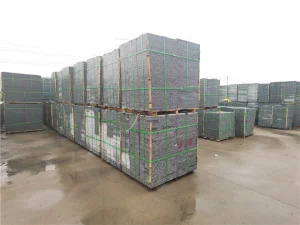
China G3702 Snowflake Blue Granite Paving Systems
View Specifications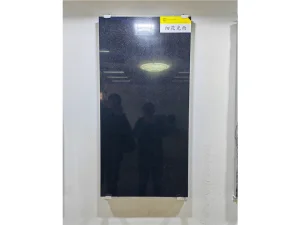
China G3401 Shanxi Black Granite High-Density Slabs
View Specifications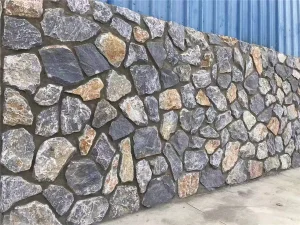
Wholesale Chinese Culture Granite Precision Sawn Blocks
View Specifications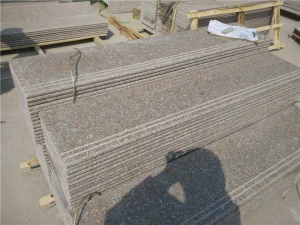
Wholesale G368 Wulian Red Granite Driveway Paving Stones
View Specifications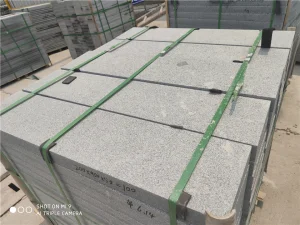
China G654 Sesame Grey Granite Anti-Slip Flamed Finish
View Specifications
Wholesale G682 Yellow Rust Granite Heavy-Duty Pavers
View Specifications