Direct From Production Line
Engineered Architectural Series: Group 01
High-load structural panels, laminated safety units, and dense cladding systems precision-machined to ISO, CE, and ASTM specifications.

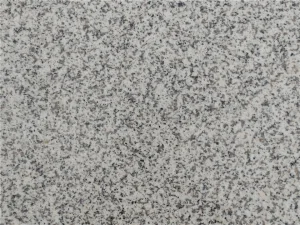
China G4101 Forest Green Granite Veneer Panels Supplier, Factories
View Product Spec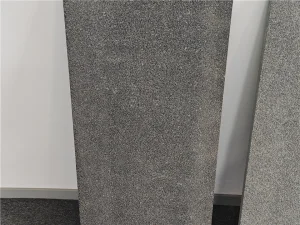
Wholesale G684 Fuding Black Granite Factories, Factory
View Product Spec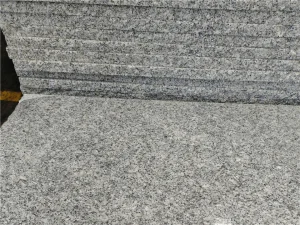
Wholesale G602 Sesame White Granite Manufacturer, Supplier
View Product Spec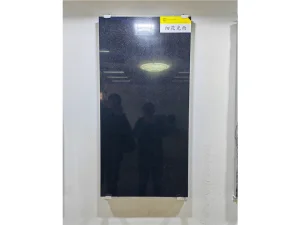
China G3401 Shanxi Black Granite Manufacturer, Factory
View Product Spec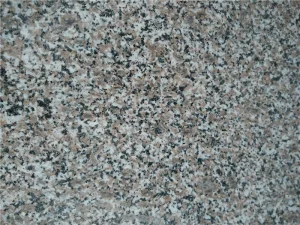
China Other Colours Granite – Custom Orders Manufacturers, Factories
View Product Spec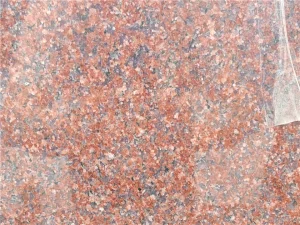
Wholesale G386 Shidiao Red Granite Tiles Manufacturers, Suppliers
View Product Spec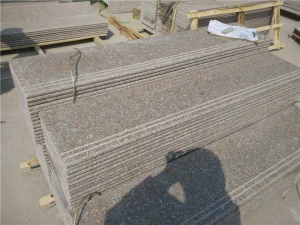
Wholesale G368 Wulian Red Granite Paving Stones Supplier, Suppliers
View Product Spec
Technical Analysis
Industrial Dynamics & Sourcing Paradigms
How modern building envelopes leverage laminated float glass to combine blast mitigation, acoustic dampening, and rigorous thermal standards under strict carbon reduction policies.
Structural Resilience & Interlayer Mechanics
Laminated float glass replaces monolithic glazing across overhead canopies, spider-cladding, and public floors. Interleaving annealed or tempered float panes with Polyvinyl Butyral (PVB) or SentryGlas® (SGP) creates an elastomeric composite. Under violent mechanical rupture, the interlayer retains glass fragments, resisting total envelope penetration and minimizing human injury.
Thermal & Acoustic Decoupling Performance
By pairing low-iron float substructures with spectrally selective soft-coatings and sound-attenuation PVB interlayers, architectural assemblies achieve Sound Transmission Class (STC) ratings exceeding 42 dB while preserving a low Solar Heat Gain Coefficient (SHGC ≤ 0.28). This minimizes climate-control energy consumption in high-rise towers.
Consolidated Turnkey Procurement
Cross-functional developers eliminate procurement bottlenecks by bundling exterior glazing with supplementary natural stone spandrels, structural steel mullions, and custom architectural clamp fittings. Single-source coordination eliminates dimensional conflicts between glass lites and facade anchoring channels.
Comprehensive Solutions
Industrial Turnkey Enclosure Packages
From single custom prototypes to mega-scale port-side industrial runs, we resolve facade engineering challenges across diverse climatic and architectural demands.
Curtain Wall Facades
Double-laminated insulated glass units (DGU/IGU) paired with structural silicone glazing (SSG) withstand positive and negative wind loads up to 5.0 kPa in coastal hurricane zones.
Overhead Canopies & Skylights
Reinforced SGP ionoplast laminates maintain residual load-bearing capacity even after dual glass fracture, meeting overhead glazing safety codes without deflection sagging.
Acoustic Balustrades
High-modulus laminated glass panels eliminate external baseline noise in urban multi-family residential projects while preserving unhindered sightlines and structural containment.
High-Security Enclosures
Multi-layer bullet-resistant and blast-mitigating configurations constructed per EN 1063 and UL 752 protect critical embassy, bank, and commercial installations.
Engineering Matrix
Laminated Float Glass Specification Standards
Rigorous baseline parameters applied across high-performance architectural glass manufacturing lines.
| Performance Parameter | Standard Specification Range | Test Methodology | Primary Industrial Application |
|---|---|---|---|
| Glass Substrate Configurations | Clear Float, Ultra-Clear (Low-Iron), Tinted, Low-E Coated | ASTM C1036 / EN 572-2 | Commercial facades, retail displays, structural glass walls |
| Interlayer Types & Calipers | PVB (0.38mm to 2.28mm), SGP / Ionoplast (0.89mm, 1.52mm), EVA | ASTM C1172 / ISO 12543 | Blast resistance, hurricane protection, overhead canopies |
| Visible Light Transmittance (VLT) | 68% – 89% (Dependent on low-iron ratio and coatings) | NFRC 300 / EN 410 | Museum glazing, panoramic storefronts, interior partitions |
| Acoustic Attenuation (Rw / STC) | 35 dB to 48 dB (Acoustic grade acoustic PVB lamination) | ASTM E90 / ISO 717-1 | Airport terminal envelopes, urban residential building enclosures |
| Thermal Transmittance (U-Value) | 1.1 – 1.6 W/m²·K (When configured within double-glazed IGUs) | EN 673 / ASTM C1363 | Zero-carbon projects, energy-efficient LEED certified buildings |
| Edge Processing Quality | Arrissed, Flat Polished, CNC Ground, Mitred (Custom angles) | DIN 1249 / EN 12150 | Exposed structural balustrades, spider-fitting point fixings |
Trust & Provenance
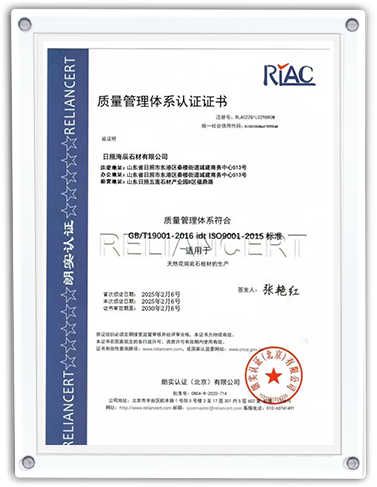
Localized Compliance & Quality Control
From clean-room PVB lamination to rigorous cross-border freight packaging, we eliminate commercial friction across overseas shipping routes.
Global Certification Audits
Manufacturing protocols comply with CE EN 14449 (Laminated Safety Glass), ANSI Z97.1, CPSC 16 CFR 1201 (Impact Standards), and AS/NZS 2208. Third-party testing records accompany each exported batch.
Port-Factory Shipping Synergy
Located near Rizhao Port and Qingdao Port, shipments bypass complex inland logistics. Heavy containers are loaded inside the facility onto fumigated steel-capped timber frames to eliminate transit micro-fractures.
Site Installation Engineering
We provide structural glass finite element analysis (FEA), shop drawings, wind-load simulation modeling, and numbered installation layouts to accelerate site installation for local contractors.
Future Vision
Technological Roadmap: Next-Gen Glazing
Our ongoing investments in autonomous autoclave controls, photovoltaic functional lamination, and active thermal management.
PHASE 01 • REFINED AUTOMATION
AI Optical Flaw Inspection
Deployment of sub-millimeter high-speed multi-camera scanning inline with float autoclaves to detect tin-side variance, micro-bubbles, and roller wave distortion in real time.
PHASE 02 • ADVANCED BIPV
BIPV PVB Encapsulation
Integrating semi-transparent thin-film photovoltaic layers directly inside laminated float packages to turn building envelopes into renewable solar collectors.
PHASE 03 • DYNAMIC TINTING
Smart Electrochromic Units
Incorporation of conductive interlayers and PDLC switchable liquid crystal films, enabling real-time privacy and solar heat gain control via automated BMS protocols.
PHASE 04 • CARBON ZERO
Low-Carbon Float Matrix
Transitioning toward hydrogen-fired and electric-arc float glass furnaces, providing high-performance architectural lites with up to 45% reduced embodied carbon.
Direct From Production Line
Engineered Architectural Series: Group 02
Complementary facade cladding panels, decorative stone accents, and specialized architectural elements available for consolidated ocean freight dispatch.
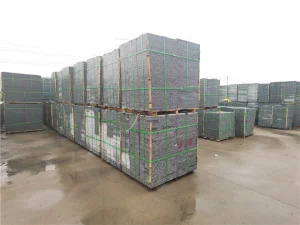
China G3702 Snowflake Blue Granite Manufacturers, Supplier
View Product Spec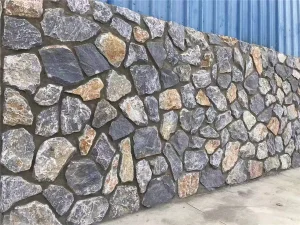
Wholesale Chinese Culture Granite: Stone Chronicles a Millennium, Artistry Inherits the Orient Manufacturer, Suppliers
View Product Spec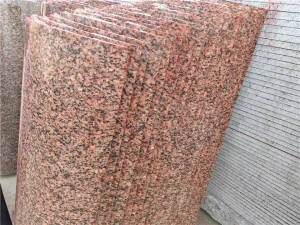
Wholesale G352 General Red Granite Cladding Panels Manufacturers, Factories
View Product Spec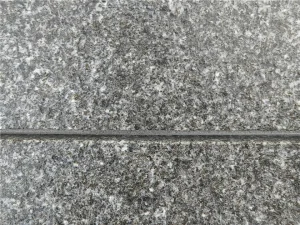
China G3701 Binzhou Blue Granite Suppliers, Factory
View Product Spec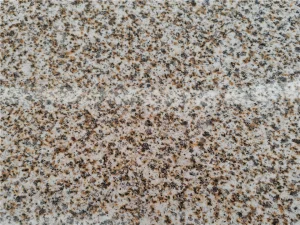
Wholesale G682 Yellow Rust Granite for Paving Suppliers, Factories
View Product Spec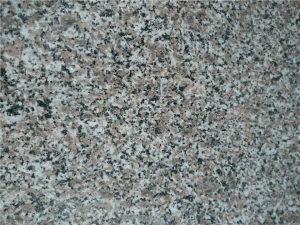
China G6361 Wulianhua Granite for Landscaping Manufacturer, Factories
View Product Spec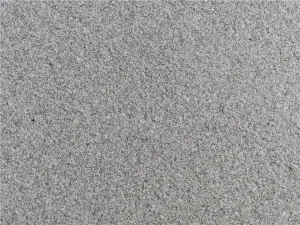
China G614 Sesame Grey Granite Slabs & Tiles Supplier, Suppliers
View Product Spec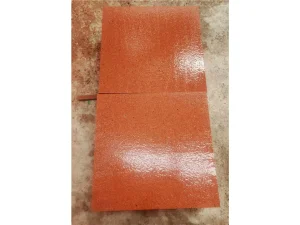
China Premium Chinese Red Granite Blocks Supplier, Suppliers
View Product Spec
Direct Procurement Q&A
Frequently Asked Questions
Clear, technical insights addressing manufacturing specs, compliance standards, and international logistics for project specifiers.
What sets industrial laminated float glass apart from standard monolithic float glass?
Monolithic float glass breaks into dangerous, sharp shards upon impact and leaves building openings unprotected. In contrast, laminated float glass joins two or more float glass panes with an engineered resin interlayer (PVB, EVA, or SGP) via high-pressure autoclave curing. When broken, glass fragments stay bonded to the interlayer, preserving building envelope integrity, resisting fall-through, and delivering superior acoustic dampening and UV screening (>99%).
When should SentryGlas® (SGP) interlayers be specified instead of standard PVB?
SGP (ionoplast) provides five times the tear strength and nearly 100 times the rigidity of conventional PVB interlayers. It is ideal for open-edge balustrades, overhead glass canopies, hurricane-resistant facades, and security-rated storefronts. In point-supported structural spider systems, SGP prevents panel sag even if both glass plies suffer mechanical damage.
How does the factory control quality, edge delamination, and optical distortion?
Our facilities operate ISO 14644-1 Class 7 clean rooms for interlayer placement, maintaining strict temperature and humidity controls to stop moisture contamination. We use multi-stage autoclaves to eliminate vacuum anomalies, and utilize CNC multi-head diamond wheels for edge grinding to prevent micro-fractures and delamination along perimeter seals.
Can buyers combine natural stone cladding with glass facade products in single shipments?
Yes. Rizhao Haichen Stone manages deep regional granite operations and comprehensive architectural building envelopes, allowing customers to bundle glass clamp fittings, structural steel, stone cladding slabs, and laminated float glass into consolidated FCL containers. This single-point export structure lowers shipping costs by up to 30% and keeps project delivery schedules aligned.
What international compliance certifications are provided with export orders?
Our glass products undergo formal third-party testing and carry CE documentation (EN 14449, EN 12150), ANSI Z97.1 impact verification for North America, SGCC certification, and AS/NZS 2208 safety glazing compliance for Oceania. Detailed inspection test plans (ITP), optical quality records, and fumigation certificates ship alongside the commercial documentation.
What are the factory's standard production lead times and FOB/CIF arrangements?
Standard cut-to-size laminated orders typically process within 14 to 21 business days. Proximity to Rizhao Port and Qingdao Port gives our factory quick maritime access to key routes across North America, Europe, Australia, and the Middle East, with standard Incoterms supported including FOB, CFR, CIF, and DDU.
Engineer Your Next Façade Project With Precision
Get in touch with our engineering team for technical drawings, finite element glass stress analyses, physical sample kits, and direct factory container pricing.