High-Spec Structural Architectural Materials & Precision Assemblies
Explore our export-ready architectural components, engineered for load-bearing durability, unmatched optical neutrality, and seamless integration into modern curtain walls, high-rise envelopes, and commercial infrastructure.
The Science of Extra-Clear Laminated Glass: Optical Fidelity Meets Structural Safety
A rigorous examination of low-iron float glass substrates, ferric oxide (Fe₂O₃) purification thresholds, photopic transmittance, and modern composite lamination under catastrophic load scenarios.
Ferric Oxide Reduction ≥ 90%
Standard architectural clear float glass contains approximately 0.1% (1000 ppm) ferric oxide, imparting an unmistakable greenish hue that intensifies exponentially as glass plies multiply. Low-iron glass (opti-white or extra-clear) refines raw silica sand using magnetic and chemical flotation, depressing Fe₂O₃ levels below 0.01% (100 ppm). This eliminates chromatic distortion in multi-ply laminated build-ups.
Visible Light Transmittance (VLT > 91%)
By eradicating the greenish absorption band across the 380–780 nm spectrum, low-iron laminated panels achieve single-lite visible light transmittance exceeding 91.5% and composite laminated multi-lites maintaining up to 89.5% photopic clarity. The result is authentic color rendering index (CRI > 98.5), vital for high-end boutique facades, luxury retail storefronts, and museum-grade display vitrines.
Post-Breakage Residual Cohesion
Unlike monolithic tempered glass which shatters abruptly into uncontained dice, laminated low-iron glass relies on elastomeric polymeric interlayers (PVB or SGP ionoplast) to adhere fractured fragments mechanically. The panel maintains diaphragm stiffness, preventing envelope breach, falling debris hazards, and immediate atmospheric water penetration even when both outer glass lites fracture.
Substrate & Interlayer Performance Benchmark
Comprehensive engineering matrix comparing traditional clear laminated configurations against advanced low-iron SGP and acoustic PVB composites.
| Glazing System Profile | Visible Light Transmittance (VLT %) | Solar Heat Gain (SHGC) | U-Factor (W/m²·K Center of Glass) | Post-Fracture Load Capacity | Acoustic Attenuation (Rw / STC) |
|---|---|---|---|---|---|
| Standard Clear Lami (6mm + 1.52 PVB + 6mm) | 84.5% (Pronounced green hue) | 0.72 | 5.4 | Flexible sag, minimal residual moment | 36 dB / STC 37 |
| Low-Iron PVB (6mm Low-Iron + 1.52 PVB + 6mm Low-Iron) | 89.8% (Neutral daylight tone) | 0.79 | 5.4 | Flexible sag, safe fragment cohesion | 37 dB / STC 38 |
| Acoustic Low-Iron (6mm Low-Iron + 0.76 Sound PVB + 6mm) | 90.2% (Acoustically tuned core) | 0.78 | 5.3 | High dampening, elastic fracture retention | 40 dB / STC 41 |
| Structural SGP Low-Iron (10mm Low-Iron + 1.52 SGP + 10mm) | 89.2% (Optically absolute edge) | 0.76 | 5.1 | Rigid plate action, sustains design wind load | 39 dB / STC 40 |
| Triple Low-Iron DGU Laminated (8mm Low-Iron + 1.52 SGP + 8mm + 16Ar + 8mm Low-E) | 74.6% (Supreme energy performance) | 0.31 | 1.1 | Severe impact, hurricane & blast rated | 46 dB / STC 47 |
Interlayer Metallurgy & Viscoelastic Thermodynamics
Selecting the precise polymer formulation dictates whether your low-iron glass assembly functions as an acoustic barrier, an aesthetic transparent balustrade, or an impact-resistant bomb blast mitigation envelope.
Standard Polyvinyl Butyral (PVB)
Plasticized high-molecular-weight resin characterized by exceptional tensile elongation (> 250%) and high ultraviolet attenuation (> 99% UV blockage below 380 nm). Ideal for interior partition screens, general overhead canopies with continuous four-sided framing, and acoustic curtain wall vision panels where structural shear coupling is secondary to impact energy dissipation.
SentryGlas® (SGP) Ionoplast
Rigid ionoplast interlayer engineered with cross-linked ionic interchain bonding. Delivers 100 times the mechanical stiffness and 5 times the tear resistance of standard PVB. In low-iron balustrades and point-supported glass fins, SGP eliminates edge creep and ensures post-breakage load-carrying capacity under heavy wind-load and pedestrian crowds without collapsing.
Acoustic Tri-Layer PVB (SC Core)
Three-layer co-extruded configuration comprising two outer semi-rigid PVB skins sandwiching an ultra-soft, viscoelastic elastomeric central damping core. This breaks acoustic resonance frequency troughs (coincidence dips) between 1,000 Hz and 4,000 Hz, mitigating highway noise, aviation hum, and urban acoustic pressure without compromising low-iron optical purity.
Silica Flotation & Refinement
Electro-magnetic beneficiation reduces crystalline iron oxides down to <95 ppm. Continuous spectrophotometric titration monitors melt viscosity and batch stability in natural gas fired regenerative tank furnaces.
Thermal Toughening & HST
Dual-chamber convection furnaces yield surface compression ≥ 100 MPa with minimal roller wave distortion (< 0.05 mm/300 mm). Mandatory automated Heat Soak Testing (HST EN 14179) eradicates nickel sulfide (NiS) inclusion risks.
ISO Class 7 Clean Lamination
Interlayer placement takes place at constant temperature (20±2°C) and relative humidity (25–30% RH) under laminar flow air filtration, followed by progressive 13.5 bar pneumatic autoclave bonding cycles up to 143°C.
Chinese Industrial Manufacturing: Resilient Supply Chains & Scale Economics
How state-of-the-art Chinese glass processing facilities combine deep raw material integration, robotics, and lean automated workflows to deliver uncompromising international tier-1 facade packages.
Automated Inline Laser Metrology & Quality Control
From jumbo stock sheet loading (sizes up to 3,660 mm × 18,000 mm) down to the final packaging line, our automated robotic cutting tables utilize high-resolution optical scanning cameras. These detect glass edge micro-fissures, bubbles (> 0.2 mm), and foreign dust particles in real-time. Automated diamond wheel multi-axis double-edging machines deliver high-polish flat arrissed edges with zero chipped corners, ensuring optimal perimeter bonding.
Integrated Harbor Hubs & Deep-Water Sea Freight
Situated within direct arterial proximity to global container mega-ports (including Qingdao Port, Rizhao Port, and Ningbo-Zhoushan), Chinese manufacturing hubs slash inland trucking transit times to under 12 hours. Factory-direct crane loading of seaworthy fumigated steel A-frames and moisture-sealed plywood crates guarantees zero moisture ingress, zero interlayer salt-fog clouding, and reliable just-in-time delivery for high-stakes urban job sites.
Substrate Traceability
Full digital barcode tracking links every single cut lite back to its float furnace melt batch, furnace annealing temperature logs, and raw quartz ore source certificates.
Autoclave Thermodynamic Control
Programmable 18-channel temperature probes verify uniform thermodynamic heat distribution inside 3.3m × 8m autoclaves, preventing edge delamination in multi-ply laminated glass.
Custom Structural Fabrication
Equipped with high-precision 5-axis CNC waterjet cutting centers, countersunk CNC edge-drilling, and ceramic frit silk-screen printing for bird-safe and solar control dot matrixes.
Engineering Solutions for High-Performance Enclosures
Architects, facade engineers, and master builders deploy low-iron laminated systems across high-performance building envelopes where aesthetic transparency must co-exist with catastrophic life-safety mandates.
Structural Glass Fins & Mullions
Full-height suspended glass facades demand uninterrupted views without steel mullions. Multi-ply low-iron laminated fins (e.g., 12mm Low Iron + 1.52 SGP + 12mm Low Iron + 1.52 SGP + 12mm Low Iron) bear wind pressures and lateral buckling stresses without greenish edge distortion.
Balustrades & Cantilevered Railings
Dry-glazed frameless balustrade systems rely on structural SGP laminated low-iron glass to resist line-load crowd impact (up to 3.0 kN/m per IBC and EN 1991). The panels withstand weather exposure with open edges, exhibiting zero polymer yellowing or delamination.
Overhead Skylights & Canopies
Mandated by international building codes to utilize laminated safety glass on slopes > 15°. Low-iron compositions maximize natural solar daylighting for LEED and WELL certified interiors while retaining cracked shards safely suspended above occupants.
High-Security & Blast Mitigation
Engineered multi-layer polycarbonate and low-iron glass laminates absorb bullet ballistic velocity (EN 1063 BR1-BR7) and explosive shock waves (ASTM F1642 / ISO 16933) for embassies, data centers, and critical government infrastructure without compromising facade elegance.
Global Standards Compliance, Testing & Rigorous Due Diligence
Our laminated architectural glass assemblies undergo exhaustive destructive and non-destructive laboratory testing to satisfy stringent building authority codes across North America, the European Union, Australia, and the Middle East.
North American Standards
Fully compliant and certified under SGCC (Safety Glazing Certification Council) per ANSI Z97.1-2015 and CPSC 16 CFR 1201 for Category II human impact safety. Fabricated in complete alignment with ASTM C1172 for architectural laminated float glass and ASTM E1300 for structural load resistance.
European Union Standards
Carries factory CE marking certified under EN 14449 (Laminated Safety Glass Evaluation of Conformity) and EN 12600 pendulum drop impact test Class 1(B)1. Heat-strengthened components certified to EN 1863; thermal toughening complies with EN 12150 and EN 14179 (HST).
Australasian & Gulf Standards
Certified under AS/NZS 2208:1996 safety glazing standards for Australia and New Zealand, alongside compliance with UAE Civil Defense fire & impact codes, and Saudi SASO conformity assessments for extreme high-ambient UV and thermal-shock climates.
Logistics Fortification & Jobsite Protection Protocols
Every consignment of laminated low-iron glass is packaged for zero damage. Panels are coated with anti-scratch protective polymeric PE peel-off films or dusted with non-reactive Lucite interleaving powder. Glass sheets are packed upright in ISPM-15 certified heat-treated solid timber cases or custom heavy-duty reusable steel containers with rubber isolation cushions. Desiccant packets inside shrink-wrapped packaging prevent humidity entrapment, ensuring crystal-clear, unblemished edges upon site unpacking.
The Next Horizon: Smart Glazing, BIPV & Vacuum-Laminated Hybrids
Explore how forward-looking R&D is merging ultra-clear laminated glass with functional nanomaterials, electrochromic dynamic daylighting, and carbon-negative building skins.
BIPV Photovoltaic Laminates
By using extra-clear low-iron float glass as the front facing sheet, Building-Integrated Photovoltaic (BIPV) laminates allow maximum photon capture to reach internal monocrystalline silicon cells, increasing overall energy conversion efficiency by 3.5% to 5.0% compared to standard float glass.
Dynamic Electrochromic (EC) Integration
Integrating tungsten oxide (WO₃) solid-state electrochromic nanocoatings directly within low-iron laminated panels enables automated electronic tinting. The envelope modulates solar heat gain from SHGC 0.45 down to 0.09 in seconds, slashing cooling HVAC loads while preserving panoramic natural view transparency.
Vacuum-Insulated Laminated Composites (VIG)
Combining a low-iron laminated external safety ply with a hermetically sealed 0.15 mm vacuum cavity insulated glass unit creates an ultra-slim facade panel delivering center-of-glass thermal insulation of U ≤ 0.48 W/m²·K (R-12), matching passive house performance within a 24 mm envelope profile.
Comprehensive Product Assemblies & Specialized Surface Treatments
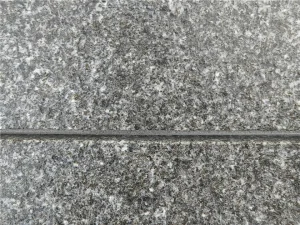
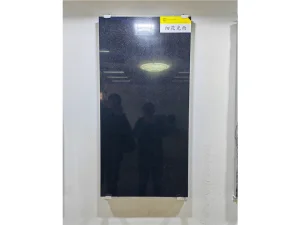
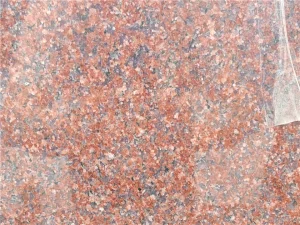
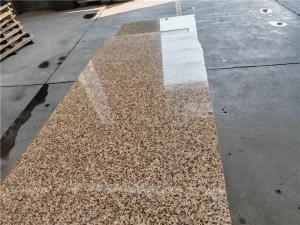
Review additional precision stone and architectural envelope systems fabricated to precise project tolerances, complete with end-to-end global project logistics support.
Frequently Asked Questions: Technical & Sourcing Intelligence
In-depth responses compiled by our senior facade engineers and factory operations team for procurement managers, structural consultants, and architects.
What is the exact chemical difference between low-iron and standard clear float glass?
The distinction lies primarily in the parts-per-million concentration of ferric oxide (Fe₂O₃). Standard float glass typically has ~1,000 ppm (0.1%), causing an emerald green tint noticeable on edges and across thick laminates. Low-iron glass restricts Fe₂O₃ to under 100 ppm (<0.01%), ensuring maximum photopic transparency and neutral chromatic fidelity.
Why is SentryGlas (SGP) preferred over standard PVB for exterior structural glass balustrades?
SentryGlas ionoplast is roughly 100 times stiffer and possesses 5 times the tear resistance of standard PVB. In point-fixed or bottom-clamped cantilevered railings with exposed edges, PVB absorbs ambient moisture over time, leading to edge clouding or delamination. SGP resists moisture and preserves high structural shear coupling, maintaining upright panel cohesion even if fractured.
How does Heat Soak Testing (HST) prevent spontaneous breakage in fully tempered glass?
Fully tempered glass can occasionally contain trace Nickel Sulfide (NiS) micro-inclusions that slowly transition from an alpha to beta phase, expanding by 2–4% and triggering spontaneous fracture. Heat Soak Testing (per EN 14179) subjects tempered glass to 290±10°C for several hours in a calibrated chamber, accelerating any potential NiS expansion to eliminate compromised panes at the factory.
What acoustic performance advantages does acoustic laminated low-iron glass provide?
Monolithic glass panels suffer from a sharp drop in sound insulation at their coincidence frequency (critical resonance dip, typically between 1,200 and 2,500 Hz). Specialized acoustic PVB features a targeted viscoelastic damping core that dissipates sound wave shear energy, boosting Sound Transmission Class (STC) ratings by 3 to 5 dB over standard PVB laminates.
What is the maximum jumbo panel size achievable for laminated low-iron architectural glass?
Our intelligent factory lines support custom architectural jumbo dimensions up to 3,660 mm wide by 18,000 mm long, incorporating multi-ply configurations such as 15mm Low-Iron + 3.04 SGP + 15mm Low-Iron. Oversized panels undergo automated edge grinding, double-furnace horizontal convection tempering, and autoclave bonding with tight roller-wave controls.
How do you guarantee color uniformity across multi-phase, large-scale curtain wall deliveries?
Color shifts can occur if raw glass substrates originate from different float lines. We mitigate this through single-source raw batch float allocation, spectrophotometer baseline testing (measuring Delta E* < 0.5 under CIE D65 illuminant), and strict production lot tracking so all lites across all phases maintain identical optical characteristics.