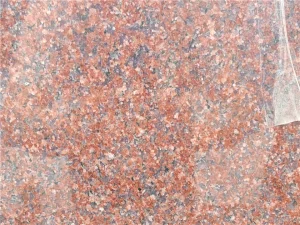
Direct Quarry Allocation
Architectural Veneer & Granite Matrix — Top Selections
Direct-from-source dimensional cut slabs, split-faced ledge stones, and engineered natural stone veneer panels designed to withstand severe thermal variations and structural loading.
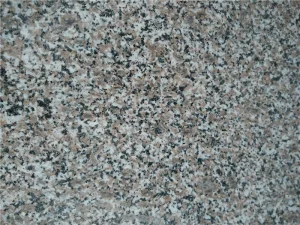
China Other Colours Granite – Custom Orders
View Product Specifications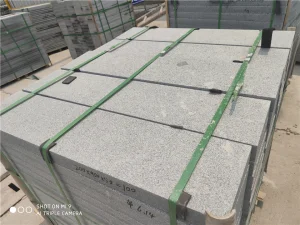
China G654 Sesame Grey Granite Flamed Finish
View Product Specifications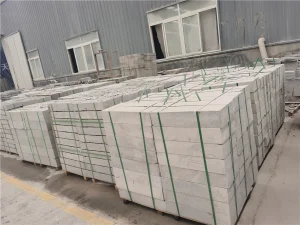
Wholesale Limestone Granite: Nature's Dual Gift
View Product Specifications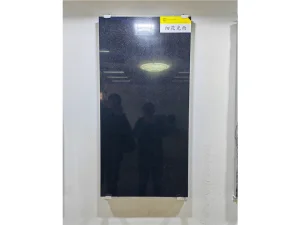
China G3401 Shanxi Black Granite Manufacturer
View Product Specifications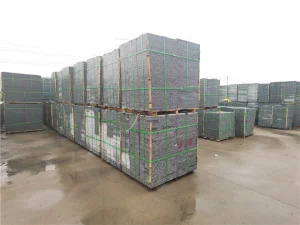
China G3702 Snowflake Blue Granite
View Product Specifications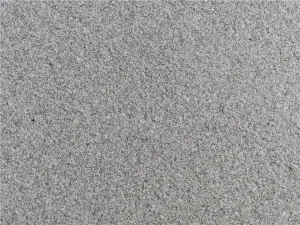
China G614 Sesame Grey Granite Slabs & Tiles
View Product Specifications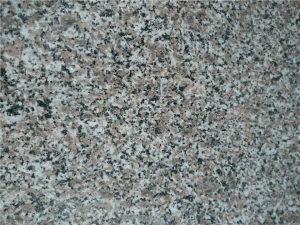
China G6361 Wulianhua Granite for Landscaping
View Product Specifications
Macro Market Analysis
Global Commercial Landscapes & Industrial Demand Dynamics
Natural stone veneers, particularly split-face ledgestones, are shifting from artisanal residential applications toward mission-critical commercial building envelopes, bio-climatic facades, and high-footfall municipal infrastructures.
Modern Architectural Façade Engineering
Global architectural trends in North America and Western Europe demonstrate a dramatic shift away from synthetic polyurethane veneers toward A1 non-combustible natural ledgestone. The tightening of building fire safety regulations (such as BS EN 13501-1 and NFPA 285) requires exterior building skins to provide total fire resistance without toxic particulate emissions during structural ignition events.
Commercial Multi-Unit Hospitality
Developers are utilizing natural ledgestone veneers for acoustic dampening, ambient thermal buffer zones, and tactile luxury aesthetics. Panels engineered with z-shaped interlocking geometries drastically lower labor installation costs by up to 45% compared to manual stone masonry, enabling scalable deployment across high-rise resort developments and commercial plazas.
Sustainable Life-Cycle Cost Reduction
Natural granite and quartzite veneers exhibit negligible life-cycle degradation. Unlike precast cementitious faux stone that suffers from aggregate bleaching and matrix spalling after freeze-thaw cycles, quarry-derived ledgestone achieves a functional life span exceeding 75 years with zero chemical maintenance, directly optimizing LEED and BREEAM green ratings.
Production Hegemony
China Quarry-Direct Scalability & Integrated Resilience
Operating directly within the Rizhao Stone Industrial Park, our vertically consolidated manufacturing model dissolves the typical supply chain bottlenecks faced by international stone buyers.
Quarry Block Securitization
We extract raw granite and quartz blocks directly from proprietary mineral veins in Shandong. This ensures chromatic uniformity across consecutive 100,000 m² delivery phases, eliminating the color batch discrepancies common among regional trading intermediaries.
Automated Splitting & Sizing
By implementing multi-blade gang saws and laser-guided hydraulic hydraulic splitting units, fabrication capacity is elevated by 50%. Panel thickness tolerance is locked within ±1.0 mm, ensuring flush mechanical interlocking for fast on-site cladding.
Deep Quality Verification
Every batch of thin stone veneer undergoes laboratory testing for water absorption, flexural elasticity, and compressive modulus. Full dry-lay inspections occur prior to crating to ensure harmonious face blending and rapid jobsite layout verification.
Dual-Port Strategic Logistics
Our processing centers are located adjacent to both Rizhao Port and Qingdao Port. This proximity eliminates excessive domestic haulage, reducing freight carbon emissions and cutting port handling fees by approximately 30%.
10+
Years of Stone Fabrication
Quarry-to-Project Direct Track
1000+
Global Delivered Projects
Spanning Europe, NA, & Middle East
99.8%
Batch Pass Rating
Rigid Third-Party Audit Conformance
<0.1%
Post-Dispatch Claims
Full Structural Assurance Protocol
Targeted Engineering Scenarios
Localized Architectural Scenarios & Cladding Implementations
Deploying ledgestone stone veneer demands strict compatibility with local climatic stresses, base substrate movements, and structural loading requirements.
High-Altitude Freeze-Thaw Environments
In regions like Scandinavia, Canada, and Northern USA, moisture entrapment within exterior masonry causes panel detachment during seasonal freezing. Haichen’s ledgestone veneer relies on dense crystalline granites (e.g., G654, G603) paired with hydrophobic backings. With an absorption rate ≤ 0.4%, frost-wedging failure is eradicated.
Hyper-Arid Thermal Expansion Zones
For installations throughout the Middle East and Southwest USA, facade skins experience daily surface temperature differentials up to 50°C. Our thin-cut veneer panels are fabricated to pair with polymer-modified thixotropic thin-set mortars (C2TES1 standard), accommodating substrate shear movements without panel delamination or micro-fracturing.
Coastal Salt-Air Marine Envelopes
Marine environments rapidly pit soft limestones and degrade cement-bonded cast aggregates. Utilizing silicious granites such as G3401 Shanxi Black and G3760 Shandong White, our veneers remain completely inert to airborne sodium chloride crystallization, preventing efflorescence, face leaching, and surface scaling.
Material Performance Benchmarks
Ledgestone & Granite Technical Reference Matrix
Standardized engineering values for structural engineers, project specifiers, and facade planners. Tested according to international ASTM and EN standards.
| Material Designation | Geological Composition | Standard Finishing | Bulk Density (ASTM C97) | Compressive Strength (ASTM C170) | Water Absorption (ASTM C97) | Primary Specifications |
|---|---|---|---|---|---|---|
| G654 Sesame Black | Fine-grained Quartz Diorite | Natural Split / Flamed / Honed | 2,680 kg/m³ | 215 MPa | 0.18% | Exterior Curtainwall, Water Features, Low-Pedestal Veneer |
| G603 Sesame White | Biotite Granite Matrix | Natural Rock Face / Bush-Hammered | 2,620 kg/m³ | 168 MPa | 0.28% | Commercial Portals, Municipal Plazas, Retaining Walls |
| G3760 Shandong White | Calcite-Doped Granite | Rock-Split / Brushed / Honed | 2,610 kg/m³ | 154 MPa | 0.22% | Hospitality Feature Walls, High-End Residential Cladding |
| G3401 Shanxi Black | Diabase Plutonic Rock | Polished / Chiseled / Split Face | 3,050 kg/m³ | 265 MPa | 0.08% | Architectural Monoliths, Structural Base Facades, Marine Skins |
| Interlocking Ledgestone | Consolidated Quartz / Granite | Rough Natural Split, Z-Cut Panel | 2,580 kg/m³ | 180 MPa | 0.32% | Rapid-Assembly Exterior Veneer, Fireplace Surrounds |
Technological Roadmap
Manufacturing Innovation: The Next Generation of Stone Veneer
Transitioning from traditional masonry methods into lightweight composite veneers, automated robotic cutting, and algorithmic panel optimization.
Ultra-Thin Honeycomb Backing Integration
Our forthcoming fabrication lines incorporate 5mm natural stone ledgestone veneer vacuum-bonded to aeronautical aluminum honeycomb backings. This composite system reduces cladding dead-load by up to 70% (down to ~15 kg/m²), enabling seismic retrofits and curtainwall installations where traditional heavyweight masonry is prohibited.
AI-Assisted Color & Texture Sorting
Deploying computer-vision inspection systems over sorting conveyors allows automated chromatic categorization of split-faced ledgestone pieces. Each panel is mapped via optical density scoring, ensuring high aesthetic predictability and eliminating jarring visual contrast along consecutive façade runs.
Carbon-Neutral Circular Cutting
We are investing heavily in closed-loop filter press slurry systems that reclaim 95% of industrial processing water. Concurrently, granite and quartz cutting fines are reclaimed into high-performance geopolymer construction aggregates, targeting full zero-waste industrial compliance by late 2027.
Global Regulatory Assurance
Regulatory Compliance, Safety Audits & Export Verification
Uncompromising export protocols ensure seamless customs clearance, jobsite safety certifications, and compliance with the most stringent regional building codes.
ASTM & EN Material Testing
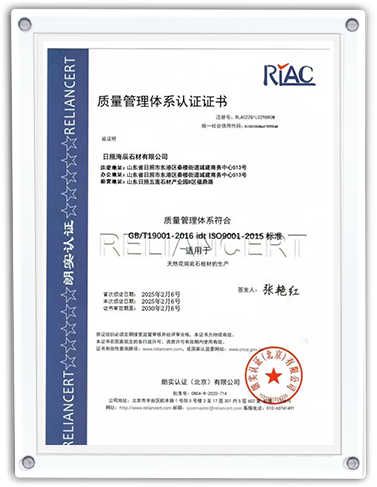
Every shipment is accompanied by batch-specific third-party laboratory verification verifying compliance with ASTM C615 / C616 for granite and quartz dimensional stone, alongside EN 1341 and EN 1343 performance parameters. This accelerates municipal engineering approvals and protects structural design accountability.
ISPM-15 Fumigation & Heavy-Duty Crating
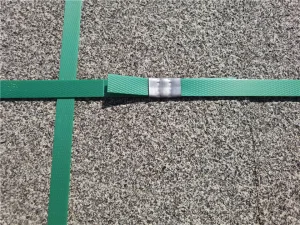
Sea freight demands zero structural risk. We utilize heat-treated, phytosanitary-certified solid timber crates lined with internal styrofoam buffers and vacuum moisture wraps. Steel-strapped reinforcement guarantees crate integrity even during rough open-ocean transit and multi-stage container yard shunting.
Comprehensive Architectural Shop Drawings
To eliminate on-site guesswork, our in-house engineering team converts architectural elevations into tagged, numbered piece layouts. By coordinating corner interlocking details (L-shaped veneer corners) prior to production, installer efficiency on site is maximized while cutting material waste down to < 3%.
Engineering & Sourcing FAQ
Frequently Asked Technical Questions
Direct answers addressing procurement, dimensional tolerances, substrate adhesion, and logistics management.
What distinguishes natural ledgestone veneer from faux concrete manufactured stone?
Natural ledgestone is sawn directly from natural granite or quartzite deposits, offering superior compressive strength (>150 MPa), near-zero water absorption (≤0.4%), and complete UV resistance. In contrast, faux manufactured stone is composed of dyed Portland cement and lightweight aggregates, which are prone to color fading, efflorescence leaching, moisture spalling, and surface erosion within 5 to 10 years of outdoor exposure.
How are panels assembled for fast, seamless on-site installation?
Our ledgestone veneers are standardly pre-assembled into interlocking "Z-panels" or "S-panels" (typically 600×150 mm or 600×200 mm) bonded with high-tensile epoxy or fiberglass-backed resin. This geometry conceals vertical seam lines and enables installers to set panels directly onto prepared concrete, cement-backer board, or structural masonry without individual stone sizing, quadrupling installation speeds.
Can natural ledgestone veneer be installed in freeze-thaw climates safely?
Yes. Due to the high density of our Shandong granite and quartzite raw blocks (density ≥ 2,560 kg/m³), the stone does not absorb significant moisture. When installed using polymer-modified mortar (ANSI A118.4/A118.15) with an appropriate drainage plane or rain-screen weep system, freeze-thaw cycling has no adverse effect on either the stone matrix or substrate bonding.
What are the minimum ordering quantities (MOQ) and production lead times?
Standard factory MOQ begins at one 20-foot full container load (FCL), equivalent to approximately 450 to 650 m² depending on stone thickness and panel profile. Typical lead time is 15 to 25 days following shop drawing confirmation. Mixed containers including dimensional slabs, split ledgestone, and matching 90-degree corner units are routinely configured for large-scale multi-unit developments.
Do you fabricate pre-cut 90-degree corner panels?
Yes. We produce monolithic finger-jointed or mitered L-shaped outside corners (typically 400+200×150 mm or 300+150×150 mm). These corner elements wrap cleanly around structural columns, building corners, and window returns, giving the finished project the authentic appearance of full-bed, heavy structural masonry.
Comprehensive Factory Selection
Engineered Dimensional Granite & Custom Cladding Solutions
Additional high-demand selections available for immediate quarry allocation, custom cutting, and worldwide containerized export dispatch.
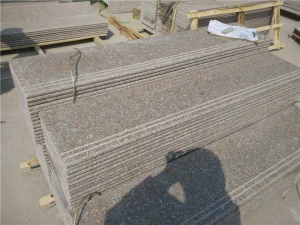
Wholesale G368 Wulian Red Granite Paving Stones
View Product Specifications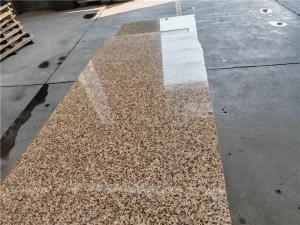
China A1684 Golden Hemp Granite Countertops
View Product Specifications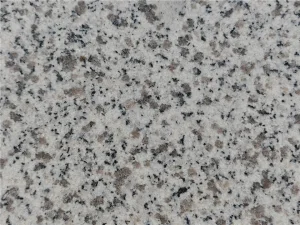
Wholesale G3760 Shandong White Marble Granite
View Product Specifications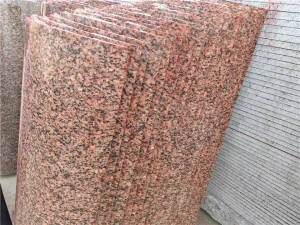
Wholesale G352 General Red Granite Cladding Panels
View Product Specifications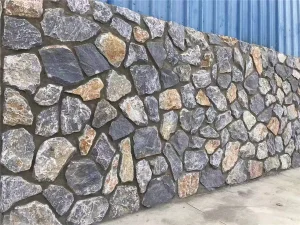
Wholesale Chinese Culture Granite: Stone Artistry
View Product Specifications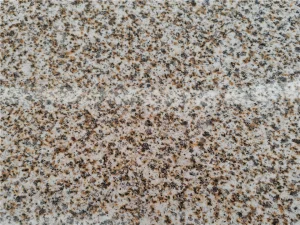
Wholesale G682 Yellow Rust Granite for Paving
View Product Specifications
China G3701 Binzhou Blue Granite Suppliers
View Product Specifications