Primary Direct Inventory
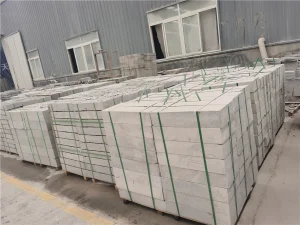
Architectural Cut-to-Size & High-Durability Slabs
Engineered to deliver exceptional mechanical performance with the classic visual elegance of natural dimensional stone.

Industrial Perspective
Global Market Dynamics & The Sintered Porcelain Shift
The global specification paradigm is transitioning from fragile quarry-extracted blocks toward high-density, sintered marble porcelain surfaces that guarantee architectural longevity.
Material Decoupling & Sustainability
Global environmental protocols and green building ratings (LEED v4, BREEAM) increasingly penalize the heavy carbon expenditure and habitat disruption associated with raw marble quarrying. Marble-effect porcelain replicates natural metamorphic stone aesthetics while offering a fully circular mineral profile, low lifecycle carbon, and negligible raw-material wastage during fabrication.
Performance Superiority Over Calcite
Traditional calcitic marbles suffer from acid sensitivity, high porosity (0.5%–2.0%), and vulnerability to scratch wear. Engineered marble porcelain tiles undergo ultra-high tonnage hydraulic pressing (over 30,000 to 44,000 tons) and kiln firing above 1,220°C, delivering impervious bodies with water absorption lower than 0.05% and Mohs hardness scales reaching 7+.
Ultra-Large Format (Slab) Adoption
Commercial specifiers, curtain wall contractors, and luxury interior architects demand expansive sizes—such as 1200×2400mm, 1600×3200mm, and slim 6mm to 12mm profiles. These formats minimize visible grout joints, simulate monolithic marble blocks, and dramatically expand structural application vectors beyond simple residential floor tiling.
Factory Infrastructure
Chinese Manufacturing Efficiency & Supply Chain Resilience
Combining industrial cluster economics, continuous raw mineral logistics, and automated digital production lines to deliver unprecedented economies of scale.
44Kt
Continuous Pressing Tonnage
Eliminating internal air micro-voids, ensuring bending strength exceeding 50 MPa.
<0.05%
Ultra-Low Water Absorption
Far exceeding standard EN 14411 Group BIa requirements for absolute frost and stain resistance.
1200DPI
Dynamic Digital Inkjet Glazing
Multi-channel 3D vein-matching engines producing up to 24 unique non-repeating face designs.
100%
Port-to-Factory Consolidation
Direct rail and port hub access ensuring frictionless container loading and reduced intermodal costs.
Integrated Industrial Cluster Advantages
Chinese production ecosystems integrate raw kaolin sourcing, feldspar refining, color glaze development, and automated kiln engineering within hyper-concentrated manufacturing zones. This structural verticality allows our facilities to rapidly recalibrate glaze formulations, change tile calibration profiles, and fulfill multi-thousand-square-meter institutional orders with consistent shade variation (Delta E < 0.3) within compressed production schedules that decentralized overseas competitors cannot match.
Technical Baseline
Material Engineering: Marble Porcelain Tile vs. Natural Calcite Marble
Direct laboratory comparative metrics verified under ISO 10545, ASTM C615, and EN 14411 international standards.
| Physical / Chemical Property | Test Methodology | Engineered Marble Porcelain | Natural Italian / Spanish Marble | Architectural Procurement Benefit |
|---|---|---|---|---|
| Water Absorption Rate | ISO 10545-3 / ASTM C373 | ≤ 0.04% Impervious | 0.20% – 1.50% (Permeable) | Prevents sub-surface staining, freeze-thaw spalling, and efflorescence. |
| Surface Hardness (Mohs Scale) | EN 101 / Mohs Scratch Test | Scale 6 – 8 (High Scratch Resistance) | Scale 3 – 4 (Easily Scratched by Sand) | Maintains optical clarity in heavy foot-traffic airports and hotel lobbies. |
| Flexural Modulus of Rupture | ISO 10545-4 / ASTM C648 | ≥ 45 – 52 N/mm² | 8 – 14 N/mm² | Permits reduced slab thickness (6mm/9mm) while reducing transit breakage rates. |
| Chemical & Acid Resistance | ISO 10545-13 (Acids/Bases) | Class ULA / UHA (Fully Unaffected) | Reacts violently (Etching with weak acids) | Zero risk from citrus spills, wine, industrial cleaners, or atmospheric acid rain. |
| Vein Consistency & Bookmatching | Optical Pattern Profiling | 100% Controllable Continuous Bookmatch | Unpredictable natural fissures / variation | Zero site-rejection delays; symmetrical vertical wall features guaranteed. |
Implementation Scenarios
Global Enterprise Application Verticals & Trends
Engineered to satisfy demanding physical specifications across high-traffic infrastructure, healthcare environments, and hospitality projects.
Ventilated Facade Cladding
Lightweight 6mm and 9mm marble porcelain panels provide exceptional UV resistance and thermal stability. Installed using invisible mechanical anchor clips or undercut anchors, they resist seismic forces and extreme wind-load pressures while permanently preserving architectural facade finishes without fading.
Luxury Hospitality & Spas
Wet areas, spa zones, and hotel reception foyers require both high slip resistance and sophisticated aesthetics. Sintered surfaces with R10/R11 micro-textured anti-slip treatments maintain the look of polished Statuario, Calacatta, or Nero Marquina without compromising barefoot traction or hygiene safety.
Healthcare & Sterile Commercial Interiors
Because non-porous vitrified porcelain bodies eliminate micro-capillary absorption, bacteria, mold, and airborne biological pathogens cannot penetrate the material surface. Coupled with silver-ion antibacterial glazes, these slabs deliver optimal hygiene performance for medical centers and corporate food preparation facilities.
Supply Chain Strategy
Enterprise Procurement Criteria & Risk Mitigation
Institutional purchasers, Tier-1 contractors, and regional distributors evaluate factory partners using stringent reliability and verification frameworks.
Caliber & Planarity Tolerances
Large-format porcelain slabs require strict edge-rectification precision. Top-tier manufacturers utilize computerized laser-triangulation sorting arrays to ensure diagonal variance remains under ±0.5mm and edge camber under ±0.15%, avoiding visible lippage during installation.
Packaging & Intermodal Cushioning
Export damage mitigation depends on reinforced steel A-frames, fumigated solid-timber crates with corner-edge guards, and moisture-barrier shrink-wrapping. Direct containerization at the plant floor prevents shock-induced transit fractures and ensures ocean-freight stability across long international shipping lanes.
Compliance, Traceability & EPDs
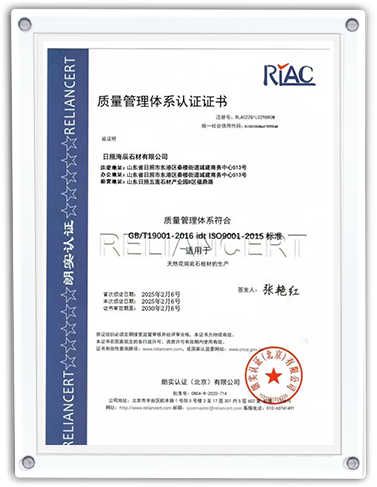
Global supply agreements require full transparency regarding mineral provenance, environmental performance declarations (EPD), and product testing certifications (CE, ISO 9001, Greenguard Gold, SASO). This documentation allows developers to meet international compliance audits without shipment holds.
Knowledge Base
Frequently Asked Technical & Procurement Questions
Detailed technical, commercial, and operational guidance addressing common inquiries from architects, project engineers, and import brokers.
How does marble porcelain tile resolve through-body veining compared to surface glaze?
Advanced manufacturing utilizes continuous multi-pipeline powder distribution systems synchronized with high-resolution digital surface inkjets. This ensures the structural mineral veins continue throughout the entire cross-section of the tile body. As a result, beveling, 45-degree mitered edges, and bullnose profiling preserve consistent color and pattern continuity without exposing an artificial, unpatterned substrate core.
What are the minimum order quantities (MOQ) and lead times for custom developer dimensions?
Standard warehouse production runs for stocked items typically require a minimum order quantity (MOQ) of one full container load (FCL), equivalent to roughly 1,000 to 2,000 square meters depending on slab thickness. For custom-glazed, bespoke veining, or specialized project-dimension requirements, production lead times generally range between 15 to 25 days following technical drawing sign-off and color prototype approval.
How do engineered porcelain slabs prevent lippage and deflection during installation?
Slab planarity starts at the factory with roller-kiln cooling curves that minimize convex or concave deflection. On site, installations must follow ANSI A108.19 or European ISO standards using polymer-modified deformable C2TES1 or C2TES2 tile adhesives, back-buttering methods, and calibrated mechanical screw-type leveling spacers to ensure a flat, reliable joint plane.
What specific export documentation and quality-control verification are provided?
Every export shipment includes verified packing lists, commercial invoices, certificates of origin (CO / Form E / Form A), clean bills of lading, and factory test inspection certificates covering water absorption, flexural strength, abrasion wear, and dimensional tolerance checks. Third-party pre-shipment inspections (e.g., SGS, Intertek, Bureau Veritas) can also be scheduled directly during container loading.
Secondary Direct Portfolio
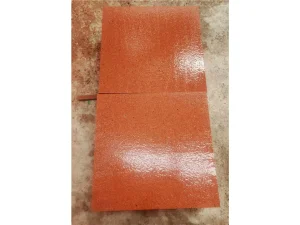
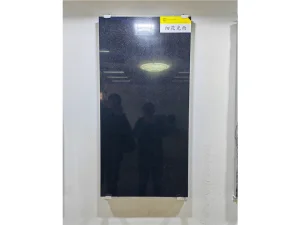
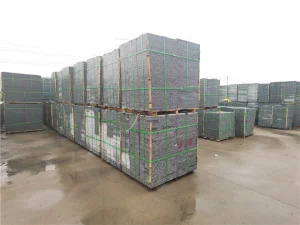
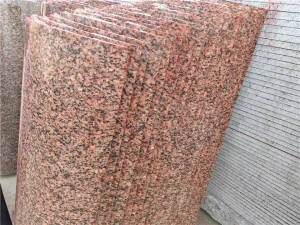
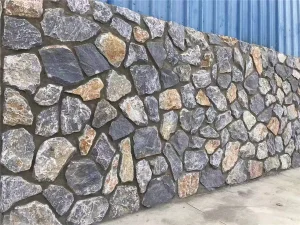
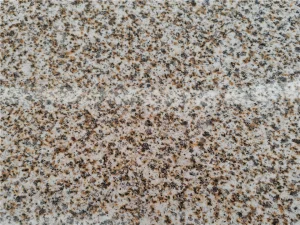
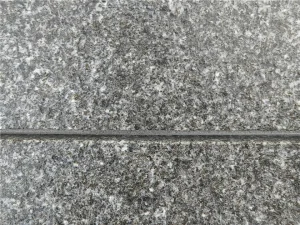
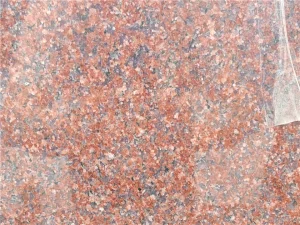
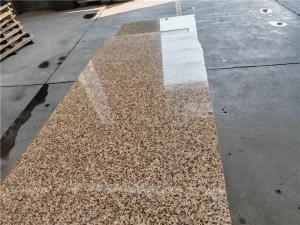
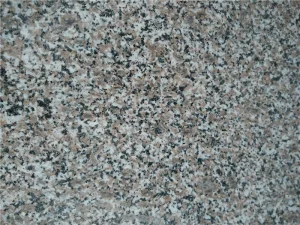
Specialty Granites, Rust Paving & Custom Sawn Slabs
Comprehensive natural stone and engineered material portfolios manufactured to precise commercial project specifications.