Engineered Civil & Architectural Parking Solutions
Explore heavy-duty architectural components, pavement modules, and foundational stone elements engineered for mission-critical parking perimeter demarcation and traffic flow control.



The Global Industrial Reality of No Parking Signage & Support Posts
A comprehensive examination of municipal regulatory enforcement, industrial estate logistics, supply chain integration, and structural longevity standards.
In modern civil engineering, urban planning, and commercial property management, the humble "No Parking" sign and post assembly serves as a vital enforcement instrument ensuring roadway safety, vehicular clearance, and emergency corridor compliance. Far beyond a simple graphic plate bolted to a pole, a reliable traffic restriction installation is an engineered system composed of structural metallurgy, retroreflective optical film, breakaway anchoring systems, and erosion-resistant foundational masonry.
The global marketplace for wholesale traffic signage and support hardware is undergoing a massive shift. Driven by stricter municipal ordinances across North America (FHWA MUTCD compliance), Western Europe (EN 12899-1 standards), and Australasia (AS/NZS 1906.1), government procurement agencies and multi-facility commercial developers no longer accept generic non-rated signage. Municipal liability concerns dictate that signs withstand severe wind loading, impact shears without impaling passenger compartments, and remain visible in low-lux conditions over a ten-to-fifteen-year lifespan.
Statutory Compliance Mandates
Sign face sizing (12"x18", 18"x24", 24"x30"), red/white chrominance boundaries, and retroreflectivity tiers are rigidly governed by civil statutes to prevent private lot legal liability.
Structural Post Metallurgy
Shift from mild tubing toward ASTM A653 high-tensile galvanized perforated square tube (Telespar style) and ribbed-back ASTM A1011 U-channel posts with NCHRP 350 breakaway safety.
Optical Sheeting Evolution
Phase-out of engineer grade glass-bead films in favor of ASTM D4956 Type IV High-Intensity Prismatic (HIP) and Type XI Diamond Grade microprismatic cube-corner optics.
Perimeter Stone Integration
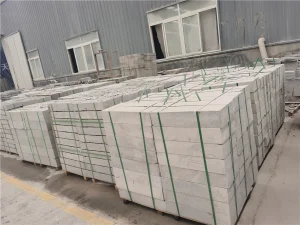
Pairing vertical posts with natural granite kerbing, carved wheel stops, and heavy masonry pedestals prevents vehicle incursions into restricted pedestrian zones.
Material Science: Substrates, Alloys, and Reflective Physics
A B2B technical comparative breakdown of sign blanks, post geometry, protective galvanization, and anti-graffiti lamination chemistry.
B2B buyers, architectural specifiers, and civil works contractors must navigate strict performance metrics when sourcing wholesale no parking signs and posts. The plate substrate must resist deformation under localized impacts and sustained coastal wind shears. The support post must strike a calculated balance between rigid static strength and occupant-protecting kinetic yield upon vehicle impact.
| Component Tier | Material / Metallurgy Standard | Yield / Tensile Strength | Corrosion / Durability Rating | Typical B2B Applications |
|---|---|---|---|---|
| Heavy-Duty Sign Blank | ASTM B209 5052-H38 Anodized Aluminum (.080" / 2.03mm) | Tensile: 42,000 PSI Yield: 37,000 PSI |
Alodine 1200F chromate treatment; 3,000 hr salt spray | Standard DOT / Municipal Streets |
| Industrial Blank | ASTM B209 6061-T6 Structural Alloy (.100" / 2.54mm) | Tensile: 45,000 PSI Yield: 40,000 PSI |
Class 1A chemical conversion coat, zero rust bloom | High-Wind Coastal & Freight Lanes |
| Perforated Square Post | ASTM A653 Grade 50 Galvanized Steel (14-Gauge, 1.75"–2.25") | Tensile: 65,000 PSI Yield: 60,000 PSI |
G90 Hot-Dip zinc coating (0.90 oz/sq ft), internal weld coat | Telespar Breakaway Assemblies |
| Ribbed U-Channel Post | ASTM A1011 High-Carbon Rail Steel (1.12 to 3.00 lbs/ft) | Tensile: 80,000 PSI Yield: 50,000 PSI |
ASTM A123 Hot-Dip Galvanized or baked green enamel | Parking Lots, Campuses, Rural Roads |
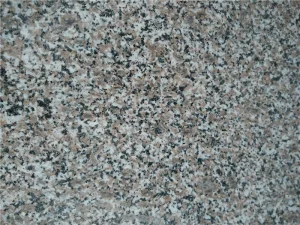
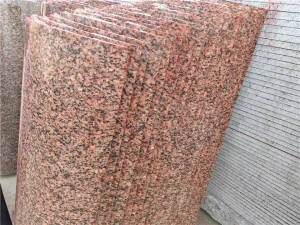
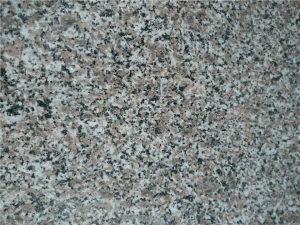
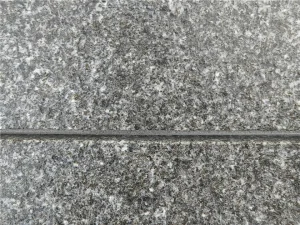
| Foundational Curb/Base | Natural Architectural Granite (Haichen G603 / G654) | Compressive: ≥ 131 MPa Density: ≥ 2,560 kg/m³ |
Impervious to freeze-thaw spalling, de-icing salts, and fuel runoffs | Bollard Core Anchors & Curb Line Stops |
Retroreflection Physics & Sheeting Standards
Direct daylight visibility is only half the equation in traffic safety engineering. Under vehicle headlamp illumination, retroreflective microprismatic sheeting redirects photons along the axis of incidence back to the driver's eye. ASTM D4956 outlines clear tiers:
- Type IV High-Intensity Prismatic (HIP): Utilizing microscopic truncated cube-corner prisms encapsulated under a sealed resin layer, HIP delivers 360 cd/lx/m² retroreflectance for white fields. Standard for municipal parking stalls, commercial strip plazas, and office campus inner roads.
- Type IX / XI Diamond Grade (Full-Cube DG3): State-of-the-art optical microprisms returning over 58% of available light back to the source. Mandatory for emergency access corridors, fire hydrant clearance zones, hospital triage lanes, and zero-ambient-light industrial complexes.
- Anti-Graffiti Overlaminates: Fluoropolymer clear coats (PVDF) applied over UV curable inks permit 100% paint, marker, and sticker removal using mild solvents without clouding the optical cube arrays beneath.
Sector-Specific Parking Enforcement Systems
Engineered site solutions tailored to civil infrastructure, high-density retail developments, multimodal logistics yards, and rapid EV charging networks.
Municipal Streetscapes & Fire Lanes
Reduces emergency response bottlenecks. Combines red-bordered R7-1 signs on 2" square perforated breakaway posts with G603 granite curb demarcations that resist mechanical wheel scrub from heavy emergency engines.
Logistics & Port Freight Hubs
Heavy semi-trailer distribution centers require oversized 24"x30" reflective signs mounted on 3-lb/ft heavy-gauge rail steel posts, reinforced with granite wheel stops to prevent trailer under-ride and blind-spot collisions.
EV Charging Stalls & ICEing Prevention
Dual-message panels ("No Parking Except for Electric Vehicle Charging") utilizing anti-scratch acrylic laminate. Bollard-mounted post setups prevent non-EV drivers from occupying high-capital charging stalls.
Next-Generation Trends: Connected Curbsides & Circular Materials
The convergence of physical traffic signage hardware with Internet-of-Things (IoT) sensing, dynamic displays, and low-embodied-carbon structural foundations.
1. The Rise of Digitally Enhanced Dynamic Signposts
As micro-mobility, autonomous delivery shuttles, and dynamic curbside pricing disrupt urban roadways, the static signpost is transforming into a connected node. Wholesale suppliers are increasingly integrating low-power e-ink display modules and solar-powered flashers directly onto the upper flange of standard 2" perforated posts. These hybrid units maintain physical MUTCD visibility while altering parking rules dynamically for rush hours, street cleaning, or autonomous freight drop-offs.
2. Embedded Sensors and Vehicle Detection
Ultrasonic and millimeter-wave radar sensors mounted into the hollow tubular structure of signposts detect illicit vehicle occupancy in real-time. By streaming telemetry over Narrowband IoT (NB-IoT) or LoRaWAN to municipal parking enforcement departments, cities eliminate physical patrolling overhead and enforce fire-lane violations instantaneously.
3. Sustainable Infrastructure & Circular Supply Chains
Global ESG mandates require civil infrastructure contractors to evaluate the total lifecycle carbon emissions of street furniture. Traditional concrete bases are heavily carbon-intensive and crumble after repeated freeze-thaw cycles and salt applications. Modern civil specifications favor precision-cut natural granite ballast blocks (such as Rizhao Haichen quarry reserves) and 100% post-industrial recycled 6061-aluminum sheet stock, which offer an indefinite service life with zero material degradation.
Solar-Illuminated Perimeter Beacons
Ultra-compact photovoltaic caps fitted inside square post tubes power perimeter flashing LED borders on no-parking signs, slashing nighttime infractions by up to 74% in blind turning corridors.
Automated CNC Die-Cut Customization
Digital flatbed cutting tables and multi-axis punches allow wholesale factories to rapidly machine custom mounting hole patterns matching regional bracket norms without weakening structural integrity.
Quarry-to-Site Integrated Logistics
By co-shipping sign support posts with architectural stone kerbing, bollards, and paving slabs, commercial buyers optimize 40-foot ocean containers, eliminating 30% of dead-freight expenses.
Crashworthiness: Breakaway Post Engineering & Wind Resistance
Understanding AASHTO LTS-6, NCHRP 350, and MASH crash test protocols for parking and roadside structural supports.
A primary criterion in municipal procurement is how a vertical signpost behaves when struck by a vehicle traveling between 35 and 62 mph. Rigid steel pipes or solid wood timbers act as lethal stationary spears. Consequently, modern roadside infrastructure requires certified breakaway systems.
Breakaway Mechanism Principles:
- Slip-Base Coupling Systems: Two cast steel plates secured by high-tensile shear bolts. Upon bumper impact, the shear bolts snap under transverse shear load, releasing the upright pole to pivot harmlessly upward and away from the windshield.
- Perforated Telespar Sleeves: A 2-inch square tube seated 12 to 18 inches inside a 2.25-inch ground-embedded sleeve anchored in soil or concrete. Corner bolt connections shear clean upon impact, leaving only a 3-inch stub above ground level to avoid snagging vehicle undercarriages.
- Base Ballast Masonry: For private plazas and internal corporate parks, surface-mounted signposts anchored into heavy granite bollards or precast blocks offer movable, non-destructive barriers that physically prevent parking without sub-surface drilling.
Consolidated Procurement: Combining Metal Posts with Architectural Stone
How factory-direct integration from Rizhao Haichen Stone bridges the gap between metal traffic hardware and enduring civil stonework.
Commercial contractors frequently face logistic fragmentation: traffic signs and posts are ordered from metal fabricators, while curbing, granite bollards, paving stones, and entrance pylons are ordered from stone quarries. This creates misaligned delivery schedules, customs bottlenecks, and container volume wastage.
The Haichen Stone Advantage: Operating from the expansive Rizhao Stone Industrial Park with self-owned quarry concessions and direct export processing lines, we allow project developers to bundle comprehensive civil entrance and parking infrastructure packages in consolidated ocean container loads:
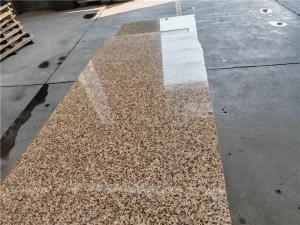
- Natural Granite Perimeter Curbstones: High-density G603 and G654 curbing defining parking lot edges and preventing vehicle encroachment onto pedestrian medians.
- Bespoke Pre-Drilled Stone Bollards: Custom-cored granite bollards designed to receive telescoping square steel posts or high-security stainless steel flag poles.
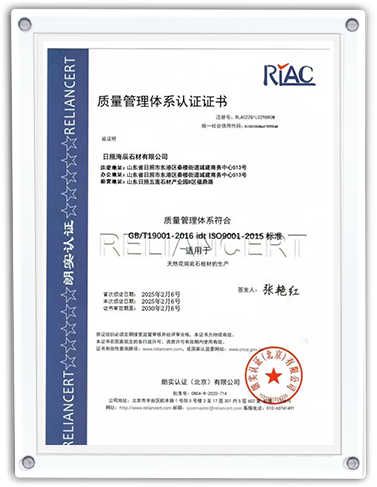
- Single-Point Factory Accountability: Eliminates intermediary trading markup and aligns raw block extraction, CNC metal stamping, and freight logistics under one ISO-audited facility.
Frequently Asked Questions for Sign & Post Sourcing
Crucial engineering, regulatory, and supply chain insights for municipal project buyers and civil engineering contractors.
What are the precise standard dimensions and alloy specifications for MUTCD-compliant No Parking signs?
How do U-Channel posts compare against Square Perforated posts in structural rigidity and installation versatility?
Which retroreflective sheeting grade should be selected for private commercial parking lots versus public thoroughfares?
What constitutes a certified breakaway base assembly to satisfy AASHTO and MASH safety mandates?
How can civil developers integrate natural granite curbstones and bollards with signage hardware for enhanced perimeter security?
What anti-corrosion finishes provide maximum longevity in coastal and chemical-intensive environments?
What are the sea freight packaging and consolidation protocols for wholesale sign and post export orders?
Factory Direct Civil Materials & Structural Stone
Premium granite paving, facade slabs, landscape curbing, and heavy structural building elements sourced straight from our Rizhao stone processing workshops.