Precision Architectural Solutions: Series I
Engineered to interface seamlessly with modern structural glazing clamps, curtain wall mullions, and architectural load-bearing stones for tier-one global infrastructure.
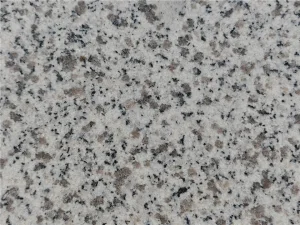
Wholesale G3760 Shandong White Marble Granite Manufacturers, Suppliers
Configure & Inquire
Wholesale G654 Sesame Black Granite Polished Slabs Suppliers, Factories
Configure & Inquire
China G614 Sesame Grey Granite Slabs & Tiles Supplier, Suppliers
Configure & Inquire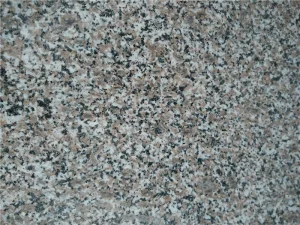
China Other Colours Granite – Custom Orders Manufacturers, Factories
Configure & Inquire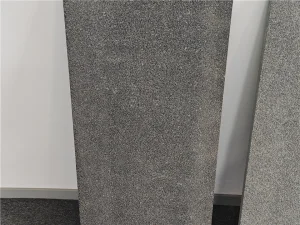
Wholesale G684 Fuding Black Granite Factories, Factory
Configure & Inquire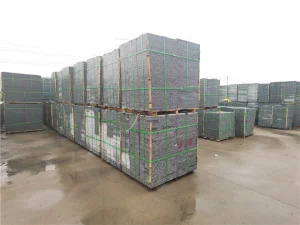
China G3702 Snowflake Blue Granite Manufacturers, Supplier
Configure & Inquire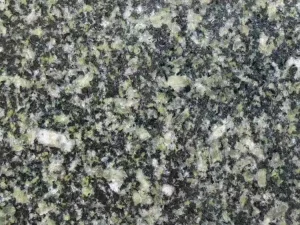
China G4101 Forest Green Granite Veneer Panels Supplier, Factories
Configure & Inquire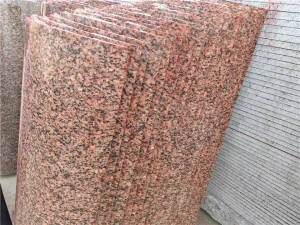
Wholesale G352 General Red Granite Cladding Panels Manufacturers, Factories
Configure & InquireGlobal Procurement Dynamics for Tempered & Laminated Safety Glass
Enterprise procurement across tier-one EPC contractors, envelope engineers, and commercial developers demands rigorous scrutiny beyond surface aesthetics. Modern industrial glass sourcing hinges upon surface compression metrics, interlayer adhesion integrity, and lifecycle post-breakage load-bearing capacity.
Surface Compression Thresholds
For architectural tempered glass, global contracts mandate strict adherence to ASTM C1048 (Kind FT) and EN 12150-1, requiring surface compression stress (σ) to consistently exceed 69 MPa (10,000 psi), and often reaching ≥ 100 MPa for hurricane or seismic exterior envelopes. Fully tempered glass guarantees catastrophic fracturing into harmless, blunt dice-like granules rather than lethal shards, mitigating liability on monumental infrastructure.
Interlayer Structural Modulus (SGP vs. PVB)
Standard Polyvinyl Butyral (PVB) delivers exceptional sound damping (Rw ≥ 38 dB) and UV filtration (> 99%), but structural applications (fin walls, overhead canopies, glass stairs) require ionoplast interlayers such as SentryGlas® (SGP). SGP features a shear modulus up to 100 times higher and five times the tear strength of traditional PVB, ensuring post-breakage rigidity where shattered glass panels remain standing under dead loads without collapsing from the frame.
HST & Spontaneous Breakage Eradication
Spontaneous failure caused by microscopic Nickel Sulfide (NiS) inclusions represents an existential risk in high-rise fenestration. Haichen Stone enforces a strict calibrated Heat Soak Testing (HST) regimen compliant with EN 14179-1 and DIN 18516-4. Glass lites are subjected to 290°C ± 10°C thermal dwell cycles for a minimum of 2 hours, forcing unstable α-phase NiS inclusions into expanded β-phase in the controlled furnace rather than on the client’s skyscraper.
Macro Industry Solutions: Mission-Critical Glazing Systems
Different commercial sectors present distinct thermodynamic, mechanical, and safety challenges. We design, process, and certify custom laminated and tempered glass packages tailored specifically to real-world operational stressors.
Super-Tall Unitized Facades
Wind pressures at elevations exceeding 200 meters can exert loads higher than 4.5 kPa. Our fully tempered, heat-strengthened, and laminated insulated glass units (IGUs) combine double or triple-silver Low-E magnetron sputtering with argon fills, cutting SHGC below 0.25 while maintaining light transmission above 60%. Edge deletion precision on Low-E coatings eliminates atmospheric oxidation inside sealed cavities.
Hurricane & Blast Mitigation
Engineered to pass Florida Building Code High-Velocity Hurricane Zone (HVHZ) requirements and ASTM E1886/E1996 Large Missile Impact testing. Under cyclic wind loads up to ±9000 Pa following a 9-lb 2x4 lumber impact at 50 ft/s, our multi-ply SGP laminated glass holds the structural perimeter without frame disengagement, preventing building envelope depressurization.
Acoustic Shielding for Transit Hubs
For airport terminals, railway stations, and urban hospital perimeters, standard monolithic glass fails to attenuate low-frequency rumble (100–315 Hz). Utilizing asymmetrical double-glazed laminated assemblies (e.g., 8mm Tempered + 1.52mm Acoustic PVB + 6mm Tempered with a 16mm warm-edge spacer), our configurations achieve a Sound Transmission Class (STC) rating of 42 to 49 dB, effectively isolating interior spaces.
Overhead Canopies & Balustrades
Balustrades and pedestrian bridges require frameless, cantilevered laminated safety glass that withstands concentrated horizontal barrier loads up to 3.0 kN/m per IBC/IRC and BS 6180. Using structural SentryGlas® with CNC-chamfered and fine-polished edges, panels retain pristine optical transparency while resisting environmental delamination and edge haze even in maritime salt-spray atmospheres.
Mechanical & Optical Specification Matrix
Engineers and specifiers require empirical metrics when calculating deflection, dead-load tolerances, and thermal shock resistance. The table below outlines standard industrial performance baselines for architectural safety glass.
| Glazing Classification | Processing Method | Surface Compression (σ) | Mechanical Impact Resistance | Post-Breakage State | Typical Applications |
|---|---|---|---|---|---|
| Standard Annealed Glass | Controlled furnace slow cooling | < 24 MPa (< 3,500 psi) | 1x Baseline (Fragile) | Large, sharp knife-like shards | Internal non-structural frames only |
| Heat-Strengthened (HS) | Accelerated forced-air quench | 24 – 52 MPa (3,500 – 7,500 psi) | 2x Standard Annealed | Large fragments; stays locked in frame | Spandrel glass, vision glass preventing fallout |
| Fully Tempered Safety (FT) | High-velocity rapid air quench | ≥ 69 – 120 MPa (10,000+ psi) | 4x to 5x Standard Annealed | Small dice fragments (≤ 100mm² area) | Frameless doors, shower screens, facade vision |
| Laminated (Annealed/Tempered + PVB) | Cleanroom sandwich + Autoclave 13.5 bar | Function of glass skin plies | High puncture resistance (Energy absorption) | Fragments adhere fully to polymer interlayer | Storefronts, acoustic partitions, overhead glazing |
| Structural Laminated (FT + SGP) | High-temperature vacuum debagging + Autoclave | ≥ 90 MPa per glass ply | Extraordinary blast & wind-load resistance | Stiff plate behavior; zero sag post-fracture | Frameless balustrades, glass fins, skylights, floors |
Technology Roadmap: Intelligent & Decarbonized Glazing
The future of architectural glazing lies at the intersection of optoelectronics, nanotechnology, and circular low-carbon manufacturing. Haichen Stone is investing heavily in next-generation processing infrastructure to meet Net-Zero 2050 targets.
Building Integrated Photovoltaics (BIPV)
Transitioning passive facades into clean energy generators. Our laminated BIPV modules encapsulate crystalline silicon micro-wafers or cadmium telluride (CdTe) thin-films within ultra-clear low-iron tempered glass and specialized polyolefin encapsulant (POE) interlayers, generating up to 130 Wp/m² while preserving daylight transmission.
Electrochromic & PDLC Smart Glazing
Integrating polymer-dispersed liquid crystal (PDLC) films and electrochromic metal-oxide coatings inside laminated assemblies. These systems transition between light-transmitting clear and dynamic tinting via an electrical current (< 5V DC), cutting HVAC cooling loads by up to 28% and eliminating motorized mechanical blinds in premier corporate suites.
Vacuum Insulated Laminated Units (VIG)
By drawing an internal vacuum of 10−4 Pa between two glass plies held apart by microscopic ceramic micro-spacers, our thin-profile VIG assemblies achieve an ultra-low center-of-glass thermal conductance of Ug ≤ 0.45 W/(m²·K), equaling the thermal resistance of a solid masonry wall within an astonishing 12.3mm thickness envelope.
Worldwide Regulatory Compliance & Factory Traceability
Exporting architectural safety glass demands stringent documentation, verifiable lab certifications, and comprehensive chain-of-custody logging. Every batch shipped from our automated facility undergoes laser-etched indelible safety marking and digital traceability.
North American Standards
Full compliance with SGCC (Safety Glazing Certification Council) under ANSI Z97.1-2015 and CPSC 16 CFR 1201 Category II impact performance. Surface compression monitored via Grazing Incidence Polarimetry (GASP), guaranteeing compliance with ASTM C1048 specifications for architectural monolithic and laminated safety lites.
European CE & EN Directives
Fully certified under EN 12150-1 (Thermal Toughened Glass), EN 14449 (Laminated Safety Glass), and EN 1279 Parts 1-6 for hermetically sealed IGUs. Continuous batch monitoring includes pendulum impact testing per EN 12600 (Class 1B1 / 1A1) and pummel testing to verify PVB interlayer adhesion indices between 3 and 7.
Ocean Logistics & End-Cap Crating
Sea-freight humidity and kinetic vibrations can lead to edge damage or interlayer milkiness. We utilize customized, ISPM-15 certified fumigated A-frames and heavy-duty steel-banded wooden end-caps with vapor-barrier desiccant bags, corner-protectors, and Lucite interleaving powder preventing chemical staining during lengthy maritime voyages.
Technical FAQ: Professional Glazing Clarifications
Detailed engineering answers addressing critical design choices, tolerances, structural calculations, and installation parameters for facade professionals.
What is the structural difference between SGP (SentryGlas) and PVB in laminated architectural glass?
Why choose Heat-Strengthened glass over Fully Tempered glass in laminated curtain walls?
How does Haichen Stone mitigate roller wave distortion and edge dip during tempering?
What are the precise protocol parameters of your Heat Soak Testing (HST)?
Can laminated safety glass be cut, drilled, or modified on-site after processing?
How does your factory prevent edge delamination and moisture haze in exposed exterior balustrades?
Precision Architectural Solutions: Series II
Comprehensive facade combinations integrating precision glass fittings, curtain wall engineering, and natural structural stones for commercial masterplans.
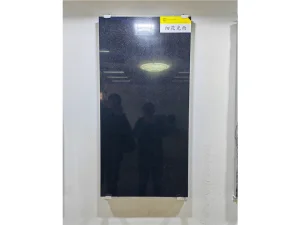
China G3401 Shanxi Black Granite Manufacturer, Factory
Configure & Inquire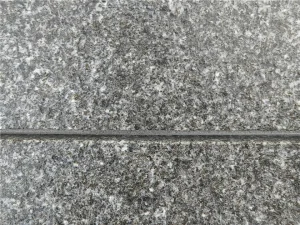
China G3701 Binzhou Blue Granite Suppliers, Factory
Configure & Inquire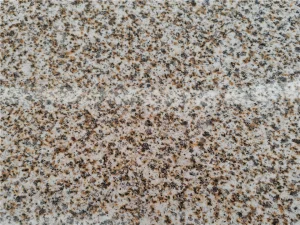
Wholesale G682 Yellow Rust Granite for Paving Suppliers, Factories
Configure & Inquire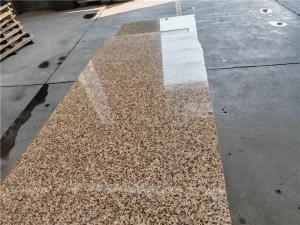
China A1684 Golden Hemp Granite Countertops Manufacturer, Factories
Configure & Inquire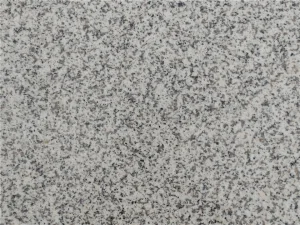
China G603 Sesame White Granite Suppliers, Factory
Configure & Inquire
China G3743 Lu Grey Granite Building Stone Manufacturer, Factories
Configure & Inquire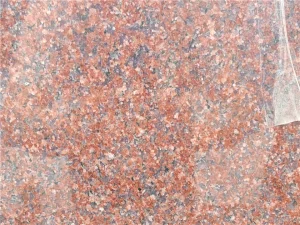
Wholesale G386 Shidiao Red Granite Tiles Manufacturers, Suppliers
Configure & Inquire