Architectural Stone Whitepaper
Wholesale Travertine Stacked Stone Manufacturers & Supplier
A comprehensive industrial guide to high-density travertine ledgestone, automated quarry fabrication, global ASTM/EN compliance, and smart architectural cladding integration.
Direct Quarry Output
Engineered Stone & Granite Cladding Solutions
Pre-sorted, calibrated, and mechanically tested natural stone inventory ready for containerized wholesale delivery.
Technical Overview
Wholesale Travertine Stacked Stone: Manufacturing Rigor & Petrography
Bridging traditional masonry aesthetics with advanced multi-axis CNC fabrication and industrial polymer mesh reinforcement.
Petrographic Integrity
Sourced from high-density calcite formations, our raw travertine offers superior compressive strength compared to porous sedimentary variants. Every production batch undergoes micro-void assessment to ensure natural gas channels do not compromise mechanical tensile stability under shear load.
Interlocking Precision
Hand-assembled ledger panels are bonded with industrial-grade epoxy matrix backed by high-tensile fiberglass mesh. Our Z-profile interlocks eliminate visual vertical seams, accelerating on-site installation while guaranteeing consistent architectural line continuation across large-scale commercial facades.
Global Weathering Stability
Engineered to withstand rigorous freeze-thaw cycles without delamination or spalling. Standardized water-repellent sealants and calibrated capillary fills allow for reliable installation across disparate climate zones—from high-humidity tropical coastlines to alpine sub-zero commercial elevations.
Audit-Proof Specs
International Compliance & Engineering Specifications
Rigorous bench testing aligned with ASTM International and European Norms (EN) ensures seamless approval across major global building authorities.
| Evaluation Parameter | Test Protocol | Architectural Standard | Haichen Industrial Range | Project Impact |
|---|---|---|---|---|
| Bulk Density | ASTM C97 / EN 1936 | ≥ 2,160 kg/m³ | 2,380 – 2,460 kg/m³ | Structural dead-load reliability |
| Water Absorption | ASTM C97 / EN 13755 | ≤ 2.50 % | 0.72 – 1.45 % | Superior freeze-thaw performance |
| Compressive Strength | ASTM C170 / EN 1926 | ≥ 52.0 MPa | 78.4 – 88.0 MPa | Resistance to substrate deformation |
| Flexural Modulus | ASTM C880 / EN 12372 | ≥ 6.9 MPa | 9.8 – 12.3 MPa | High wind-load shear integrity |
| Thermal Shock Resilience | EN 14066 Standard | No micro-fissuring | Class A Certified (No degradation) | Direct exterior sun exposure stability |
Direct Factory Infrastructure
Chinese Supply Chain Superiority: Precision, Scale & Port Logistics
Decoupled raw material sourcing, automated CNC diamond profiling, and seamless deep-water maritime dispatch.
Automated Diamond Profiling
Our Shandong manufacturing hub operates automated multi-blade bridging saws and high-speed CNC surface planers. This mechanical alignment guarantees panel corners retain 90-degree square profiles, preventing staggered accumulation during high-rise facade installation.
Strict Dry-Lay Quality Control
Every commercial order goes through visual color-range zoning. Factory technicians pre-assemble full 50-square-meter layouts under daylight conditions to blend natural tonal gradients, weeding out irregular veining prior to industrial crating.
Port-Factory Intermodal Hub
Positioned proximate to Rizhao and Qingdao ports, our logistics pipeline bypasses internal inland bottlenecks. Integrated terminal handling enables direct sea container stuffing, customized sea-worthy fumigated timber cages, and FOB/CIF cargo documentation.
Application Horizons
Architectural Versatility Across Modern Building Envelopes
Engineered stacked travertine responds to demanding commercial spaces, residential facades, and high-wear public interiors.
Commercial Façades
Ventilated rain-screen and mechanical clip systems ensure long-term exterior bonding on airports, civic halls, and office towers without mortar staining.
Hospitality Retaining Walls
Linear split-face profiles cast multi-dimensional shadows under natural and accent LED grazing, elevating resort landscapes and luxury villas.
Thermal Enclosures
Natural thermal mass dampens diurnal temperature spikes. Frequently specified around architectural fireplaces, chimney breasts, and sauna envelopes.
Acoustic Attenuation
Irregular split surfaces naturally scatter ambient sound reflections, improving STC (Sound Transmission Class) ratings in corporate conference spaces.
Strategic Horizon
Industry Trends: The Evolution of Stacked Stone Cladding
Emerging technologies reshaping ledger production, environmental documentation, and building envelope integration.
EPD & Embodied Carbon Accountability
Modern developers require verified Environmental Product Declarations (EPD). Natural stone processing features significantly lower embodied energy than manufactured cementitious veneer, offering superior LEED v4.1 credit alignment.
Prefabricated Mechanical Backing
The market is migrating from field mortar applications to mechanized rear mounting brackets. Factory-inserted aluminum channels allow direct mechanical fixing to steel studs, slashing job site labor hours by upwards of 40%.
Zero-Waste Slurry Circularity
Factory wastewater filtration units recycle 95% of industrial water during the block splitting and calibrated cutting process. Collected stone slurry is repurposed into aggregate binders, avoiding municipal landfill load.
Technical Clarifications
Frequently Asked Questions: B2B Sourcing & Technical Due Diligence
Detailed technical, logistical, and structural answers to simplify direct factory procurement for developers and specifiers.
How does natural travertine stacked stone outperform artificial faux-stone veneers?
Natural travertine stacked stone features monolithic mineral structural integrity composed of recrystallized calcium carbonate. Unlike cast cementitious artificial stone, it does not suffer from surface pigment fading caused by UV irradiation, nor will it exhibit white efflorescence leaching. Natural stone delivers superior compressive strength (>75 MPa), indefinite structural longevity, and complete fireproof performance (Class A1 Euroclass reaction to fire).
What installation systems are recommended for high-rise exterior cladding?
For elevations exceeding 3 meters (10 feet), relying solely on chemical adhesive paste is not compliant with most modern municipal building codes. We mandate mechanical anchoring systems: our factory slots rear anchor kerfs or integrates mechanical anchors that tie into stainless steel (AISI 304/316) subframes. This engineered system isolates stone panels from seismic substrate movement and wind shear deflection.
How do you maintain visual color consistency across multi-container production runs?
Color consistency begins at the extraction face. Raw blocks are quarried from identical geological bench strata. During our multi-step processing, slabs are coded by batch. Prior to crating, a continuous 50 m² dry-lay inspection is conducted under color-calibrated 5500K LED daylight panels. Master range control samples are retained to cross-reference each sequential container run.
What is the factory standard packaging protocol to eliminate maritime shipping breakage?
Ledger panels are individually separated by closed-cell polyethylene foam membranes, nested face-to-back, and shrink-wrapped in sets of 4 to 6 units per heavy-gauge cardboard carton. Cartons are loaded into solid hardwood crates treated and heat-stamped under ISPM-15 guidelines. Crated structures are corner-braced with galvanized steel strapping and braced internally within marine shipping containers to prevent shifting.
Can you provide customized corner solutions and tailored panel profiles?
Yes. We produce matching "L-shaped" interlocking corner units via precision 45-degree finger-joint bonding and solid-carved return pieces. Standard corner heights correspond directly with regular panel heights (e.g., 150mm × 150/300mm), ensuring clean exterior building wraps with zero field-miter cuts required on site.
Comprehensive Catalog
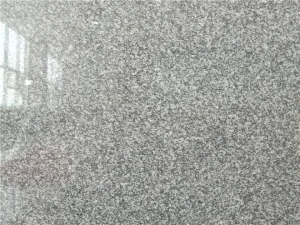
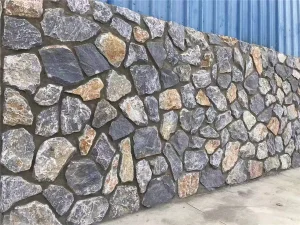
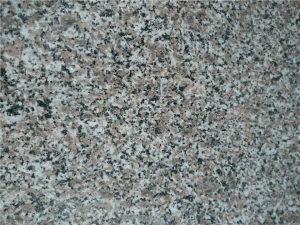
High-Spec Granites & Architectural Masonry Units
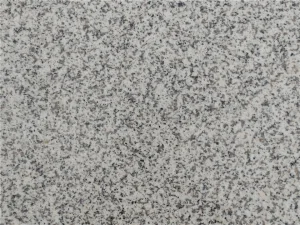
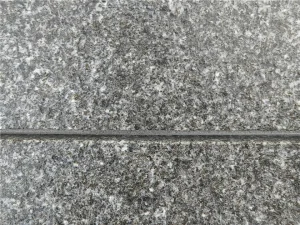
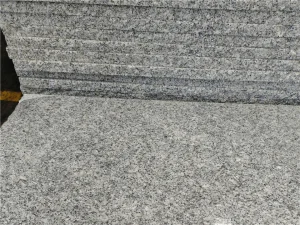
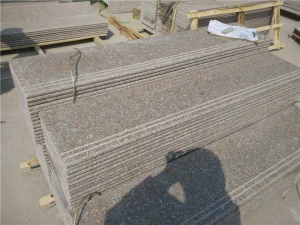
Direct supply contracts covering cut-to-size wall facings, kerbs, pavers, and bespoke civic stone elements.