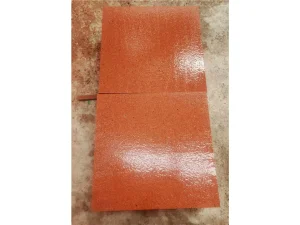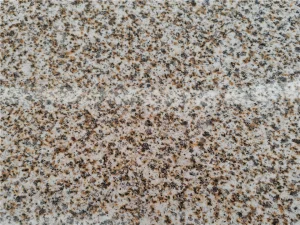
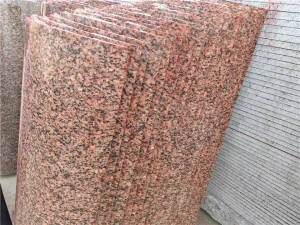
Wholesale G352 General Red Granite Cladding Panels for Hanoi Architecture
View Specifications
Pre-calibrated, high-density granite modules fabricated for urban transport nodes, commercial facades, and high-footfall landscape plazas across Hanoi.
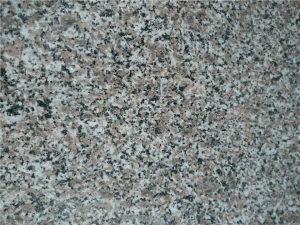
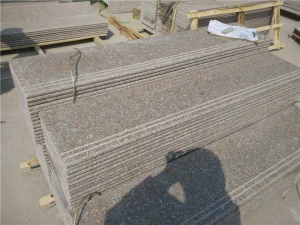
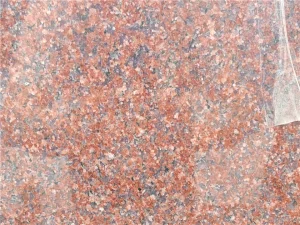
Hanoi serves as the administrative, cultural, and rapidly expanding economic heart of Vietnam. Over the past decade, urban growth has extended beyond historic districts such as Hoan Kiem and Ba Dinh into major satellite nodes including Nam Tu Liem, Cau Giay, Long Bien, and Tay Ho Tay (Starlake). This multi-polar expansion has shifted regional building materials procurement toward natural igneous rock formations, specifically red-tinted granites, due to their structural performance and cultural association with longevity, prosperity, and authority.
Unlike southern Vietnam, where porous basalt and sedimentary sandstones dominate regional quarry reserves, the Red River Delta relies on structured supply corridors to fulfill structural granite consumption. High-grade red granites (such as G352, G386, and G368 Wulian Red) are primarily secured from dedicated quarry reserves in Northern China and channeled directly into northern Vietnam via the Haiphong deep-water port system and the overland Lang Son border trade corridor.
In Hanoi’s local stone fabrication ecosystem, primary staging depots located along National Route 1A, the Thang Long Boulevard industrial axis, and surrounding clusters in Gia Lam and Thanh Tri manage secondary cutting, profiling, and emergency order balancing. However, large-scale projects require direct, vertically integrated manufacturing partnerships with mine-direct processors to guarantee chromatic coherence across tens of thousands of square meters.
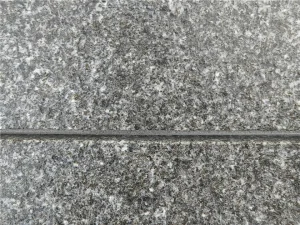
Red granite represents a plutonic igneous rock composed of coarsely crystalline quartz, alkali feldspars (predominantly orthoclase or microcline), and subordinate plagioclase, biotite, or hornblende. The distinctive crimson, rose, and vermilion coloration that makes G352, G368, and G386 architecturally coveted originates from potassium-rich feldspar lattices imbued with fine ferric oxide (Fe₂O₃) crystalline inclusions formed during prolonged magmatic cooling phases deep within continental crustal plutons.
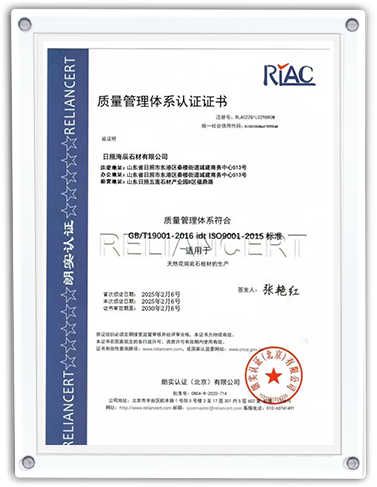
Globally, the red granite trade is governed by key extraction centers spanning Scandinavia (Imperial Red), India (Ruby Red, Jhansi Red), Brazil (African Red profiles), and Northern China (Shandong and Fujian geologic belts). Among these, Shandong-quarried granites remain the foremost choice for major Vietnamese infrastructure projects. The balance of high compressive capacity, dense mineral matrix, low radioactive indices (Class A environmental certification), and cost efficiencies achieved through massive block extraction makes it an industry benchmark.
High microcline concentrations ensure lasting chroma that resists solar UV oxidation and tropical atmospheric degradation over multi-decade structural lifespans.
Micro-capillary porosities under 0.28% protect the stone against vapor expansion, sub-surface fungal spore propagation, and chemical leaching during Hanoi's monsoon cycles.
Rupture moduli exceeding 14.5 MPa ensure resistance to ground settlement stresses encountered across alluvial subsoils in the Red River Delta basin.
Architectural stone selection for public and commercial developments in Hanoi must adhere to international norms (ASTM C615 and European EN 1469 standards). The following data outline our primary red and companion granite varieties calibrated for projects in the Hanoi Capital Region:
| Granite Classification | Apparent Density (kg/m³) | Water Absorption (%) | Compressive Strength (MPa) | Flexural Modulus (MPa) | Recommended Hanoi Application |
|---|---|---|---|---|---|
| G352 General Red | 2,640 – 2,670 | 0.21 | 162.4 | 15.8 | High-Rise Curtain Walls |
| G368 Wulian Red | 2,610 – 2,650 | 0.24 | 154.2 | 14.1 | Heavy-Duty Urban Paving |
| G386 Shidiao Red | 2,630 – 2,660 | 0.19 | 168.0 | 16.5 | Commercial Lobbies & Basements |
| G6361 Wulianhua | 2,600 – 2,630 | 0.26 | 148.5 | 13.6 | Public Squares & Curbs |
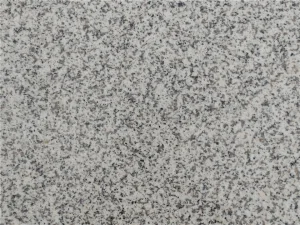
| G654 Sesame Grey | 2,710 – 2,750 | 0.17 | 180.2 | 18.2 | Transit Substructures |
Due to Hanoi’s humid subtropical climate (Köppen Cwa)—characterized by sweltering, precipitation-heavy summers, cool damp winters, and sustained high relative humidity—the choice of stone finish and facade anchoring systems requires careful engineering:
In modern commercial developments throughout Cau Giay and Tay Ho, wet-mortar installations often result in efflorescence and moisture staining due to vapor migration. To prevent this, ventilated facades utilizing G352 General Red polished or honed panels mounted on marine-grade 316 stainless steel undercut anchors or back-bracket channels are specified. This air cavity permits continuous thermal venting, shielding building envelopes from solar thermal gain while preventing interstitial moisture accumulation.
Hanoi’s mass transit extensions (Line 3 Nhon-Hanoi Station and upcoming arterial transit corridors) demand paving stones with high slip resistance (British Pendulum Tester value > 55 in wet conditions) and high flexural capacity. Flamed and bush-hammered G368 Wulian Red and G6361 granite flagstones (50mm to 80mm thickness) offer reliable dimensional stability under dynamic pedestrian traffic and service vehicle live loads.
Civic architectural developments surrounding administrative quarters in Ba Dinh prioritize granites that project dignity and resist biological staining. The refined grain and vibrant feldspathic matrix of G386 Shidiao Red make it an enduring choice for municipal monuments, raised podiums, and ceremonial plazas. Its dense matrix resists micro-algae growth, maintaining structural clarity across decades of seasonal monsoon exposure.
Modern stone manufacturing has evolved beyond traditional gang-sawing into digital, computer-guided fabrication. As a vertically integrated supplier serving the Hanoi market, Haichen Stone deploys a modern manufacturing infrastructure designed to achieve dimensional accuracy, minimal kerf waste, and chromatic batch consistency:
Diamond Multi-Wire Saws: Blocks extracted from our Shandong quarries are sliced using high-speed multi-wire machines equipped with synthetic diamond-beaded wires. This achieves thickness tolerances within ±0.5mm, producing flat substrate planes that reduce downstream grinding energy.
Digital Colorimetrics & Automated Dry-Lay: Every red granite slab passes an optical scanning bridge. Multi-spectral sensors record color temperature, grain distribution, and vein orientation, cataloging each panel into an intelligent database. For key facades in Hanoi, virtual 3D dry-lays match adjacent panels by tone, avoiding chromatic banding before shipment.
High-Precision 5-Axis CNC Profiling: For custom curbstones, radial copings, chamfered stair nosings, and column cladding required by Hanoi's transit interchanges, 5-axis interpolating bridge cutters execute CAD/CAM designs to sub-millimeter tolerances.
Logistics represent a core variable in material budgeting for Hanoi engineering procurement. Securing reliable deliveries across international borders requires a clear, well-structured multi-modal transport network:
Direct Sea Freight Corridor (Rizhao/Qingdao to Haiphong Port): Shandong's primary stone fabrication hubs are positioned close to Rizhao Port and Qingdao Port. Consolidated containerized shipments or break-bulk vessels transit to Haiphong Port within 4 to 7 sailing days. Haiphong acts as the primary maritime clearance hub for Northern Vietnam, handling break-bulk and container freight with efficient turnaround.
Inland Transit via Haiphong-Hanoi Expressway (CT04): Upon customs release at Dinh Vu or Lach Huyen terminals in Haiphong, heavy container flatbeds transit the 105 km modernized CT04 Expressway directly to project laydown areas in Hanoi within 2 to 3 hours, avoiding urban traffic restrictions through pre-cleared night logistics protocols.
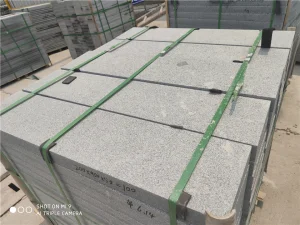
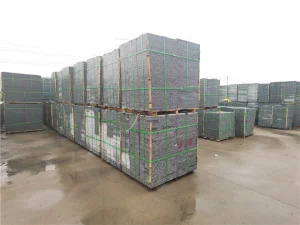
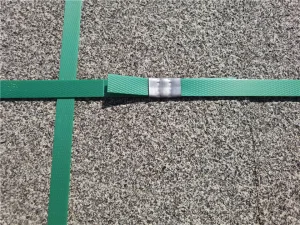
Protective Export Packaging: All cut-to-size panels and paving stones are packed into fumigated (ISPM 15 compliant) hardwood timber crates reinforced with galvanized steel strapping, corner shock protectors, and plastic moisture barriers. These precautions protect edges and finishes from damage throughout maritime transit and dockside handling.
From quarry-cut raw blocks to precision-finished slabs, exploring companion color palettes and engineered stone modules supplied to global and Vietnamese construction contractors.