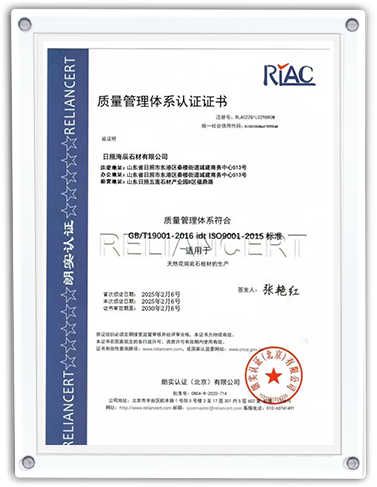
Specified Architectural Granite for Japanese Developments
Engineered to withstand rigorous seismic cycles, freeze-thaw degradation, and heavy pedestrian traffic in Japanese metropolitan and transit environments.
-
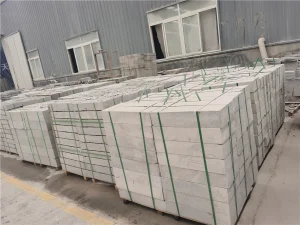 Limestone-Texture Granite for Japanese Urban Plazas & High-End FacadesWholesale Limestone Granite: Nature's Dual Gift Manufacturer, Factory
-
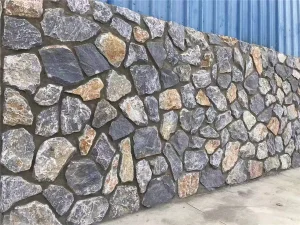 Cultural Landscape Granite for Japanese Gardens, Shrines & RestorationWholesale Chinese Culture Granite: Stone Chronicles a Millennium, Artistry Inherits the Orient Manufacturer, Suppliers
-
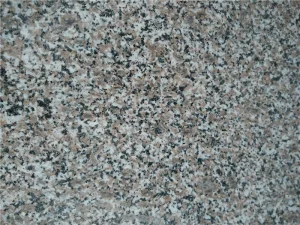 JIS-Calibrated Custom Colored Granite for Major Japanese Construction ProjectsChina Other Colours Granite – Custom Orders Manufacturers, Factories
-
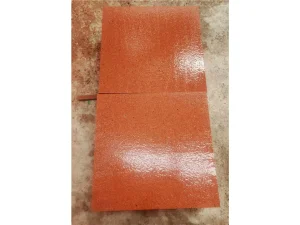 High-Density Monumental Red Granite Blocks for Prestigious Commercial TowersChina Premium Chinese Red Granite Blocks Supplier, Suppliers
The Granite Supply Landscape in Japan: Structural Deficits & Direct Manufacturing Sourcing
An authoritative breakdown of why Japan's leading construction syndicates, general contractors, and landscape architectural bureaus rely on integrated direct stone manufacturing.
Domestic Quarry Exhaustion in Japan
Historical quarry assets throughout Fukushima, Okayama, and Ibaraki prefectures have suffered severe volume reductions due to environmental protections and labor shortages. For large-scale projects like the Toranomon-Azabudai redevelopments or Osaka Metro upgrades, domestic supply cannot fulfill multi-thousand-square-meter requirements with tonal uniformity.
- Severe shortages in domestic white (e.g., Inada) and grey granites
- Depleted quarry extraction rights across central Honshu
- Crucial need for direct-source quarries with certified batch extraction
Extreme Quality Demands (JIS A 5003 / JASS 9)
Japanese engineering offices enforce some of the highest stone consistency criteria in the world. Tolerance for micro-fractures (Kizuna), ferrous rust spotting (Sabitsuki), and edge chipping is practically zero. Standard international trading batches inevitably fail Zenekon site inspection without dedicated computerized optical grading.
- Strict water absorption rates: ≤0.35% to prevent freeze thaw cracking in Hokkaido/Tohoku
- Total avoidance of biotite oxidation causing yellow staining
- Automated diamond grinding achieving planarity within 0.5 mm variance
Supply Chain Consolidation & Lead Time Resilience
Japan's severe penalization for construction delivery delays (Chitai-shokin) mandates suppliers with immediate port accessibility and dedicated block reserves. Direct maritime routing from Shandong Peninsula to the Kanmon Straits and Tokyo Bay guarantees uninterrupted project phasing for major real estate conglomerates.
- Pre-allocated quarry reserves ensuring identical vein structure over 3-year timelines
- Direct factory-to-port containerization eliminating intermediary handling
- Prefabricated anchor slots, kerb bevels, and tactile cuts delivered ready-to-set
Integrated Quarry & Fabrication Solutions for Japan Construction
Eliminating broker volatility through end-to-end quarry mastery, digital dry-lay protocols, and BIM-compatible dimensioning.
Seismic Curtain Wall & Mechanically Anchored Cladding
Earthquake compliance under Japan’s Building Standard Law (Kenchiku Kijun-hō) requires granite cladding panels to accommodate cyclic drift deformation. We machine precise back-cut anchor kerfs, aluminum clip kerf grooving, and stress-relieved edges directly on calibrated 5-axis bridge cutters.
- Precision CNC slotting compatible with Halfen and Fischer anchor systems
- Flexural strength certified ≥14.5 MPa according to ASTM C880 and JIS standards
- Numbered palletization coordinated strictly with architect installation blueprints
High-Traffic Municipal Transit Paving (Shinkansen & Metro Plazas)
Railway concourses, streetscapes, and pedestrian overpasses require exceptional skid resistance (BPN ≥60) and extreme wear tolerance. Our factory produces flamed, bush-hammered, and micro-grooved pavers engineered to remain slip-resistant under severe monsoon rain and coastal freeze conditions.
- Flaming lines calibrated with multi-nozzle oxygen torches to prevent micro-fracturing
- Custom tactile paving stones (Tenji Block) cut with precision guide ridges
- High density G603, G654, and Lu Grey granites resisting heavy de-icing salt applications
| Granite Material Grade | Color / Textural Characteristic | Water Absorption (JIS A 5003) | Compressive Strength | Japanese Market Application Scope |
|---|---|---|---|---|
| G603 Imperial Sesame White | Uniform light-grey fine/medium grain, zero veins | 0.28% (Compliant) | 162 MPa | Urban transit plazas, Shinkansen platforms, exterior stairs, curbstone systems |
| G654 Sesame Grey (Padang Dark) | Basalt-like charcoal grey, ultra-consistent crystallization | 0.19% (Superior) | 215 MPa | Commercial office towers, recessed cladding, luxury retail entrances, landscape copings |
| G3760 Shandong Supreme White | Bright calcite-granite matrix, marble-like aesthetics | 0.31% (Compliant) | 145 MPa | Corporate atriums, prestigious hotel lobbies, cultural facilities, museum wall panels |
| G386 Shidiao Red | Deep vermilion crystalline feldspar matrix | 0.24% (Compliant) | 178 MPa | Civic monument stonework, traditional shrines, temple foundations, accent facades |
| G684 Fuding Deep Basalt/Black | Fine volcanic basaltic grain, deep charcoal/black | 0.12% (Ultra-Dense) | 240 MPa | Water feature coping, reflecting pools, high-wear vehicular thresholds, luxury villas |
Japanese Standard Assurance: Digital Dry-Lay & Verification Protocols
Bridging the cross-border gap through documented laboratory inspections, Japanese-speaking trade logistics, and mock-up verification.
Factory Dry-Lay Inspection (Kari-Gumi)
For premier hotel lobbies, exterior facade envelopes, and large plazas, we perform complete pre-shipment dry-lay assemblies on our 4,000 m² indoor staging floor. High-resolution orthophotography and video inspections are reviewed and signed off by the client’s designated structural auditor before packing.
Fumigated Timber Crating with Corner Protectors
Japanese job sites maintain strict zero-damage standards. We employ heavy-duty, heat-treated pine crates compliant with ISPM 15 standards. Each crate incorporates high-density EVA shock absorption pads, heavy-gauge plastic wrapping for sea-salt barrier defense, and reinforced steel band strapping.
Bilingual Engineering & Custom Millwork Support
Our engineering bureau directly processes CAD/DWG and Revit BIM files provided by Japanese architectural studios. We produce full Japanese-annotated cutting schedules, block origin traceability reports, and mill test certificates demonstrating compliance with JIS A 5003 building stone metrics.
Engineered for Japan's Diverse Regional Environments
From the freezing winter salt environments of Hokkaido to the coastal seismic zones of Tokyo Bay, our granites are formulated to endure.
Northern Japan & Hokkaido Freeze-Thaw Resistance
In Sapporo and Sendai, exterior stone experiences rapid freeze-thaw cycles coupled with heavy de-icing chemical exposure. By enforcing a water absorption threshold ≤0.25%, Haichen granite eliminates inter-crystalline cracking and spalling, ensuring municipal curbstones remain intact over 50-year service life spans.
Metropolitan Tokyo High-Density High-Rises
For mixed-use commercial projects in Minato-ku and Shibuya, architectural specifications require exact tonal homogeneity across tens of thousands of square meters. Our dedicated quarry faces guarantee that year 1 facade cladding matches year 3 extension phases with zero perceptible delta-E color deviation.
Kansai Historical & Traditional Shrine Restoration
In Kyoto and Nara, restoration projects necessitate nuanced traditional surface treatments. We combine modern multi-axis diamond wire sawing with traditional manual finishing—including bush-hammered (Koyurugi), chisel-tooled (Nomi-kiri), and pine-bark textures—to harmonize with century-old cedar timber structures.
Technical Roadmap: Green Quarrying & Next-Gen Fabrication (2026–2030)
Deploying smart optical sorting, circular slurry recycling, and zero-carbon extraction to fulfill Japanese ESG and CASBEE green building goals.
AI Optical Vein & Flaw Scanning
We are integrating multi-spectral line-scan cameras directly on automated calibration conveyors. This technology screens internal mineral density and micro-fissures imperceptible to human inspection, ensuring 100% defect-free stone for structural facade envelopes.
CASBEE & LEED Embodied Carbon Alignment
Japan’s top developers (Mitsui Fudosan, Mitsubishi Estate, Mori Building) increasingly prioritize low embodied-carbon building products. Haichen Stone operates solar-powered cutting lines and a closed-loop closed-circuit wastewater filtration system, saving 92% of manufacturing water.
Ultra-Thin Granite Honeycomb Composite Slabs
To reduce structural dead loads on seismic steel-frame towers in earthquake zones, our advanced processing line produces 5 mm–8 mm thin granite veneer bonded to aerospace-grade aluminum honeycomb panels, decreasing facade deadweight by up to 65%.
Frequently Asked Questions: Sourcing Granite for Japan Projects
Direct answers for procurement officers, Zenekon engineering heads, and importing trading agencies.
How does Haichen Stone guarantee compliance with Japanese JIS A 5003 and JASS 9 standards?
How do you prevent ferrous oxidation (rust spots) on white and light-grey granites like G603 and G602?
Can you handle complex radius profiling, curb drops, and tactile paving for municipal contracts?
What is your lead time for containerized shipments from Rizhao to major Japanese ports?
Can our Japanese inspection agency or architect conduct factory audits prior to shipping?
Standard & Custom Granite Production Series
Direct quarry-milled stone varieties calibrated for commercial paving, dry-hung facade systems, public infrastructure, and Japanese monument engineering.
-
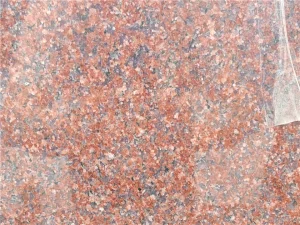 G386 Shidiao Red Granite Paving & Cladding Tiles for Japanese Architectural ProjectsWholesale G386 Shidiao Red Granite Tiles Manufacturers, Suppliers
-
Authentic Oriental Granite Carvings for Japanese Historic Sanctuaries & ParksWholesale Chinese Culture Granite: Stone Chronicles a Millennium, Artistry Inherits the Orient Manufacturer, Suppliers
-
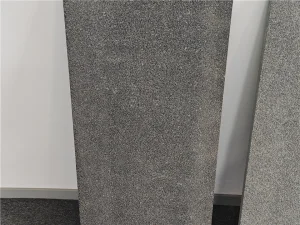 G684 Fuding Deep Black Basaltic Granite for Japanese Commercial Plazas & WaterwallsWholesale G684 Fuding Black Granite Factories, Factory
-
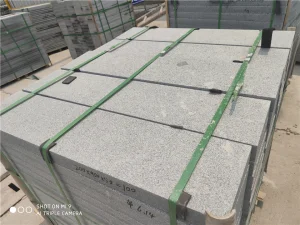 G654 Sesame Dark Grey Granite Flamed Paving for Japanese Pedestrian & Vehicular WalkwaysChina G654 Sesame Grey Granite Flamed Finish Supplier, Factories
-
 G3743 Lu Grey High-Strength Granite Structural Building Stone for Zenekon ContractsChina G3743 Lu Grey Granite Building Stone Manufacturer, Factories
-
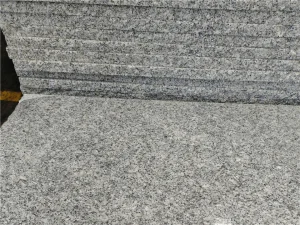 G602 Sesame White Economical Granite Paving & Curbstone for Japanese Transit StationsWholesale G602 Sesame White Granite Manufacturer, Supplier
-
Specialty Custom Grain & Tonal Granite Orders for Japanese Architectural Landmark DesignsChina Other Colours Granite – Custom Orders Manufacturers, Factories
-
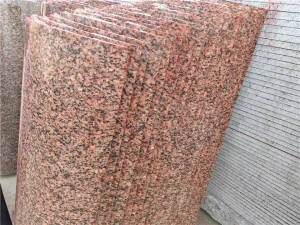 G352 General Red Granite High-Rise Dry-Hanging Cladding Panels for Japanese Office ComplexesWholesale G352 General Red Granite Cladding Panels Manufacturers, Factories