Featured Architectural Granite & Natural Stone Series
Direct quarry-sourced dimension stones cut, finished, and calibrated to international engineering tolerances for global infrastructure, commercial facade, and urban paving projects.
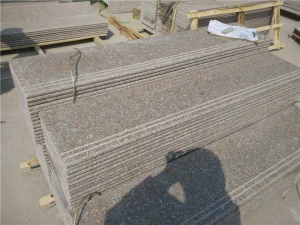
G368 Wulian Red Granite Paving Stones
View Product Details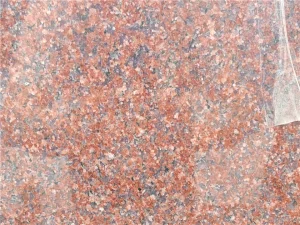
G386 Shidiao Red Granite Tiles
View Product Details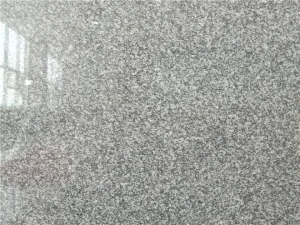
G3743 Lu Grey Granite Building Stone
View Product Details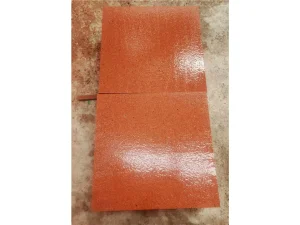
Premium Chinese Red Granite Blocks
View Product Details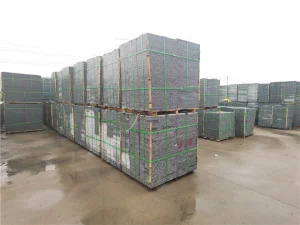
G3702 Snowflake Blue Granite
View Product Details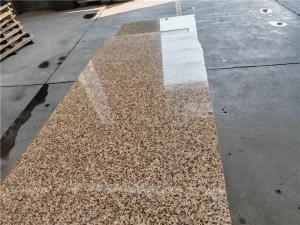
A1684 Golden Hemp Granite Countertops
View Product Details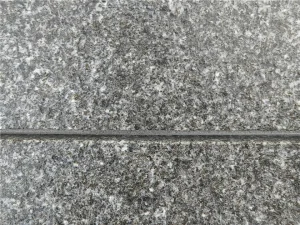
G3701 Binzhou Blue Granite Slabs
View Product Details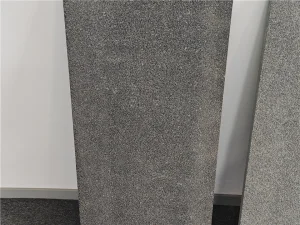
Wholesale G684 Fuding Black Granite
View Product DetailsMicro-Geological Composition & Structural Superiority of Chinese Charcoal Gray Granite
In modern structural landscape architecture and high-load commercial envelope systems, China Charcoal Gray Granite (geologically categorized within the fine-to-medium grained plagioclase-quartz-biotite intrusive igneous rock series) stands as the benchmark material for durability, flexural resilience, and color uniformity. Mined predominantly across the Precambrian metamorphic terranes of Shandong and Fujian provinces, these reserves exhibit a tightly interlocking holocrystalline texture that directly correlates to near-zero pore space and exceptional mechanical stability.
Unlike sedimentary or low-grade metamorphic stones prone to frost-heave and chemical degradation, Chinese Charcoal Gray varieties—including industrial classifications such as G654, G3743 (Lu Grey), and Sesame Dark variants—feature a modal quartz content ranging between 25% and 35%, balanced by microcline feldspar and minor amphiboles. This precise mineral distribution yields a bulk density exceeding 2,650 kg/m³ and compressive strength values routinely bypassing 160 MPa under wet and dry test protocols (ASTM C170 / EN 1926).
Petrographic Benchmark Summary
- Mineral Matrix: Plagioclase (45%), Quartz (30%), Biotite/Hornblende (20%), K-Feldspar (5%)
- Water Absorption Index: ≤ 0.18% by weight (ASTM C97 / EN 13755)
- Flexural Strength (Rupture Modulus): ≥ 14.5 MPa (ASTM C99)
- Freeze-Thaw Durability: Unimpaired post 50 cycles (-20°C to +20°C)
- Radioactivity Class: Class A building material (Unrestricted internal/external application)
Macro Commercial Trends in Charcoal Gray Granite Procurement
An analysis of international procurement shifts, supply chain resilience, and material substitution metrics across major infrastructure hubs.
Supply Chain Consolidation
The international dimensional stone market has witnessed a paradigm shift toward integrated quarry-to-factory complexes in China. By controlling raw block extraction in Shandong and Fujian, Tier-1 manufacturing facilities mitigate primary cost fluctuations and eliminate intermediate handling markups, providing guaranteed volume security for multi-phase megaprojects.
Cost-Performance Superiority
Compared to European dark granites such as Nero Impala or Spanish Dark Grey, Chinese Charcoal Gray Granite provides identical physical performance metrics at a 35% to 50% reduced FOB cost structure. This cost efficiency allows civil engineers and project developers to specify natural stone over artificial concrete pavers without compromising budget parameters.
Decarbonization & Eco-Labels
Modern Chinese stone factories operate under strict circular economy mandates. Zero-discharge water recycling systems, automated diamond-wire sawing (which reduces dust and material waste by up to 25%), and solar-supplemented fabrication yards enable compliant suppliers to deliver EPD (Environmental Product Declaration) certificates for LEED and BREEAM green building accreditations.
Technical Manufacturing Roadmap & Precision Finishing Systems
From raw block extraction to automated multi-head calibration, explore the industrial workflow powering Chinese granite processing facilities.
Stage 1: Diamond Wire Quarry Extraction & Petrographic Selection
Quarrying utilizes fully automated diamond-wire saws and hydraulic splitting rigs, eliminating blast-induced micro-fractures. Blocks are bench-tested for grain homogeneity and micro-fissure density using ultrasonic wave propagation tools before transportation to primary sawing yards.
Stage 2: Multi-Blade Gang Sawing & Automated Calibrating
Raw blocks are sliced into jumbo gang-saw slabs or thick structural blanks using high-speed multi-blade cutters calibrated with laser alignment sensors. Thickness tolerances are strictly maintained within ±0.5 mm for architectural slabs and paving units.
Stage 3: Advanced Thermal Spallation & Surface Texturing
Depending on the project specification, surfaces undergo automated flaming (high-temperature oxygen-propane thermal jetting), bush-hammering (multi-point carbide hammering), or continuous resin polishing. Thermal flaming causes controlled differential expansion of quartz grains, creating a slip-resistant micro-texture ideal for exterior urban spaces (PTV > 45 in wet conditions).
Stage 4: 5-Axis CNC Bridge Cutting & Edge Machining
Dimensional tiles, radius kerbs, and rainscreen facade panels are machined using 5-axis CNC bridge saws. Beveling, chamfering, pencil-edge profiles, and pre-drilled kerf slots for invisible anchor facade brackets are executed with sub-millimeter precision based on CAD/BIM models.
Stage 5: Photometric Dry-Lay Sorting & Sealing Treatments
Prior to packaging, finished tiles undergo dry-lay assembly under standardized daylighting illuminants. Spectrophotometric cameras analyze shade variations to ensure smooth tonal transitions across broad paved surfaces or vertical elevations. Optional nano-permeating oleophobic/hydrophobic sealers are applied for stain protection.
Macro Industry Solutions for Modern Structural Applications
Targeted engineering configurations designed to solve environmental, structural, and aesthetic challenges in public, commercial, and transport infrastructure.
Ventilated Rainscreen Facades
Thin-cut (20mm to 30mm) Charcoal Gray Granite panels combined with stainless steel undercut anchors form ventilated curtain wall systems. Thermal bridge reduction, moisture dissipation, and elevated wind-load resistance make these systems ideal for high-rise commercial structures operating in harsh climatic zones.
Heavy-Duty Municipal Plazas
High-traffic public squares require paving materials capable of handling extreme point loads and vehicular service access without cracking. Charcoal Gray Granite in 80mm to 120mm thicknesses delivers shear resistance and flexural integrity, preventing rutting and structural settlement under heavy traffic.
Railway & Transit Hub Flooring
High pedestrian throughput in metro stations, airports, and multi-modal transit hubs demands materials with exceptional Mohs hardness (Rating 6.5 to 7) and chemical resistance against floor scrubbing machinery. Honed or fine-flamed Charcoal Gray Granite minimizes maintenance downtime while retaining its appearance.
Localized Application Scenarios Across Micro-Climatic Zones
How material specifications are tailored to satisfy regional building codes and environmental conditions around the globe.
Nordic & Alpine Cold Climate Specifications
In Northern Europe, North America, and Alpine regions, paving materials are subjected to intense freeze-thaw cycles and de-icing salt application. Chinese Charcoal Gray Granite specified for these regions features a guaranteed water absorption threshold of < 0.15% and deep flamed textures to provide a minimum Pendulum Test Value (PTV) of 55, preventing pedestrian slip hazards during winter ice events.
Middle Eastern & Tropical High-Solar Load Zones
In GCC countries and equatorial regions, extreme surface solar radiation causes rapid thermal expansion in building materials. Charcoal Gray Granite facade panels specified for these locations are engineered with expansion joints sealed with high-elasticity structural silicones, utilizing the stone's low coefficient of thermal expansion (≈ 6.5 x 10⁻⁶ / K) to maintain structural alignment.
Technical Specification Matrix: Chinese Charcoal Gray Granite Variants
Comparative engineering data based on standardized ASTM and European EN test methodologies.
| Physical Property / Test Parameter | G654 Sesame Dark | G3743 Lu Grey | G684 Fuding Black / Basalt | Testing Standard Reference |
|---|---|---|---|---|
| Bulk Density (kg/m³) | 2,680 - 2,720 | 2,640 - 2,670 | 2,950 - 3,050 | ASTM C97 / EN 1936 |
| Water Absorption (% by wt.) | 0.14 - 0.17 | 0.16 - 0.19 | 0.08 - 0.12 | ASTM C97 / EN 13755 |
| Compressive Strength (MPa) | 175.2 (Dry) / 162.0 (Wet) | 158.0 (Dry) / 145.0 (Wet) | 210.0 (Dry) / 195.0 (Wet) | ASTM C170 / EN 1926 |
| Flexural Strength (MPa) | 16.8 | 14.2 | 22.4 | ASTM C880 / EN 12372 |
| Abrasion Resistance (mm) | 15.5 (Wide Wheel) | 16.2 (Wide Wheel) | 12.8 (Wide Wheel) | EN 14157 |
| Slip Resistance (Flamed Finish) | PTV 68 (Dry) / PTV 54 (Wet) | PTV 65 (Dry) / PTV 52 (Wet) | PTV 72 (Dry) / PTV 58 (Wet) | EN 14231 / BS 7976 |
| Mohs Hardness Scale | 6.5 - 7.0 | 6.0 - 6.5 | 7.0 | EN 101 |
Frequently Asked Technical & Procurement Questions
Expert guidance on specification, sourcing logistics, quality assurance, and installation procedures.
How do Chinese Charcoal Gray Granite factories control color consistency across multi-thousand square meter projects?
Color consistency is maintained through block batching and photometric sorting. Primary stone factories select raw blocks from specific geological benches within the quarry known for consistent mineral distribution. Following slicing and surface texturing, automated spectrophotometric cameras inspect each panel under standardized lighting. Slabs are graded into narrow color-tone bands (Tones A, B, and C) and packaged according to phased installation plans to ensure visual harmony across expansive paved or clad areas.
What is the optimal surface finish for exterior municipal paving versus interior high-traffic flooring?
For exterior municipal plazas and walkways, thermal flamed, bush-hammered, or water-jet finishes are recommended to maximize anti-slip properties (wet PTV > 45). For interior commercial flooring, high-traffic corridors, or elevator lobbies, a honed (smooth matte, 400-grit to 800-grit) finish is preferred. Honed surfaces present the rich dark gray tones of the stone without generating mirror reflections or highlighting micro-scratches caused by tracked surface grit.
What shipping packaging and load protection protocols are implemented for sea transport?
Finished stone components are packed into ISPM-15 compliant, heavy-duty fumigated wooden crates lined with polyethylene foam sheeting. Crates are reinforced with steel band strapping and fitted with corner protectors. In container loading yards, crates are chocked and braced with timber struts and dunnage bags to absorb dynamic motion during ocean transport, ensuring zero breakage or edge-chipping during international shipping.
How does Chinese Charcoal Gray Granite respond to thermal stress and freeze-thaw cycles in extreme climates?
Due to its micro-crystalline matrix and near-zero water absorption (< 0.18%), moisture infiltration into the stone matrix is minimized. Consequently, when subjected to sub-zero temperatures, the internal hydrostatic pressure generated by ice crystallization remains well below the stone's tensile strength threshold. Standard EN 12371 testing demonstrates no degradation in flexural strength or structural sound loss after 50 freeze-thaw cycles.
Specialized Granite Finishes & Complementary Building Materials
Explore additional natural stone textures, cut-to-size paving variants, and specialized structural elements engineered for complete envelope solutions.
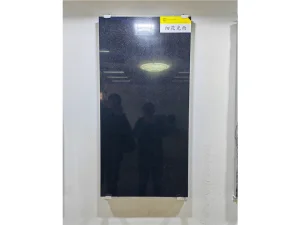
G3401 Shanxi Black Granite Slabs
View Product Details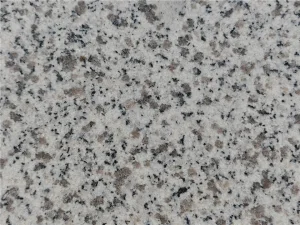
G3760 Shandong White Marble Granite
View Product Details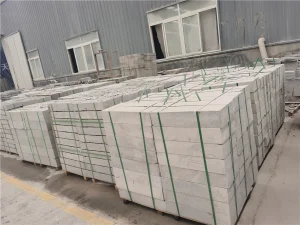
Limestone Granite Architectural Series
View Product Details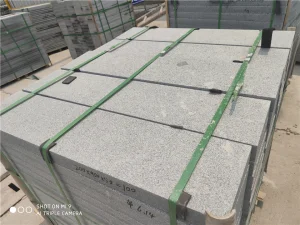
G654 Sesame Grey Flamed Granite
View Product Details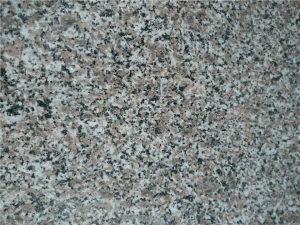
G6361 Wulianhua Granite Landscaping
View Product Details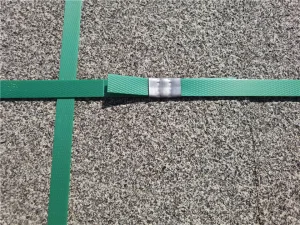
G654 Sesame Black Polished Slabs
View Product Details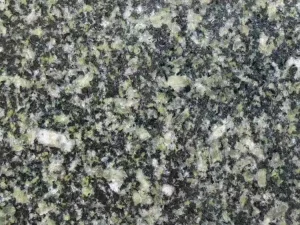
G4101 Forest Green Granite Veneers
View Product Details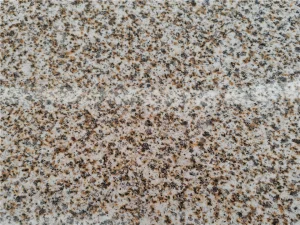
G682 Yellow Rust Paving Granite
View Product DetailsSpecify Chinese Charcoal Gray Granite for Your Next Global Project
Connect directly with our engineering and logistics specialists in Rizhao, Shandong. Receive full CAD shop-drawing support, physical sample boxes, and comprehensive factory-direct pricing for your tender package.