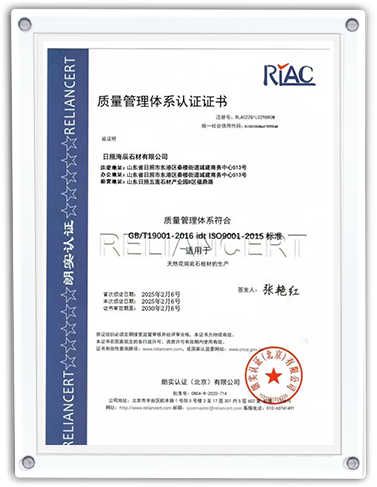
High-Performance Granite & Marble Modules: Part I
Engineered for facade durability, commercial flooring, and dimensional stone projects requiring tight mechanical tolerances and durable surface brilliance.
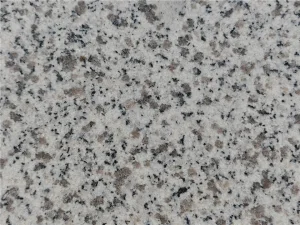
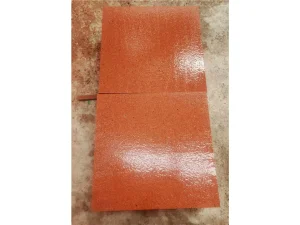

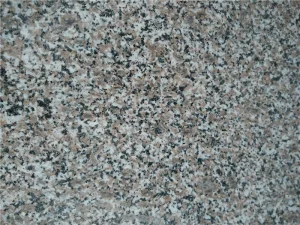
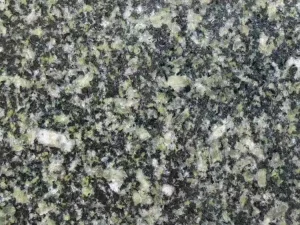
Global Market Dynamics of Polished Natural Stone
The international architectural stone sector demands higher reflectivity, structural resilience, and verified chemical durability across high-traffic airports, luxury facades, and municipal infrastructure.
Global Architectural Demand
Global demand for high-reflectivity natural stone has transitioned beyond mere aesthetics to strict lifecycle performance. Commercial real estate developers across North America, the Middle East, and Western Europe now demand granite and marble surfaces that resist environmental weathering, thermal fracturing, and chemical erosion while maintaining a specular gloss rating above 90 Gloss Units (GU).
Polishing Compound Evolution
The global polishing chemical landscape has phased out traditional wax emulsions in favor of fluoropolymer sealers and nano-silica densifiers. In industrial stone processing, the shift focuses on resin-bonded diamond abrasive progressions from 50 grit coarse milling up to 3000 grit micro-finishing, followed by mechanical thermo-chemical buffing to achieve molecular planarization without volatile organic compounds (VOCs).
Material Supply Disruptions
Legacy stone quarrying hubs in southern Europe face tightening mineral limits and rising electrical energy costs. As a result, Tier-1 contractors increasingly establish direct contracts with integrated Chinese facilities that control both raw quarry concessions and modern high-speed continuous polishing lines, securing multi-phase tonal stability across multi-thousand square meter deliveries.
Engineering Stone Polish: Mechanical & Petrochemical Principles
Achieving structural mirror finishes requires understanding the petrographic differences between silicate-based granite and carbonate-based marble under high-pressure processing.
Abrasive Grit Kinematics
Granite finishing relies on multi-axis planetary grinding heads utilizing metal-bonded synthetic diamond plates (50#, 150#, 300#) for primary surface planarization. This removes gang-saw micro-undulations, followed by phenolic resin-bonded diamond abrasives (500# to 3000#) to level surface peaks below 0.2 micrometers Ra.
Thermochemical Crystallization
Unlike granite's pure mechanical polish, marble contains over 90% calcite (CaCO3). It responds to oxalic acid-based fluorosilicate polish formulas. Friction heat from 175-300 RPM pads generates an acid-base surface conversion, creating calcium fluorosilicate—a vitreous barrier harder than the underlying stone.
Petrographic Variations
Natural granites such as G603, G654, and G352 feature complex quartz (Mohs 7), orthoclase feldspar (Mohs 6), and biotite mica (Mohs 2.5-3) matrices. Differential mineral hardness causes micro-relief if feed rate and spindle pressure are improperly calibrated, requiring automated variable-frequency spindle control.
Hydrophobic Nano-Sealing
Directly following automated polish passes, micropores down to 10-50 nanometers are treated with organosilicon penetrating sealers. This seals interior capillary tracks against water migration and efflorescence while preserving natural vapor permeability across exterior ventilated cladding.
China Factory Efficiency: The Rizhao Manufacturing Advantage
Combining proprietary quarry extraction, modern continuous processing lines, and immediate access to coastal maritime freight networks.
Vertical Mine Integration
Haichen Stone operates dedicated quarry concessions across the Shandong stone basin. By controlling raw block extraction directly from source veins, we eliminate middle-tier broker markups, ensure block density uniformity, and offer continuous vein matching across phased commercial releases.
Automated Production Velocity
Our workshop integrates 24-head continuous automated slab polishers and CNC 5-axis bridge cutting centers. This increases output throughput by over 50% compared to semi-manual facilities, producing up to 35,000 m² of polished architectural slabs monthly under strict thickness tolerances.
Port-Factory Logistics Corridor
Positioned directly within the Rizhao Stone Industrial Zone, our facility operates less than 45 kilometers from Rizhao Port and within short reach of Qingdao Port. This port-factory model cuts overland transit time, reduces transport breakage risks, and saves up to 30% on containerized shipping routes worldwide.
Architectural Deployment & Specification Parameters
Selecting surface treatment variations for specialized applications, balancing mirror reflectance against pedestrian slip resistance and structural wind loads.
Commercial Lobbies & Atriums
Polished granite and crystallized marble offer scratch resistance and light diffusion in Class-A commercial lobbies. With a specular gloss of 90-95 GU, polished surfaces brighten internal spaces and lower electrical lighting needs across expansive interior floors.
Ventilated Curtain Wall Panels
Curtain wall stone must withstand wind deflection, rain penetration, and freeze-thaw spalling. Polished G3760 and G654 panels are cut to 25-30 mm thicknesses, calibrated within ±0.5 mm, and slotted for stainless-steel anchorage clips in compliance with ASTM C1242 specifications.
High-Traffic Transit Hubs
Metro terminals and airport corridors demand high abrasion resistance. For high-wear pedestrian zones, we deliver honed and semi-polished finishes (400-800 grit) to retain stone crystallization, ensuring a dynamic coefficient of friction (DCOF > 0.42) for steady footing under wet tracking.
Bespoke Hospitality Countertops
Hospitality vanity tops and bar elements combine high-polish surface treatments with precision CNC edge profiling (Bullnose, Ogee, Dupont). We apply food-grade fluoropolymer impregnators to prevent organic staining from citrus acids, wine, oils, and commercial detergents.
Quality Control, ASTM/EN Testing & Technical Benchmarks
Dimensional stone procurement requires verifiable data. The following technical specifications represent standard physical and mechanical properties across our core polished granite production lines.
| Material Category | Quarry Code | Apparent Density (kg/m³) | Water Absorption (%) | Compressive Strength (MPa) | Flexural Strength (MPa) | Specular Gloss (GU) | ASTM / EN Standard |
|---|---|---|---|---|---|---|---|
| Sesame White Granite | G603 | 2,650 | 0.28% | 168.2 | 15.8 | ≥ 90° | ASTM C615 / EN 1341 |
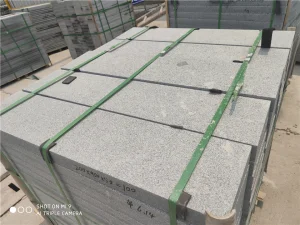
| Sesame Grey Granite | G654 | 2,720 | 0.19% | 194.5 | 17.4 | ≥ 92° | ASTM C615 / EN 1341 |
| Shandong White Marble/Granite | G3760 | 2,610 | 0.22% | 152.0 | 14.1 | ≥ 95° | ASTM C503 / C615 |
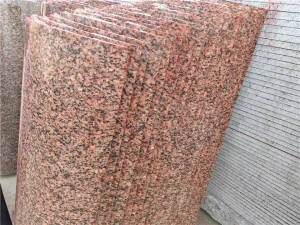
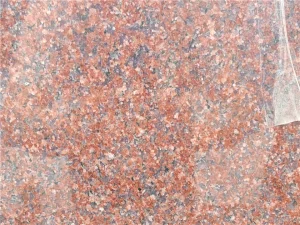
| General Red Granite | G352 | 2,630 | 0.25% | 174.0 | 16.2 | ≥ 88° | ASTM C615 / EN 1341 |
| Fuding Black Granite | G684 | 2,980 | 0.12% | 210.0 | 19.8 | ≥ 95° | ASTM C615 / EN 1341 |
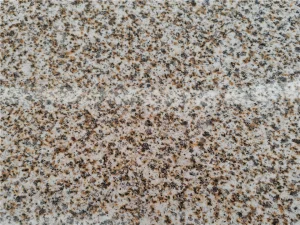
| Yellow Rust Granite | G682 | 2,590 | 0.34% | 145.0 | 13.5 | ≥ 85° | ASTM C615 / EN 1341 |
Dry-Lay Verification Protocol
For large-scale facade or commercial lobby packages, we perform pre-shipment dry-lay layouts across our 6,000 m² staging area. Tiles are mapped, numbered according to shop drawings, and checked under daylight lamps to ensure uniform vein direction and color balance before packing.
Export Seaworthy Packing
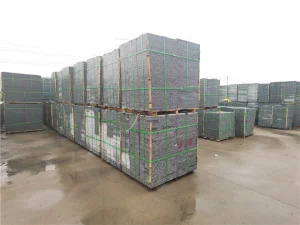
Export materials are packaged in ISPM-15 compliant, fumigated solid wood crates secured with internal foam corner guards, polyethylene moisture wraps, and high-tensile steel strapping. Crates feature integrated balance points for safe forklift and overhead crane unloading on construction jobsites.
Batch Chemical Traceability
Every production batch includes full raw block tracking records, digital surface gloss profiles, density testing sheets, and radio-protection environmental certifications. Third-party inspections (SGS, TÜV, Bureau Veritas) are readily facilitated prior to container sealing.
Sustainable Production Trends & Next-Gen Automation
How Haichen Stone uses closed-loop water treatment, AI optical grading, and precision processing to achieve sustainable, low-carbon stone manufacturing.
Zero-Discharge Sludge Recycling
Modern continuous polishing consumes substantial water volumes for spindle cooling and particulate removal. Our plant runs a multi-stage closed-circuit clarification filter-press system that recycles 98% of process water while compressing stone slurry into inert structural aggregate cakes, eliminating runoff and municipal disposal.
AI Computer Vision Optical Grading
Manual eye inspections face fatigue issues across multi-thousand meter production runs. Haichen Stone uses high-speed machine vision scanners directly on our outfeed conveyors. These line-scan cameras detect minute micro-fissures, chromatic variations, and gloss shifts, sorting panels into tolerance-graded groups.
Low-Carbon Thin Stone Facades
Transportation weight represents a major contributor to stone facade carbon footprints. Using ultra-thin composite diamond saws, we cut structural granite slabs down to 10-12 mm and bond them with aluminum honeycomb cores. This cuts panel weight by up to 60%, lowering facade loads and freight emissions.
Enterprise Sourcing: Strategic Stone Questions & Answers
Technical guidance for commercial buyers, civil contractors, and architectural specifiers sourcing polished stone directly from China.
How does Rizhao Haichen Stone ensure color consistency across multi-thousand m² orders?
Color stability starts at the quarry face. We source blocks exclusively from homogenous geological strata and verify each batch with chromatic spectrophotometers. Slabs undergo computerized sorting and full dry-lay sequencing at our facility before packing, ensuring seamless panel-to-panel color transitions across large building elevations.
What is the mechanical difference between a flamed finish and a polished finish?
A flamed finish applies a high-temperature oxy-propane flame (~2,500°C) across the stone face, causing thermal shock that fractures quartz crystals to leave a textured, slip-resistant surface for exterior paving. In contrast, polishing uses a sequence of progressive diamond abrasives and crystallization to create a specular, mirror-like finish for internal flooring and cladding.
Can polished marble and granite be specified for exterior walkways?
We do not advise high-polish stone for outdoor, uncovered horizontal walkways because wet rainwater reduces the Dynamic Coefficient of Friction below safe values (DCOF < 0.42), creating slipping hazards. For exterior plazas and stairs, we recommend flamed, bush-hammered, or sandblasted finishes. Polished slabs excel on vertical rainscreens, exterior columns, and covered dry lobbies.
How does factory automation lower overall stone procurement costs?
Automated 24-head continuous polishers and computerized bridge saws minimize kerf waste, maintain precision thickness tolerances (±0.5 mm), and cut labor costs per square meter. Fast production runs also shorten project lead times, helping overseas contractors reduce on-site installation adjustments and avoid construction delay penalties.
What documentation accompanies an international export shipment?
Shipments include an export Commercial Invoice, Packing List, Clean On-Board Bill of Lading, Certificate of Origin (CO/Form A/Form E), Official Phytosanitary Fumigation Certificate (ISPM-15), Mill Test Certificates covering ASTM/EN physical criteria, and batch photo/video verification logs from container loading.
What is the typical lead time for custom cut-to-size project orders?
Standard containerized orders (1,000–3,000 m²) typically require 15 to 25 working days from approved shop drawings and sample sign-off to port delivery. Phased releases for large-scale developments can be scheduled over multiple container shipments according to your on-site installation schedule.
High-Performance Granite & Marble Modules: Part II
Precision cut-to-size architectural slabs, high-load paving stones, and specialized curbstone formats for infrastructure, hospitality, and civic developments.


Initiate Your Commercial Stone Procurement Specification
Submit project bill-of-quantities, architectural shop drawings, or required finish benchmarks to our Rizhao technical engineering office. We provide prompt material take-offs, full sample kits, and complete port-of-destination freight estimates.