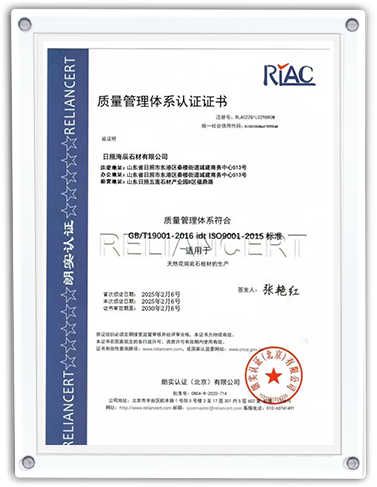
Featured Architectural & Dimensional Granite Slabs
Direct-quarry standard cuts and custom-dimensioned materials calibrated for high-durability commercial and infrastructure projects worldwide.

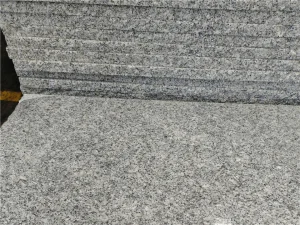
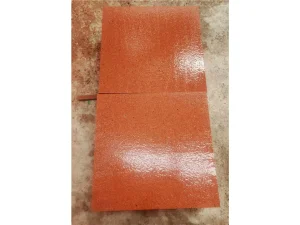

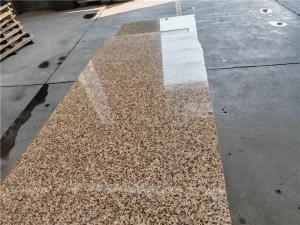
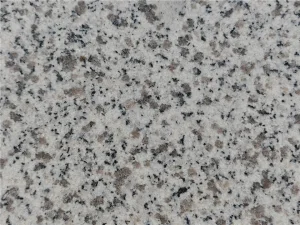
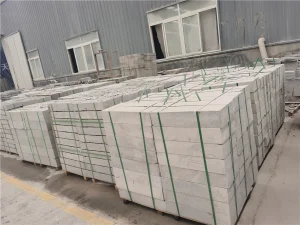
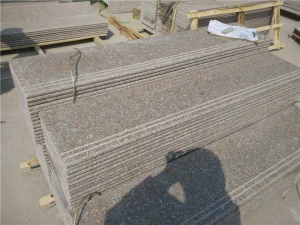
Geological Matrix & Physical Engineering of Pearl Flower Granite G383
Evaluating mineralogical composition, crystalline integrity, and high-load stress resistance under severe climatic variations.
Petrographic Composition
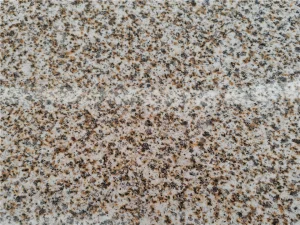
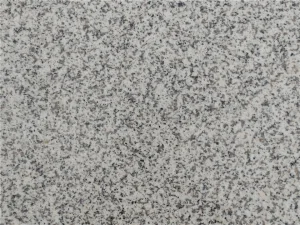
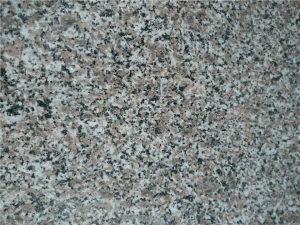
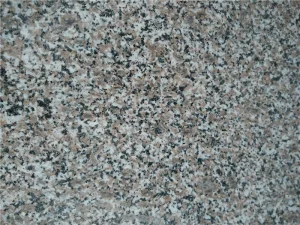
Pearl Flower Granite (coded as G383 or Wulian Flower) originates from the vast crystalline intrusive plutons of the Shandong peninsular complex. Petrographically classified as an alkali feldspar-quartz biotite granite, its structural framework boasts 60–65% potassium-rich orthoclase and plagioclase feldspar, 25–30% interlocking vitreous quartz, and 5–8% biotite. This microcrystalline arrangement generates the iconic speckled pearl-and-petal aesthetic while ensuring high intermolecular shear strength.
Density & Compressive Rigidity
Standard ASTM C615 and EN 12372 lab audits demonstrate that G383 Granite consistently exhibits a bulk density exceeding 2,620 kg/m³ with a water absorption rate controlled well below 0.32%. Its dry ultimate compressive resistance exceeds 145 MPa, reaching 160 MPa in select unweathered veins. This makes it an ideal medium for hyper-loaded urban applications, including multi-lane civil bus lanes, airport aprons, and multi-tier structural podium facades.
Freeze-Thaw & Chemical Stability
Thermal stress and salt-spray crystallisation tests reveal high structural endurance. Subjected to 50 continuous freeze-thaw cycles between -20°C and +20°C under EN 12371 parameters, G383 shows zero macro-fissuring and less than a 1.2% reduction in flexural rupture modulus. Its dense, silica-dominant boundary acts as an impenetrable shield against acid atmospheric precipitation, airborne chlorides, and industrial chemical splashback.
Commercial Reality: Global Infrastructure & The G383 Supply Chain
How Pearl Flower Granite maintains dominance as the international benchmark for cost-to-performance efficiency in major civic schemes.
Municipal Scale Sourcing
In European and Middle Eastern metro infrastructure, the requirement for raw dimensional stone is governed by predictable surface consistency and batch volume safety. While natural variations in some granites cause severe chromatic mismatch across multi-year phases, G383's expansive geological uniformity guarantees color matching across thousands of square meters. This eliminates the risk of tonal disparities between distinct shipment lots.
Cost-to-Lifespan Economics
Civil engineering cost modeling highlights that selecting reconstituted artificial stone or low-density porous limestone leads to premature degradation, resurfacing costs, and liability claims within 7–10 years. In contrast, G383 Pearl Flower Granite offers a design lifecycle exceeding 75 years with minimal maintenance. The quarry economics of Shandong allow it to compete closely with manufactured concrete pavers, delivering higher durability at a comparable installed cost.
Supply Decoupling Countermeasures
Global supply bottlenecks require suppliers to maintain deep raw reserves and vertically integrated processing. Haichen Stone protects international contractors from market shocks through dedicated quarry rights in Rizhao and stockpiles of raw blocks. This operational backbone shields ongoing contracts from supply crunches and export restrictions.
Technological Manufacturing Velocity: The Shandong Production Advantage
Integrating smart multi-wire saws, CNC edge profiling, and dual-port shipping hubs to optimize delivery lead times.
Automated High-Speed Sawing
Traditional single-blade frame cutters have been replaced by multi-wire diamond gang saws. These units slice multi-ton raw G383 blocks into finished slabs at three times the speed of older setups. Calibrated computerized tensioning keeps kerf variation under ±0.5 mm. This thickness consistency speeds up installation by minimizing the need for manual bedding corrections on site.
Optical Defect Scanning
Haichen Stone integrates machine-vision color-sorting and structural flaw scanning across its finishing lines. As cut tiles travel down the conveyor, high-resolution cameras analyze the grain pattern, surface density, and coloration of each G383 piece. Panels showing micro-cracks or excessive mineral spots are separated before packing, keeping lot acceptance rates above 99.8%.
Integrated Dual-Port Logistics
Factory proximity to both Rizhao Port and Qingdao Port gives our operations a strong logistics edge. Heavy stone cargo requires short land transit routes to control inland freight costs. Located just minutes from container loading docks, Haichen Stone avoids high transport markups, enabling fast ocean dispatch to Europe, the Americas, the Middle East, and Southeast Asia.
Strategic Architectural Applications: Tailored G383 Finishes
Matching industrial surface treatments to specific commercial, civil, and environmental project requirements.
Flamed Thermal Paving
Subjecting the sawn G383 surface to automated 2,800°C oxygen-propane flame jets causes quartz grains to spall, creating a rough, slip-resistant surface. This finish reaches a Pendulum Test Value (PTV) over 65 under wet conditions, meeting DIN 51130 R11/R12 safety standards for public plazas, subway access points, and civic sidewalks.
Bush-Hammered Kerbstones
Using multi-point pneumatic bush-hammer tools yields a uniformly pitted, light-toned surface. This finish is widely specified for highway kerbs, road barriers, and tactile pavers. It softens the stone's color while enhancing nighttime visibility and road edge definition under vehicle headlights.
Ventilated Facade Cladding
Diamond-honed and polished G383 panels, processed in 25mm to 30mm calibrated thicknesses, serve as durable cladding for steel-framed ventilated facades. High flexural strength ensures secure kerf-cut anchoring and back-bolt fixing, providing verified wind-load resistance for multi-story towers.
Waterfront & Marine Coping
Due to its low open porosity (<0.3%), Pearl Flower Granite resists seawater erosion and salt crystallisation damage along coastal promenades and ports. The stone resists biological growth and marine staining, making it a reliable material for splash zones, marinas, and riverfront walkways.
Standard Compliance: G383 Physical Benchmark Audits
Comparing China G383 laboratory test metrics against ASTM C615 and European EN standards for structural natural stone.
| Physical Property Target | Testing Standard | ASTM / EN Benchmark Requirements | Haichen Stone G383 Lab Verified Values | Engineering Assessment |
|---|---|---|---|---|
| Apparent Bulk Density | ASTM C97 / EN 1936 | Minimum ≥ 2,560 kg/m³ | 2,640 – 2,680 kg/m³ | Passes with a +3.1% margin above threshold |
| Water Absorption by Weight | ASTM C97 / EN 13755 | Maximum ≤ 0.40% | 0.22% – 0.28% | Substantially reduced moisture ingress risk |
| Dry Compressive Strength | ASTM C170 / EN 1926 | Minimum ≥ 131 MPa | 148.5 – 162.0 MPa | Suitable for high-load vehicular traffic |
| Flexural Rupture Modulus | ASTM C880 / EN 12372 | Minimum ≥ 8.27 MPa | 13.4 – 15.8 MPa | Resists wind suction and anchor point fatigue |
| Abrasion Surface Wear | ASTM C241 / EN 14157 | Hardness Index (Ha) ≥ 25 | Ha = 42.0 – 48.0 | Durable under heavy pedestrian footfall |
| Freeze-Thaw Resistance | EN 12371 (50 Cycles) | Residual Strength Loss < 20% | < 1.8% Strength Loss | Fully certified for sub-zero alpine and nordic zones |
Global Sourcing Requirements: Mitigating Procurement Risk
Key inspection protocols and supply chain strategies to ensure large-scale overseas orders arrive on time and within specification.
Range Sample Verification
Natural stone inherently features slight organic variance. Tier-1 procurement teams avoid approving a single pristine sample tile. We advise buyers to request an approved range box showing the maximum dark and light limits across current quarry benches. This practice prevents subjective color claims and keeps site handovers moving smoothly.
Factory Dry-Lay Audits
For key areas like transit concourses and grand facades, our workshop runs complete pre-shipment dry-lay routines. Slabs are laid out across the factory floor, aligned by grain flow, photographed under calibrated daylight lamps, and cataloged with clear sequence codes. This visual pre-check ensures trouble-free installation once the stone reaches the site.
Export Packaging & Ocean Stacking
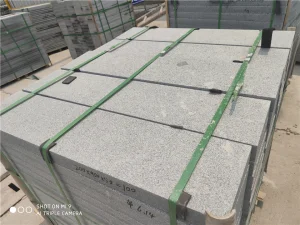
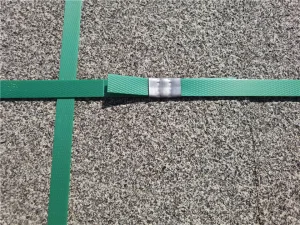
Rough ocean voyages can lead to edge chipping if packaging is substandard. Haichen Stone packs products in IPPC-certified, heat-treated solid timber crates reinforced with exterior galvanized steel bands. Inside, high-density polyethylene film separates finished faces to guard against surface friction, moisture accumulation, and finish discoloration.
Frequently Asked Questions: Pearl Flower G383 Supply
Key operational details on supply capacities, fabrication tolerances, port logistics, and project coordination.
Specialty Granite Varieties & Bespoke Formats
Explore our broader quarry reserves, specialized stone finishes, and engineered elements crafted for distinctive commercial landmarks.