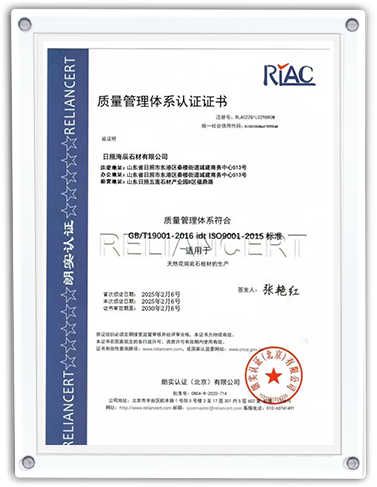
Primary Export Portfolio & Specimen Stock
Certified factory production profiles matched to global civil engineering, glass envelope, and architectural cladding installations.
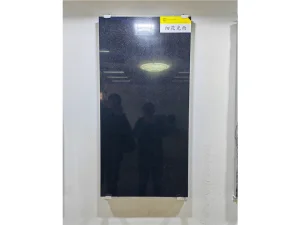
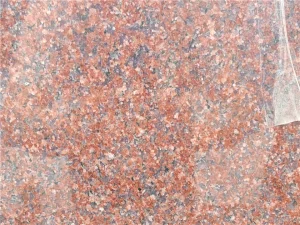
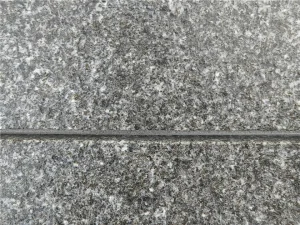

The Global Shift to Double Laminated Glass Architectures
Rising regulatory stringency in seismic resilience, hurricane fortification, and urban acoustic isolation has driven wholesale double laminated glass from a premium architectural choice into mandatory building codes worldwide.
Structural & Post-Breakage Retentivity
Unlike standard single-ply tempered glass that fragments instantly upon thermal shock or spontaneous NiS (nickel sulfide) inclusion failure, double laminated glass maintains load integrity post-failure. Utilizing composite interlayers like SentryGlas (SGP) or high-grade Polyvinyl Butyral (PVB), glass panes remain safely adhered to the structural core, preventing catastrophic fallouts from high-rise building envelopes.
Extreme Weather & Impact Hardening
Coastal municipal projects across North America, the Caribbean, and Southeast Asia specify double laminated composites designed to pass ASTM E1996 Large Missile Impact Level D/E testing. The multilayer damping system absorbs windborne projectile energy during typhoons and category 5 hurricanes without envelope breach, safeguarding internal building pressure balances.
Acoustic Damping (Rw & STC Ratings)
Megacity mixed-use towers positioned beside transit arteries require profound sound insulation. Double laminated glass with specialized viscoelastic acoustic interlayers addresses the critical coincidence frequency drop between 1000 Hz and 3000 Hz, achieving Sound Transmission Class (STC) ratings exceeding 42 dB without excessive structural dead load weight.
Complete Structural Cladding & Facade Systems
Connecting structural stone masonry with high-performance architectural glass creates balanced, thermally insulated, and aesthetically unified envelopes.
Hybrid Stone & Glass Unitized Curtain Walls
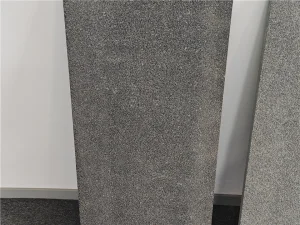
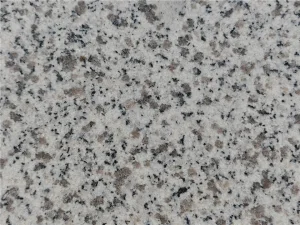
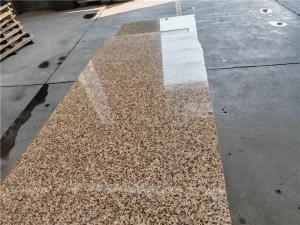
Modern engineering frequently demands uninterrupted transitions from granite spandrel panels to expansive double laminated vision lites. Haichen Stone provides unified packages integrating precision-sawn granite, structural steel frameworks, and spider clamp fittings to ensure cohesive thermal expansion allowances across adjacent material interfaces.
Blast & High-Security Structural Glazing
Commercial headquarters, embassies, and financial data centres utilize multi-layer laminated makeup (e.g., 10mm Toughened + 1.52mm SGP + 10mm Toughened + 1.52mm PVB + 6mm Toughened). Engineered in conjunction with rigid stainless steel clamp fittings, our assemblies satisfy ISO 16933 blast-mitigation performance standards.
Canopy, Skylight & Glass Flooring Systems
Overhead glazing requires rigorous safety engineering. Double laminated glass with ionoplast polymer interlayers demonstrates superior shear modulus at high ambient temperatures, guaranteeing that glass floors and skylights withstand direct dynamic footfalls and snow accumulation loads even if one ply sustains accidental fracture.
| Performance Parameter | Monolithic Tempered | Standard PVB Double Laminated | Structural SGP Double Laminated |
|---|---|---|---|
| Post-Breakage Structural Integrity | Zero (Instant Collapse) | Moderate (Sagging Blanket) | Extreme (Rigid Structural Retention) |
| Interlayer Shear Modulus (20°C) | N/A | ~1.0 to 1.5 MPa | ~100 to 130 MPa (100x stiffness) |
| Moisture Delamination Resistance | High | Requires Sealed Edge Sealing | Inherent Weather & Salt-Spray Stability |
| Solar Acoustic Performance (Rw) | 31 dB (10mm) | 37-39 dB (5+0.76+5mm) | 38-41 dB (Combined Viscoelastic) |
| Primary Global Code Verification | EN 12150, ANSI Z97.1 | EN 14449, ASTM C1172 | ASTM E1300, EN 16612, Miami-Dade NOA |
Technology Roadmap: The Future of Smart Glazing
The laminated glass fabrication sector is undergoing rapid evolution toward automated precision, energy generation, and dynamic daylight governance.
Direct embedding of Polymer Dispersed Liquid Crystal (PDLC) conductive films between double laminated sheets. This provides instantaneous switchable privacy alongside intelligent Solar Heat Gain Coefficient (SHGC) modulation triggered by building management automation.
Next-generation double laminates incorporate transparent thin-film cadmium telluride (CdTe) or perovskite photovoltaic layers within the structural resin core, transforming entire glass facades and stone spandrels into clean energy harvest points without sacrificing clarity.
State-of-the-art cleanrooms utilize AI optical scanner cameras to inspect sub-micron roller wave distortions, bow/warp tolerances, and pinhole imperfections in Low-E sputtered coatings prior to high-pressure vacuum lamination.
Global Compliance & Multi-Package Logistics Strategy
Eliminating container breakages, cross-border compliance bottlenecks, and material delays for international EPC contractors.
Stringent Multi-Regional Certifications
Every batch of exported glass and architectural stone is certified against relevant standards: CE Marking (EN 14449 / EN 12150) for the European Union, ANSI Z97.1 & SGCC for the United States, and AS/NZS 2208 for Australia and New Zealand. Traceable mill certificates and test batches accompany all bills of lading.
Seaworthy Heavy-Duty Steel A-Frame Stows
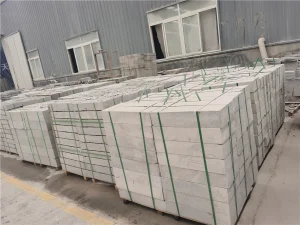
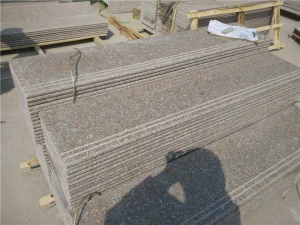
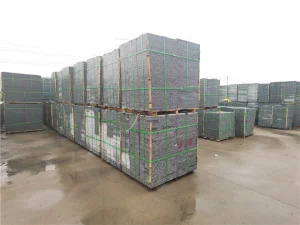
Industrial glass transport requires specialized crating. Slabs are loaded using desiccant-isolated, moisture-barrier wrapping within reinforced steel A-frames or heat-treated timber crates conforming to ISPM 15 standards, calibrated specifically for heavy marine container transport from Rizhao and Qingdao ports.
Direct Package Consolidation
Contractors benefit by consolidating building envelopes: natural granite cladding slabs, curbstone foundations, engineered double laminated glass, stainless steel glass clamps, and structural steel frames under one consolidated purchase agreement, significantly reducing overall shipping overhead and port processing fees.
Comprehensive Material Catalog for Bulk Procurement
Direct factory pricing on standardized dimension cut-to-size panels, slabs, curb elements, and bespoke carvings.

Wholesale Double Laminated Glass & Cladding FAQ
Essential technical answers addressing glass composition, structural performance limits, certification, and project package orders.