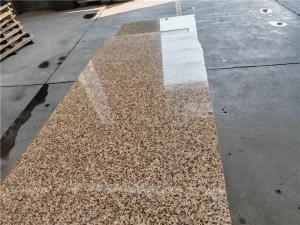
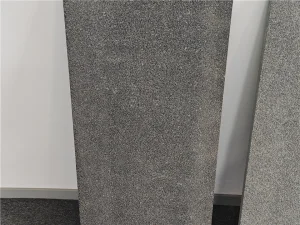
Featured Quarry-Direct Flamed & Architectural Granite Series (Part I)
Direct supply from Shandong and regional Chinese quarry hubs with engineered slip resistance, high flexural strength, and precision factory calibration.
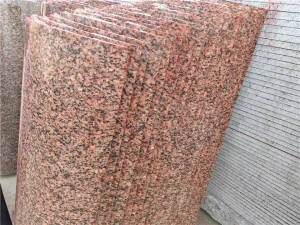
Wholesale G352 General Red Granite Cladding Panels Manufacturers, Factories
View Technical Specs
China G3743 Lu Grey Granite Building Stone Manufacturer, Factories
View Technical Specs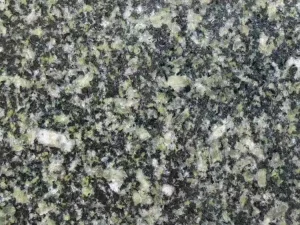
China G4101 Forest Green Granite Veneer Panels Supplier, Factories
View Technical Specs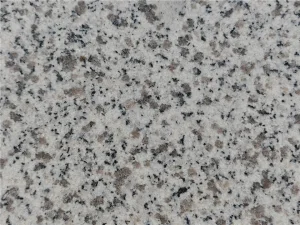
Wholesale G3760 Shandong White Marble Granite Manufacturers, Suppliers
View Technical Specs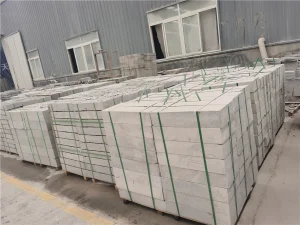
Wholesale Limestone Granite: Nature's Dual Gift Manufacturer, Factory
View Technical Specs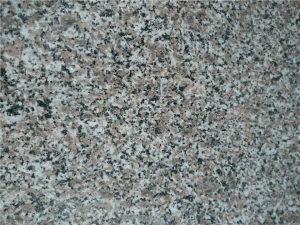
China G6361 Wulianhua Granite for Landscaping Manufacturer, Factories
View Technical Specs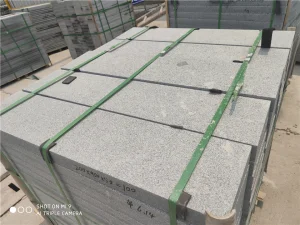
China G654 Sesame Grey Granite Flamed Finish Supplier, Factories
View Technical SpecsTechnical Baseline Standards for Wholesale Flamed Granite
Empirical quality parameters benchmarked under ASTM C615 and European EN 1341 standards for commercial specification.
> 165 MPa
Compressive Strength
ASTM C170 High-Load Rating
< 0.22 %
Water Absorption
ASTM C97 Freeze-Thaw Barrier
PTV > 65
Wet Slip Resistance
BS 7976-2 Pendulum Test Rating
2.68 g/cm³
Bulk Density
High Igneous Mass Density
1. The Physics of Flamed Granite Surface Processing & Micro-Structural Integrity
A comprehensive examination of high-temperature thermal spalling, quartz expansion phase transition, and surface friction coefficient engineering.
In contemporary architectural engineering and urban infrastructure development, specifying exterior paving and facade cladding requires a precise balance between structural durability, slip resistance, and environmental aesthetic longevity. Flamed surface granite (also historically referred to as thermal finish granite) stands at the pinnacle of stone processing techniques engineered specifically for high-traffic public realms and exposed architectural envelopes.
1.1 Thermodynamics of Thermal Spalling in High-Quartz Igneous Rock
The flaming process relies on subjecting cut granite slabs to high-velocity, high-temperature thermal jets generated by oxy-propane or oxygen-natural gas burners reaching temperatures between 1,100°C and 1,500°C (2,012°F to 2,732°F). As the torch traverses the sawn stone surface at controlled speeds (typically 1.2 to 2.5 meters per minute), an extreme thermal gradient is established between the surface skin and the stone core.
Granite is fundamentally composed of quartz, alkali feldspar, plagioclase, and minor ferromagnesian minerals like mica and amphibole. Quartz possesses an exceptionally anisotropic coefficient of thermal expansion ($\alpha = 14 \times 10^{-6}/K$ at ambient temperatures, rapidly increasing near the phase transition). When exposed to intense heat:
- Alpha-to-Beta Quartz Transition: At approximately 573°C (1,063°F), $\alpha$-quartz undergoes a displacive crystallographic transformation into $\beta$-quartz, resulting in a sudden volumetric expansion of roughly 0.8%.
- Micro-Differential Shear Stress: Because adjacent feldspar crystals expand at significantly lower rates and exhibit cleavage planes, differential thermal stress forces quartz grains near the surface to micro-fracture and spall away.
- Natural Texture Formation: The controlled mechanical exfoliation leaves behind a non-directional, highly tactile, glassy-vitrified surface characterized by mechanical roughness, micro-shadows, and rich color depth without sacrificing structural sub-surface density.
Material Selection Mandate for Wholesale Buyers
Not all granites flame equally. Igneous rocks with quartz content below 15% (such as pure black gabbro or certain basalt varieties) do not undergo sufficient thermal spalling and may crack or discolor. When procuring black flamed granite (e.g., G684 Fuding Black), precise flame nozzle calibration and automated water cooling beds are strictly required to avoid thermal shock fracturing.
1.2 Friction Dynamics and Slip Resistance Standard Ratings
For landscape architects and civil engineers, the governing metric for specifying flamed granite over smooth or polished alternatives is slip prevention under wet, oily, or icy conditions. Thermal flaming alters the topography of the stone surface, creating micro-texture depths between 0.5 mm and 2.0 mm.
| Testing Standard | Test Parameters | Flamed Granite Value | Compliance Application |
|---|---|---|---|
| DIN 51130 (Ramp Test) | Motorized oil-wet inclining platform | R11 - R12 | High-risk public inclines, transit platforms, pool concourses |
| BS 7976-2 / EN 13036-4 | Pendulum Test Value (PTV) wet slider 96 | PTV 55 - 72 (Low Slip Risk) | Municipal pedestrian zones, commercial building entries |
| ASTM C1028 | Static Coefficient of Friction (SCOF) wet | 0.75 - 0.88 | ADA Compliant accessible routes and public sidewalks |
| ANSI A137.1 / A326.3 | Dynamic Coefficient of Friction (DCOF) wet | > 0.60 | Commercial wet area exterior flooring specifications |
2. China's Granite Supply Chain Synergy & Direct Factory Scaling
How centralized quarrying clusters, industrial automation, and deep seaport integration eliminate middleman markups and ensure structural lead-time reliability.
Shandong & Fujian Mining Clusters
Direct integration with mega-scale quarry reserves including G603 Sesame White, G654 Sesame Grey, G3760 Shandong White, and G684 Fuding Black ensures uninterrupted material flow even for multi-hundred-thousand square meter commercial projects.
Automated Flame-Processing Lines
Multi-nozzle CNC flaming machines deliver consistent thermal exposure, preventing uneven burning, shadow lines, or localized slab bowing. Automated water-cooling cascades preserve internal shear strength while maintaining precise cut-to-size tolerances.
Dual-Port Coastal Logistics Hubs
Situated within rapid transport radii of Rizhao Port and Qingdao Port, bulk shipments transition directly from factory packing lines to container ships. Freight consolidation and port-side clearing lower landed costs by up to 22% compared to inland factories.
3. International Quality Compliance & Material Standards
Comprehensive alignment with ASTM, European Norms (EN), and global green building certifications for seamless submittal approval.
ASTM C615 / C615M Standard Specification
Guarantees structural granite meets minimum requirements: Absorption by weight max 0.40%, Density min 2,560 kg/m³, Compressive strength min 131 MPa, Modulus of rupture min 10.3 MPa, and Flexural strength min 8.27 MPa.
EN 1341 / EN 1342 / EN 1343 Harmonized Standards
Full CE & UKCA compliance documentation for natural stone slabs, setts, and kerbs for external paving. Subjected to freeze-thaw resistance testing under EN 12371 (56 freeze-thaw cycles without strength degradation).
LEED v4 & BREEAM Green Building Credits
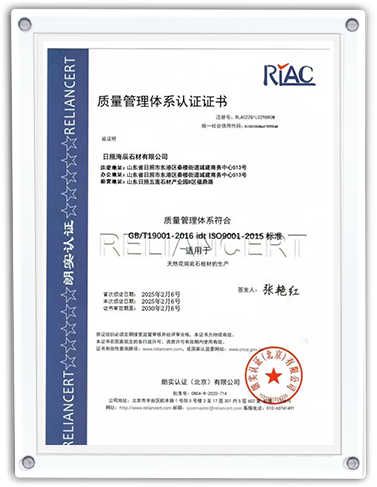
Natural stone processed with zero VOC emissions. Sourced from ISO 14001 certified quarries supporting closed-loop water filtration systems, contributing to MR Credits for recycled content, local extraction, and EPD transparency.
4. Application Engineering: Scenario-Based Specification Matrix
Tailoring stone thickness, surface flaming intensity, and edge detailing to distinct structural and climatic environments.
4.1 High-Density Municipal Plazas & Transit Hubs
In high-footfall areas such as railway concourses, metro entrances, and public civic plazas, flamed granite pavers must endure extreme impact, heavy rolling loads (cleaning equipment, emergency vehicles), and aggressive de-icing chemical exposure.
- Recommended Dimensioning: Minimum 50 mm to 80 mm thickness for pedestrian zones with occasional vehicular access; 100 mm to 150 mm depth for dedicated bus channels and freight zones.
- Finish Optimization: Flamed & Brushed (also known as Thermal Water-jet or Flamed Leathered). Flaming creates high slip resistance, while secondary diamond-brushing removes micro-shards, making the surface smoother under foot traffic while preventing dirt trap buildup.
- Color Selection: G603 Sesame White, G654 Sesame Grey, and G3743 Lu Grey provide consistent monochromatic tones that visually disguise urban wear and grease stains.
4.2 Exterior Rain-Screen Vent Facades
Anchored granite rain-screen facades require thin-cut dimensional stone panels that present high flexural strength to withstand wind suction forces while remaining lightweight.
- Specification Profile: 30 mm nominal thickness cut to precision tolerances ($\pm 1.0\text{ mm}$). Kerf cut slots or back-drilled undercut anchors (e.g., Fischer or Keil systems) fitted directly into aluminum sub-framing.
- Thermal Surface Uniformity: Computerized thermal flaming guarantees color consistency across batch lots, preventing visual patchwork effects on elevated multi-story facades.
4.3 Severe Nordic & Alpine Freeze-Thaw Environments
In cold climates (e.g., Scandinavia, Canada, Northern US, Eastern Europe), micro-cracks in stone absorb water, which expands by 9% upon freezing, causing spalling or structural fracturing.
- Petrographic Requirement: Low-micro-porosity granites with open porosity ratings under $0.5\%$. Flamed surfaces must be treated with deep-penetrating fluoropolymer impregnating sealers to prevent water absorption without forming a film barrier that traps sub-surface vapor.
5. B2B Global Enterprise Procurement & QA/QC Control Protocols
A rigorous 5-stage quality management framework designed to mitigate financial risk and guarantee jobsite installation efficiency.
1. Block Grading
Spectrophotometric analysis and ultrasonic flaw detection at the quarry bench ensure only Grade A+ blocks without dark spots, color lines, or internal micro-fractures enter primary sawing lines.
2. Precision Machining
Multi-blade gang saws and diamond wire block cutters calibrate thickness tolerances within $\pm 0.5\text{ mm}$ for indoor tiles and $\pm 1.5\text{ mm}$ for heavy exterior pavers.
3. Dry-Lay Color Matching
Full-scale dry-lay inspection under daylight spectrum lighting. Slabs are color-grouped, numbered sequentially according to shop drawings, and packed in exact installation order.
4. Export Crate Engineering
Heavy-duty fumigated ISPM-15 solid pinewood crates lined with plastic film and foam padding. Steel banding with corner guards prevents maritime movement damage during long sea transit.
6. Future Industry Trends: Automation, Decarbonization & Circular Stone Fabrication
How modern stone factories are transforming flamed granite processing through green manufacturing innovations.
The natural stone manufacturing sector is experiencing a paradigm shift driven by stringent carbon neutrality mandates, environmental protection laws, and demand for automated precision. Modern wholesale suppliers are evolving beyond conventional stone cutting into technology-driven green factories.
- Robotic Flame Automation & Fuel Transitions: Traditional manual oxy-acetylene torching is being superseded by automated 6-axis robotic arms operating with hydrogen-oxygen plasma jets. This reduces fuel consumption by up to 35%, eliminates carbon soot residue on light granite surfaces, and guarantees flawless surface texture uniformity across millions of square meters.
- 100% Closed-Loop Slurry Recycling: Water filtration systems utilizing automated filter presses separate stone slurry into compressed dry filter cakes and 99% clarified process water. Slurry byproduct is recycled into ceramic tile substrates and engineered eco-aggregates, eliminating environmental dumping.
- Embodied Carbon Transparency (EPD): When evaluated under Life Cycle Assessments (LCA), natural flamed granite exhibits substantially lower embodied energy than synthetic quartz, ceramic slabs, or concrete paving due to minimal chemical transformation during processing. Factories providing verified Environmental Product Declarations (EPDs) hold a strong competitive edge in international commercial tenders.
7. Frequently Asked Questions (Technical & Procurement FAQ)
Addressing core technical, quality control, and commercial logistics inquiries from global stone buyers.
Does thermal flaming reduce the flexural or compressive strength of granite slabs?
Thermal flaming exfoliates only the top 0.5 mm to 1.5 mm surface layer. Because structural strength is determined by the total sound core thickness, flaming does not significantly reduce structural integrity provided the initial slab thickness accounts for the microscopic surface loss. For high-load structural specifications, we recommend adding 2 mm to 3 mm of tolerance allowance during initial block sawing.
What is the difference between Flamed Finish and Bush-Hammered (Litchi) Finish?
Flamed Finish uses intense heat jet flames to cause micro-thermal spalling, creating a glassier, natural crystalline rough texture with varied grain highlights. Bush-Hammered Finish is a purely mechanical process where pneumatic carbide-tipped hammer points strike the surface, creating an even, uniform pitted pattern. Flamed finishes preserve more of the original natural crystal color variation, whereas bush-hammering slightly lightens the overall color tone.
How do you prevent color variation across large volume orders of Chinese granite?
Color stability is controlled at the quarry source. We extract raw blocks exclusively from single quarry layers for specific contract lots. During factory processing, slabs are categorized into sub-tonal color shades (Shade A, B, C), and a mandatory pre-shipment dry-lay inspection is conducted. Sequenced numbering on the edge of each slab ensures seamless installation on-site.
What is the maximum container loading capacity for heavy flamed granite pavers?
Standard 20-foot heavy-duty ocean shipping containers carry a maximum payload of 21.5 to 27 metric tons, depending on destination port weight regulations (e.g., US market limit is typically 21.5 tons without overweight chassis, while EU/Middle East allows up to 26–27 tons). For example, 20 mm flamed pavers equal roughly 370–450 m² per 20ft container, while 50 mm pavers yield approximately 180–200 m².
Should flamed granite exterior pavers be sealed after installation?
Yes. While flamed granite is highly durable, the open micro-textured surface created by thermal spalling can trap airborne particulates, dirt, and organic oils. Applying a breathable, solvent-based penetrating fluoro-chemical sealer (impregnator) prevents water and stain penetration without forming a surface film, retaining the full non-slip PTV rating and natural stone aesthetics.
Featured Quarry-Direct Flamed & Architectural Granite Series (Part II)
Explore additional premium colors and structural formats available for global container-load procurement.
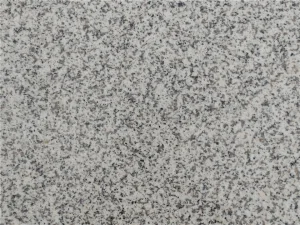
China G603 Sesame White Granite Suppliers, Factory
View Technical Specs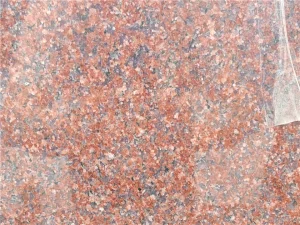
Wholesale G386 Shidiao Red Granite Tiles Manufacturers, Suppliers
View Technical Specs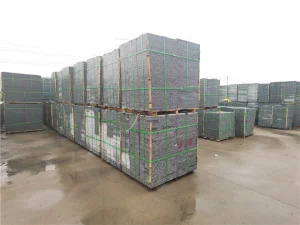
China G3702 Snowflake Blue Granite Manufacturers, Supplier
View Technical Specs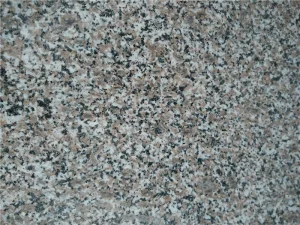
China Other Colours Granite – Custom Orders Manufacturers, Factories
View Technical Specs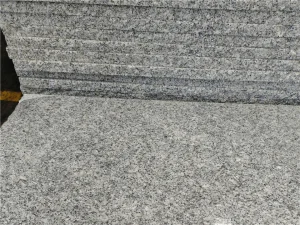
Wholesale G602 Sesame White Granite Manufacturer, Supplier
View Technical Specs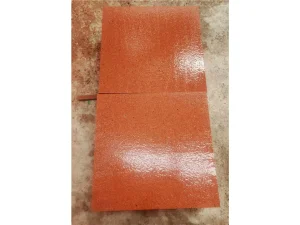
China Premium Chinese Red Granite Blocks Supplier, Suppliers
View Technical Specs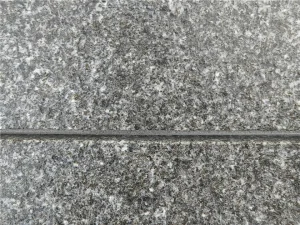
China G3701 Binzhou Blue Granite Suppliers, Factory
View Technical Specs