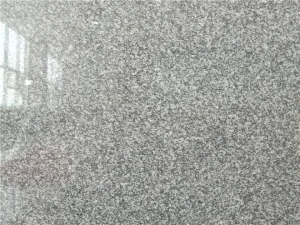
Engineered Project Glass & Stone Systems (Selection Part I)
Pre-engineered structural components and monolithic natural surfaces precision-machined for worldwide commercial installations.
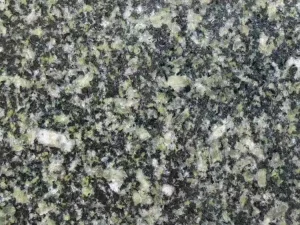
China G4101 Forest Green Granite Veneer Panels
View Specifications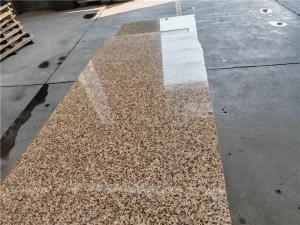
China A1684 Golden Hemp Granite Countertops
View Specifications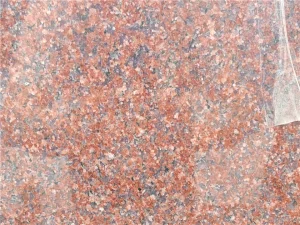
Wholesale G386 Shidiao Red Granite Tiles
View Specifications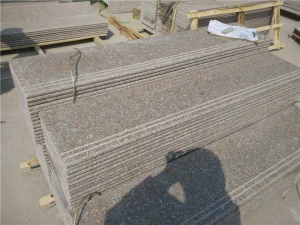
Wholesale G368 Wulian Red Granite Paving Stones
View Specifications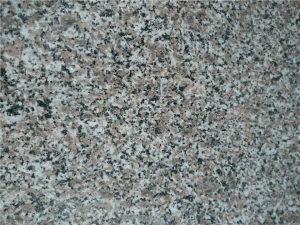
China G6361 Wulianhua Granite for Landscaping
View Specifications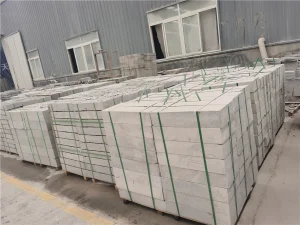
Wholesale Limestone Granite: Hybrid Collection
View Specifications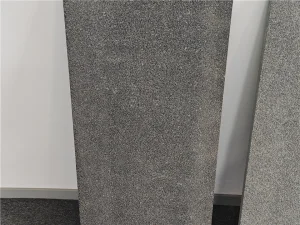
Wholesale G684 Fuding Black Granite Pavers
View Specifications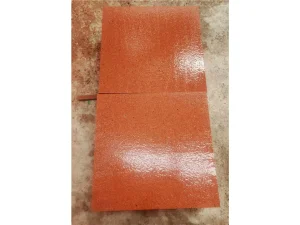
China Premium Chinese Red Granite Raw Blocks
View SpecificationsHeat Strengthened Laminated Glass: The Architectural Shift
Why modern structural engineering codes favor Heat-Strengthened Laminated assemblies over Fully Tempered panels in high-risk envelope designs.
Elimination of Nickel Sulfide (NiS) Failures
Unlike fully tempered glass, heat-strengthened (HS) glass undergoes controlled convection cooling that does not lock in the severe tensile core stress (>69 MPa). This mechanical profile completely circumvents the risk of catastrophic spontaneous breakage triggered by microscopic Nickel Sulfide inclusions, eliminating expensive on-site forensic evacuations.
Superior Post-Breakage Interlocking
When fully tempered laminated glass ruptures, it shatters into thousands of dice-sized kernels, causing the composite panel to collapse into a soft, sagging membrane ("wet blanket effect"). Heat-strengthened lites fracture into extensive, jagged islands that mechanically interlock, maintaining structural rigidity and keeping the envelope closed until replacement.
Minimal Roller Wave & Optical Planarity
Because heat strengthening introduces a surface compression profile between 24 MPa and 52 MPa (3,500 to 7,500 psi), processing furnaces run with gentler quenching cycles. This virtually eliminates edge lift, severe roller wave distortion, and quench marks (anisotropy), ensuring crisp reflected images across prestige architectural facades.
Comparative Performance Matrix: Glazing Technologies
ASTM C1048, EN 1863, and EN 12600 standard alignments for structural specification teams.
| Performance Indicator | Annealed Laminated Glass | Heat-Strengthened Laminated Glass | Fully Tempered Laminated Glass |
|---|---|---|---|
| Surface Compression Range | < 24 MPa (< 3,500 psi) | 24 – 52 MPa (3,500 – 7,500 psi) | > 69 MPa (> 10,000 psi) |
| Thermal Shock Resistance | ~40°C ΔT | ~100°C ΔT (Resists High Solar Load) | ~200°C+ ΔT |
| Post-Breakage Residual Rigidity | Moderate (Large shards, risk of tear) | Optimal (Mechanical shard interlock) | Poor (Granular dice collapse laminate) |
| Spontaneous NiS Rupture Risk | Zero | Zero (No core tension threshold) | High unless Heat Soak Tested (EN 14179) |
| Interlayer Compatibility | PVB / EVA / SentryGlas (SG) | PVB / Acoustic / SG Structural Polymers | PVB / SG Structural Polymers |
| Optical Distortion (Roller Wave) | None | Extremely Low (< 0.08 mm / 300 mm) | Moderate to High (> 0.15 mm / 300 mm) |
Advanced Manufacturing & Global Supply Chain Integration
Combining automated dual-chamber convection tempering, cleanroom autoclave cycle management, and direct multimodal shipping hubs.
Intelligent Convection Heating Furnaces
Our processing lines deploy full forced-convection heating chambers equipped with matrix temperature control sensors. By eliminating localized hot-spots on high-performance soft-coat Low-E glass, our systems achieve exact surface compression tolerances across runs exceeding 10,000 m².
Class 100 Laminating Cleanrooms
Interlayer layups occur in Class 100 cleanrooms under strict hygrometric control (RH 20–25%, temperature 18–22°C). High-pressure autoclaves (up to 13.5 bar at 145°C) ensure optimal resin-to-glass polymerization, completely preventing edge bubble formation and micro-delamination under extreme UV and coastal humidity.
Port-Factory Direct Infrastructure
Situated in proximity to primary shipping terminals (Rizhao & Qingdao Ports), our packaging lines utilize seaworthy, end-capped A-frames and dessicant-sealed crates. Direct port linkage reduces internal handling damage, cuts drayage emissions, and secures competitive landed logistics costs worldwide.
Engineered Use Cases for Heat-Strengthened Laminated Glass
Targeted solutions answering code demands across extreme wind zones, public corridors, and seismic footprints.
Overhead Skylights & Canopies
Global building codes universally mandate that broken glass above occupied pedestrian spaces must stay intact. Heat-strengthened laminated glass with structural interlayers creates a sturdy diaphragm when cracked, preventing shards from falling and keeping weather seals intact until service teams arrive.
High-Rise Curtain Wall Spandrel & Vision
Curtain wall spandrels absorb intense thermal loads due to dark ceramic frit patterns or back insulation, often causing thermal stress fractures. Heat-strengthened laminated units easily absorb temperature deltas up to 100°C without requiring cumbersome heat soak testing cycles.
Frameless Balustrades & Point-Fixed Walls
For spider-fitting and point-supported facade designs, local stress concentrations around bolt drill holes can cause localized failure in ordinary lites. Heat-strengthened lamination resists localized clamping strains while delivering dependable edge-compression stability.
Engineering FAQ: Specification & Quality Control
Practical guidance for façade consultants, general contractors, and procurement managers.
Why choose Heat-Strengthened Laminated over Heat-Soak Tested Tempered Glass?
Heat Soak Testing (EN 14179) reduces the rate of NiS-induced failure but cannot mathematically eliminate it. Furthermore, once a tempered lite breaks, it granulates immediately and loses structural function. Heat-strengthened lamination provides a fail-safe mechanism: it guarantees zero NiS spontaneous breakage while preserving post-break structural containment.
What is the standard tolerance control for surface compression?
Per ASTM C1048, heat-strengthened glass requires a surface compression profile between 24 and 52 MPa (3,500 to 7,500 psi). Our factory uses non-destructive differential surface refractometers (GASP) to continuously calibrate heating cycles, keeping surface compression strictly within the target range across all batch runs.
How does PVB compare to Ionoplast (SentryGlas) interlayers in HS lamination?
Standard PVB (0.76 mm, 1.52 mm) serves effectively in four-side framed systems requiring standard acoustic dampening and UV filtration. For open balustrades, point-supported spiders, and large canopies, SentryGlas ionoplast interlayers deliver 100 times the stiffness and five times the tear strength of PVB, working in tandem with HS shards to sustain design live loads even after fracture.
Can Heat-Strengthened glass be cut or drilled after processing?
No. Just like tempered glass, all cutting, edge polishing, notch milling, and hole drilling must be completely executed prior to the thermal strengthening process. Attempting post-furnace mechanical processing will breach the surface compression layer and initiate immediate fracture propagation across the entire plate.
Integrated Façade Systems & Hardscape Material (Selection Part II)
Architectural stone cladding modules, custom landscape masonry, and precision-cut interior panels for integrated envelope construction.
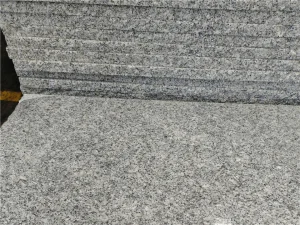
Wholesale G602 Sesame White Granite
View Specifications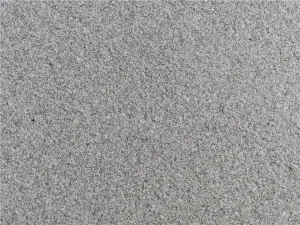
China G614 Sesame Grey Slabs & Tiles
View Specifications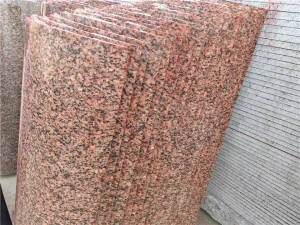
Wholesale G352 General Red Cladding Panels
View Specifications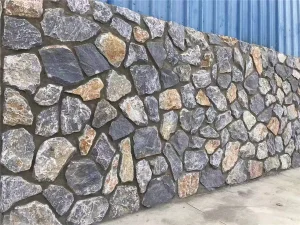
Chinese Culture Custom Architectural Stonework
View Specifications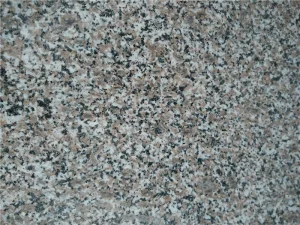
Custom Palette Architectural Hardstone Panels
View Specifications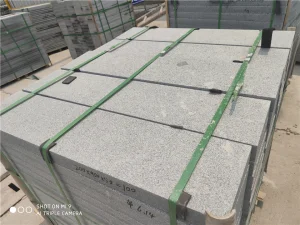
China G654 Flamed Finish Tactile Granite
View Specifications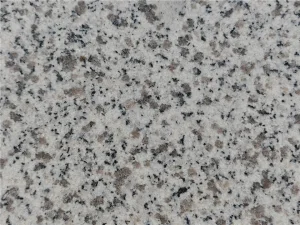
Wholesale G3760 Shandong White Crystalline Panels
View Specifications