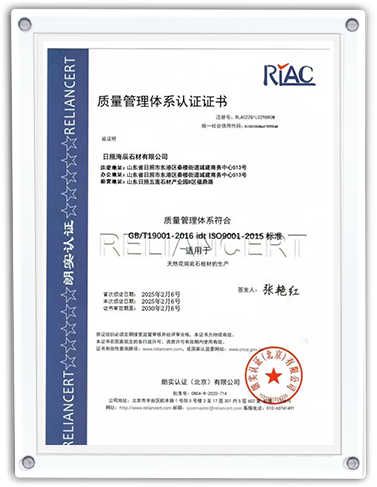
Featured Architectural Glazing & Composite Envelopes
Precision-manufactured units calibrated for structural curtain wall assemblies, thermal break fenestration, and integrated natural material envelopes.
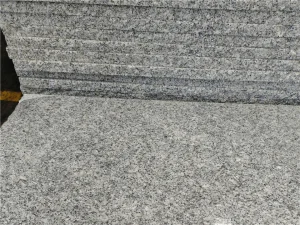
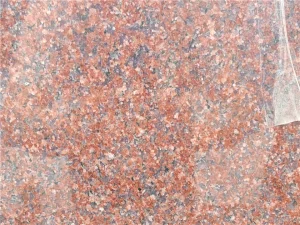
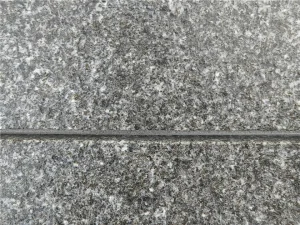
The Strategic Evolution of Insulated Laminated Glazing (ILG)
Navigating stringent zero-carbon building directives, seismic resilience criteria, and architectural solar control through composite glass-membrane engineering.
Thermal Decarbonization & Low-E Coatings
Global regulatory frameworks such as ASHRAE 90.1 (US), the EU Energy Performance of Buildings Directive (EPBD 2024/1275), and China's GB55015 energy conservation standards necessitate overall assembly U-values below 1.1 W/(m²·K). High-performance double-glazed units (DGU) integrating a laminated safety pane and magnetron-sputtered triple-silver Low-E coatings effectively mitigate solar radiant flux while achieving superior thermal insulation.
Structural Integrity & Fall-Out Prevention
Monolithic tempered glass carries an inherent, albeit minimal, risk of spontaneous breakage caused by nickel sulfide (NiS) inclusions. When deployed overhead in skylights, canopies, or elevated curtain walls, the integration of laminated glass (utilizing cross-linked Polyvinyl Butyral [PVB] or SentryGlas [SGP] ionoplast interlayers) prevents panel collapse, preserving tensile envelope integrity even under full surface fracture loads.
Acoustic Damping & Low-Frequency Noise
Rapid urban densification adjacent to transport corridors demands sophisticated acoustic attenuation. By pairing panes of asymmetric thicknesses (e.g., 8mm exterior tempered + 16mm warm-edge cavity + 6mm+1.52PVB+6mm interior laminated), our composite systems counter the acoustic coincidence dip, achieving Sound Transmission Class (STC) ratings exceeding 42–48 dB across challenging traffic and aviation frequencies.
Structural Configuration of Insulated Laminated Assemblies
A granular breakdown of interlayer chemistry, multi-chamber gas insulation, and hermetic perimeter barriers engineered for decades of zero-failure service.
Interlayer Chemistry: PVB vs. SentryGlas (SGP)
Standard architectural lamination relies on standard architectural Polyvinyl Butyral (PVB) to deliver Grade-A safety performance, shatter control, and UV filtration (blocking up to 99% of 280–380nm wavelengths). For high-load, open-edge exterior canopies, glass fins, and hurricane-rated storefronts, our factory employs Kuraray SentryGlas (SGP) ionoplast interlayers. SGP provides 5 times the tear strength and 100 times the post-breakage rigidity of conventional PVB, preventing interlayer creep and moisture-induced edge delamination over extensive service cycles.
Hermetic Edge Sealing & Warm-Edge Spacers
The longevity of an Insulated Glass Unit (IGU) hinges strictly upon the integrity of its dual-seal perimeter barrier. Haichen integrates a continuous polyisobutylene (PIB) primary vapor seal, backed by high-modulus two-component structural silicone secondary seals for structural glazing applications. By replacing traditional aluminum spacers with hybrid composite stainless steel/polymer warm-edge spacers, edge thermal bridging (Ψ-value) is mitigated by up to 65%, virtually eliminating perimeter condensation under sub-zero ambient conditions.
Noble Gas Filling & Desiccant Matrix
Internal hermetic cavities are charged with 90%+ pure Argon or Krypton gas via robotic vacuum-assist displacement systems, drastically suppressing internal convection and thermal conduction. Integrated into the spacer framework is a high-adsorption 3A molecular sieve desiccant that permanently traps trace manufacturing moisture. This guarantees a dew point consistently lower than -60°C, verified through non-destructive laser gas analysis before container crating.
| Assembly Configuration | Visible Light Transmittance (VLT) | Solar Heat Gain (SHGC) | U-Value (W/m²·K, Argon 90%) | Acoustic Rating (STC / Rw) | Primary Target Application |
|---|---|---|---|---|---|
| 6mm Low-E + 12A + (6mm + 1.52PVB + 6mm) | 64% | 0.34 | 1.32 W/m²·K | 40 dB | Commercial Office Towers, Mid-Rise Facades |
| 8mm Solar Control + 16A + (8mm + 1.52SGP + 8mm) | 52% | 0.26 | 1.18 W/m²·K | 44 dB | High-Rise Glazing, Hurricane Impact Zones |
| 10mm Low-E + 16A + (10mm + 2.28SGP + 10mm) | 48% | 0.22 | 1.10 W/m²·K | 46 dB | Skylights, Overhead Glazing, Airport Terminals |
| Triple Glazed: 6 + 12A + 6 + 12A + (6+1.52PVB+6) | 58% | 0.28 | 0.74 W/m²·K | 47 dB | Passive House Certified Envelopes, Nordic Regions |
Automated Production, Quality Traceability & Port Proximity
How Rizhao Haichen Stone combines heavy industrial processing with smart clean-room autoclaving and streamlined maritime logistics.
Cleanroom Lamination & Controlled Autoclaving
Our glass fabrication facility features an ISO Class 7 cleanroom environment with real-time temperature (20±2°C) and relative humidity (<28%) stabilization to prevent particulate contamination or moisture entrapment prior to vacuum de-airing. Secondary thermo-compression inside computerized multi-stage autoclaves running at 13.5–14.0 bar pressure and 135–145°C guarantees complete cross-linking and optical clarity without optical haze or micro-bubbles.
Automated Inline Laser Metrology & Quality Control
Every pane undergoes robotic edge deletion of Low-E coatings to prevent sealant oxidation, followed by high-speed CNC arrissing, tempering furnace heating with optical distortion monitoring, and automated secondary sealing extrusion. Inline optical scanners continuously test for roller wave distortion, edge lift, and gaseous argon concentration, rejecting any unit that deviates from strict ASTM C1172, ASTM C1036, or EN 1279 compliance thresholds.
Strategic Dual-Port Maritime Integration
Strategically situated in the Rizhao Stone Industrial Park (Shandong, China), our operational hub leverages direct arterial freight routes to Rizhao Port and Qingdao Port. This port-factory co-location reduces internal transport handling by 30%, eliminates intermediate transshipment risks, and provides rapid vessel scheduling for breakbulk or containerized shipments across North America, Europe, Australia, and the Middle East.
Synergy of Architectural Glazing, Stone Cladding & Structural Steel
Bridging the gap between diverse envelope materials to provide turnkey structural solutions for project developers and general contractors.
Integrated Curtain Wall & Stone Cladding Packages
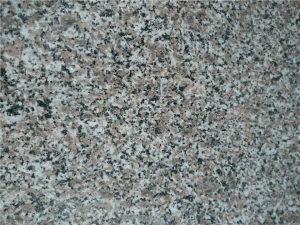
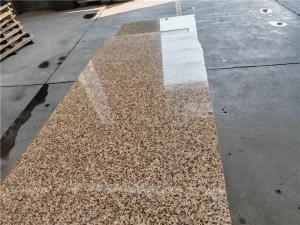
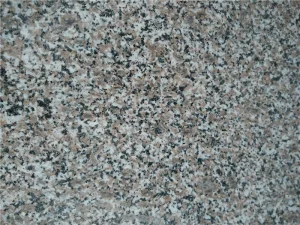
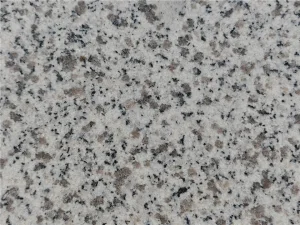
Modern commercial buildings rarely rely on a single material. Haichen operates as an integrated manufacturer combining natural stone fabrication (quarried granites such as G603, G602, G654, G3760, and custom marbles) with structural fenestration systems. Our technical detailing team assists architects with coordinating thermal expansion coefficients between heavy granite spandrels and insulated laminated vision glass, eliminating on-site interface errors.
Engineered Steel Frameworks & Precision Glass Clamps
To support large-span insulated laminated panels, we manufacture precision stainless steel glass clamps, spider fittings, and custom hot-dip galvanized steel sub-structures. By fabricating both the glazing components, hardware anchorages, and steel support members under a unified quality assurance regime, we guarantee micron-level assembly tolerances and prevent galvanic corrosion in harsh coastal or industrial environments.
One-Stop Export Consolidation & Phased Logistics
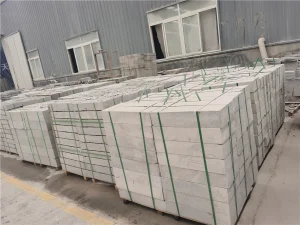
Sourcing building envelopes from multiple disparate vendors leads to schedule slippage and mismatched container space. Haichen’s logistical infrastructure allows overseas contractors to bundle custom insulated laminated glass units, CNC-carved granite pavers, facade cladding slabs, and fenestration extrusions within consolidated containerized dispatches, reducing total freight expenditure by up to 25% while streamlining customs clearance.
Localized Application Scenarios & Case Studies
Customizing glass engineering parameters for extreme thermal variations, typhoon corridors, and high-security public infrastructure.
High Solar Irradiation & Desert Climates (Middle East / GCC)
Challenge: Surface ambient temperatures reaching 50°C paired with massive infrared thermal gain, requiring low solar heat coefficient without turning internal spaces into dark caves.
Solution: Double-glazed insulated laminated panels comprising 8mm high-selectivity solar reflective glass + 16mm 90% Argon air space + 6mm+1.52PVB+6mm interior pane. This configuration yielded an SHGC of 0.23 and a light-to-solar-gain (LSG) ratio of 1.85, saving an estimated 34% in cooling energy for Dubai commercial complexes.
Typhoon & Hurricane Corridors (Coastal SE Asia & Florida)
Challenge: Cyclic wind loads exceeding 4.5 kPa combined with windborne debris impact demands compliant with Miami-Dade and ASTM E1886/E1996 large missile tests.
Solution: Outer sacrifical sacrificial pane of 8mm fully tempered glass, 14mm argon space, backed by an interior impact-resistant laminate of 8mm tempered + 2.28mm SentryGlas + 8mm tempered. Successfully withstood sustained structural positive and negative cycling at 5,000 Pa with zero perimeter dislodgement.
Sub-Zero Continental & Nordic Environments
Challenge: Severe interior-exterior temperature gradients (>45°C) provoking thermal shock edge fractures and extreme conductive heat loss.
Solution: Triple-glazed insulated laminated units incorporating two dual-cavity warm-edge spacer tracks, dual krypton gas filling, and dual surface Low-E coatings (#2 and #5), yielding a center-of-glass U-value of 0.65 W/(m²·K). Integrated heat-soak testing (HST per EN 14179) eliminated the risk of premature spontaneous breakage.
Rigorous International Glazing Standards Compliance
Every batch manufactured in our Rizhao facility undergoes systematic testing verified against major North American, European, and Australian performance codes.
North American Standards (SGCC / IGCC / ASTM)
Fully compliant with ASTM C1172 (Standard Specification for Laminated Architectural Flat Glass), ASTM E2190 (Insulating Glass Unit Performance and Evaluation), and certified through the Safety Glazing Certification Council (SGCC - ANSI Z97.1) and Insulating Glass Certification Council (IGCC) for moisture vapor penetration and structural silicone retention.
European Norms (CE / EN 1279 / EN 14449)
Certified under EN 1279 Parts 1–6 (Thermal and Acoustic Performance, Gas Leakage Rate <1% per annum, Fogging and Moisture Resistance) and EN 14449 for laminated safety glass. Heat Soak Testing (HST) is conducted strictly in accordance with EN 14179 to destroy unstable nickel sulfide crystals prior to crate loading.
Australasian Benchmarks (AS/NZS 2208 & 4666)
Audited and verified compliant with AS/NZS 2208 for safety glazing materials in buildings (human impact resistance) and AS/NZS 4666 for insulating glass units. Designed specifically to handle the elevated UV radiation conditions characteristic of the Southern Hemisphere without polymeric embrittlement.
Wholesale Insulated Laminated Glass FAQ
Definitive answers covering engineering parameters, quality assurance protocols, delivery lead times, and global export packaging.
What is the critical distinction between PVB and SentryGlas (SGP) in Insulated Laminated Glass?
How does Haichen guarantee that the insulating unit will not fog or leak gas over its service lifespan?
Can Low-E coatings be applied directly adjacent to the laminated interlayer?
What maximum glass dimensions can your factory process for wholesale insulated laminated orders?
How does Haichen coordinate mixed shipments of natural stone, glass units, and curtain wall fittings?
What is your policy regarding third-party quality inspection and factory audits?
Complementary Structural & Landscape Stone Products
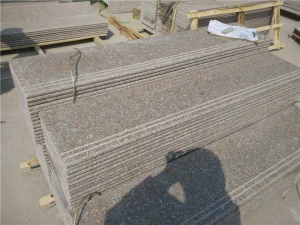
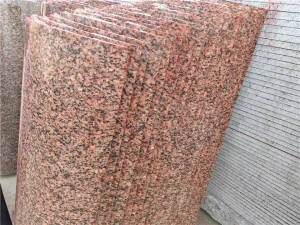
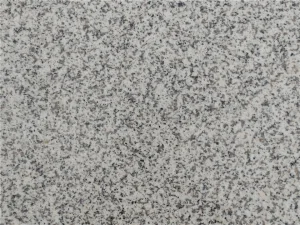
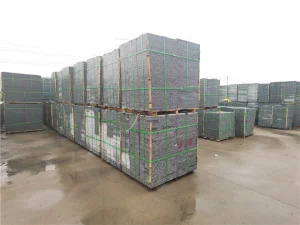
Quarry-direct materials processed to match facade fenestration, public plaza landscaping, and municipal structural requirements.
Initiate an Engineering Specification or Request a Wholesale Proposal
Directly connect with our Rizhao-based structural glazing engineers and natural stone export managers for architectural take-offs, sample kits, and optimized maritime dispatch schedules.
Technical Desk & Instant WhatsApp
For immediate project tenders, bill-of-quantities (BOQ) evaluations, and structural calculations:
Telephone: +86-13082791888
Direct WhatsApp: +86 13082791888
Our trade specialists operate across international time zones (UTC+8).
Architectural Take-Off & Shop Drawings
Submit CAD/BIM facade drawings, thermal performance targets (U-value/SHGC), or customized granite cutting schedules:
Direct Engineering Email: [email protected]
Formal quotations, thermal simulation analyses, and physical range samples dispatched within 48 hours.
Factory & Quarry Operational Campus
Physical Address: Shandong Rizhao Stone Industrial Park, Rizhao, Shandong, China.
Logistics Nodes: Direct arterial container loading to Rizhao Port and Qingdao Maritime Freight Terminal.
On-site audits, third-party laboratory sample selection, and factory inspection delegations welcome year-round.