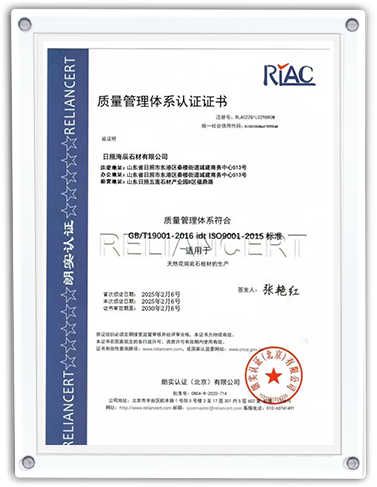
Grey Granite Suppliers & Factories in the Seoul Market
Technical performance specifications, cross-border direct-quarry supply chains, and architectural masonry solutions for high-density metropolitan infrastructure in Seoul and Gyeonggi-do.
Send Inquiry NowPrimary Grey Granite Specifications for Seoul Projects
Pre-selected, quarry-calibrated granite grades rigorously lab-tested to satisfy KS F 2530 architectural stone parameters across the Capital Region.
-
 Seoul Grade China G614 Sesame Grey Granite Slabs & Tiles Supplier, Suppliers
-
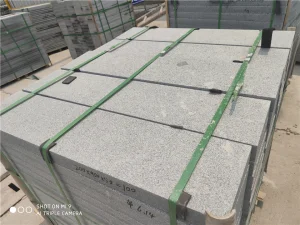 Seoul Paving Grade G654 Sesame Grey Granite Flamed Finish Supplier, Factories
-
 Seoul Civil Engineering China G3743 Lu Grey Granite Building Stone Manufacturer, Factories
-
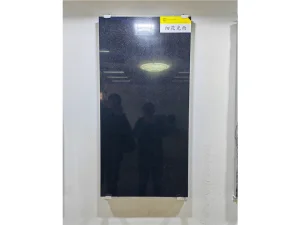 Korea Commercial Spec China G3401 Shanxi Black Granite Manufacturer, Factory
The Seoul Metro Market: Natural Stone Consumption & Urban Redevelopment
The Seoul Metropolitan Area, housing over 25 million people across its urban center and Gyeonggi satellite nodes, presents one of the highest dimensional granite consumption indices per square kilometer in the Asia-Pacific territory. Between massive urban regeneration agendas such as the Yeouido financial revival, Magok High-Tech District expansions, and nationwide Great Train eXpress (GTX) transit hubs, exterior dimensional masonry demand has evolved past basic utility.
In South Korea, grey granite is the baseline architectural substrate. It is prized for visual sobriety, strict compliance with the Seoul Metropolitan City Landscape Ordinances, and superior freeze-thaw resilience against severe winter thermal cycles. Yet, domestic South Korean quarry extraction (historically sourced from regions like Geochang and Pocheon) has contracted significantly due to environmental restrictions, carbon controls, and labor exhaustion, creating a structural sourcing deficit.
Critical Urban Factor: Sub-Zero Climates & De-Icing Salt Stress
Seoul winters regularly expose exterior stonework to temperatures below -15°C paired with harsh calcium chloride de-icing compounds. Low-absorption grey granite varieties (≤ 0.28%) are essential to prevent surface spalling, micro-fissuring, and salt-crystallization blowouts.
Structural Sourcing Shifts
Korean tier-1 contractors (EPCs) including Hyundai E&C, Samsung C&T, and GS E&C systematically direct external envelope and public square packages to direct-origin primary Chinese processors capable of high-throughput block calibration.
Total Landed Cost Efficiency
Direct supply from Shandong ports (Rizhao and Qingdao) to Incheon and Pyeongtaek reduces deep-water transit times to 24–36 hours, securing rapid maritime delivery schedules unachievable by Southeast Asian or European suppliers.
Direct Shandong Factory Moats for Seoul Infrastructure
How Haichen Stone leverages localized quarry assets, smart fabrication automation, and maritime logistics to eliminate commercial intermediaries.
Quarry-Direct Batch Continuity
Large-scale commercial projects in Gangnam and Bundang require chromatic consistency spanning tens of thousands of square meters. Our privately controlled reserves guarantee precise grain matches across phased multi-year releases.
Automated Infrared Multi-Blade Sizing
Equipped with CNC wire saws, digital diamond block-cutters, and automated calibrating beds, our Rizhao factory maintains dimensional tolerances within ±0.5mm, critical for dry-hang open facade designs common in contemporary Seoul architecture.
Rigorous KS F 2530 Verification
Every export bundle bound for Korean ports is pre-audited for water absorption, dry density, and flexural rupture strength, meeting both South Korean National Building Codes and international ASTM/EN benchmarks.
Seoul-Specific Architectural & Civil Engineering Scenarios
Matching stone textures and cut profiles to rigorous municipal codes and extreme climate exposures.
Subway & GTX Transit Infrastructure
Seoul Metro lines, transfer stations, and the GTX rail network demand flamed and bush-hammered grey granite floor plates of 30mm–50mm thickness. These surfaces withstand millions of commuter footfalls, preventing slip hazards during damp monsoon conditions and icy winters.
Dry-Hang Commercial Curtain Walls
Corporate corporate headquarters in Gangnam-daero and Pangyo Techno Valley leverage honed, water-jet, or fine-flamed Lu Grey and Sesame Grey panels mounted on ventilated stainless steel framing systems, balancing thermal mass with acoustic dampening.
Apt. Complex (아파트) Landscapes
Major apartment redevelopments (LH, Raemian, Hillstate) specify granite curb stones, radius segments, retaining barriers, and outdoor waterscapes. Haichen Stone produces radius-matched kerbs directly to Korean standard drawings with clean sawn edges.
Need Immediate Project Costing for South Korea?
Submit your Korean shop drawings (CAD/DWG) or bill of quantities. Our international technical sales desk provides detailed FOB Rizhao or CIF Incheon/Pyeongtaek bids within 24 hours.
Send Inquiry NowMaterial Performance: KS Standard vs. Haichen Stone Production
Quantifiable testing data verifying compliance with the standard architectural stone performance codes of South Korea.
| Physical / Mechanical Property | Korean Standard (KS F 2530) | Haichen Lu Grey (G3743) | Haichen Sesame Grey (G654/G614) | Performance Relevance in Seoul |
|---|---|---|---|---|
| Apparent Density (kg/m³) | ≥ 2,500 | 2,640 | 2,710 | High structural integrity under mechanical loads |
| Water Absorption (%) | ≤ 0.50 | 0.22 | 0.17 | Critical defense against severe sub-zero freeze-thaw cycles |
| Compressive Strength (MPa) | ≥ 100 | 148 | 185 | Supports heavy vehicular, bus, and truck axle traffic |
| Flexural Modulus of Rupture (MPa) | ≥ 8.0 | 12.4 | 15.1 | Prevents cracking on suspended exterior facade anchors |
| Abrasion Resistance (mm) | ≤ 0.50 | 0.18 | 0.14 | Decades of wear life in high-traffic metro terminals |
Integrated Shandong-to-Seoul Export Operations
A precision-managed production and logistic protocol designed to meet rigid construction timelines across Korea.
1. Digital Sample & Range Approval
Prior to cutting, high-resolution calibrated color scans and physical control samples showing acceptable vein and tone variations are dispatched to project offices in Seoul for architect sign-off.
2. Precision Gang-Saw & Dry-Lay Quality Control
Large slab blocks are gang-sawn, surface-treated, and subjected to a factory-floor dry-lay audit. This ensures seamless continuity of grain and color transitions before panels are packed.
3. Heavy-Duty Fumigated Crating & Short-Sea Dispatch
Stone is packaged in solid, heat-treated, IPPC-stamped timber crates lined with protective foam. Bundles are loaded at Rizhao or Qingdao Port, arriving at Incheon or Pyeongtaek within 48 hours for immediate customs release.
Comprehensive Granite & Masonry Portfolio
Direct manufacturer selection spanning commercial granite varieties, custom paving materials, and specialized facade slabs engineered for global projects.
-
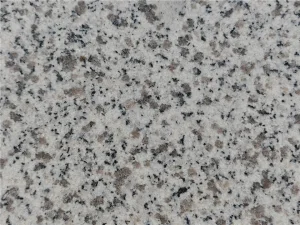 Seoul Interior Spec Wholesale G3760 Shandong White Marble Granite Manufacturers, Suppliers
-
Korea Structural China G3743 Lu Grey Granite Building Stone Manufacturer, Factories
-
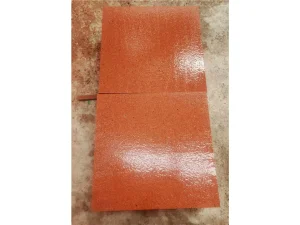 High-Grade Accent China Premium Chinese Red Granite Blocks Supplier, Suppliers
-
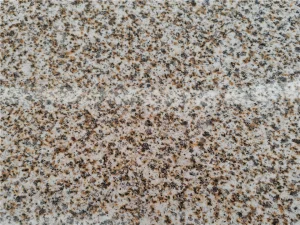 Urban Walkway Wholesale G682 Yellow Rust Granite for Paving Suppliers, Factories
-
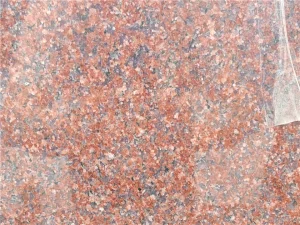 Plaza Decorative Wholesale G386 Shidiao Red Granite Tiles Manufacturers, Suppliers
-
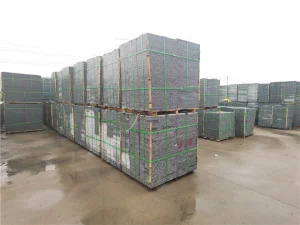 Architectural China G3702 Snowflake Blue Granite Manufacturers, Supplier
-
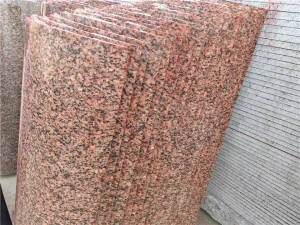 Exterior Facade Wholesale G352 General Red Granite Cladding Panels Manufacturers, Factories
-
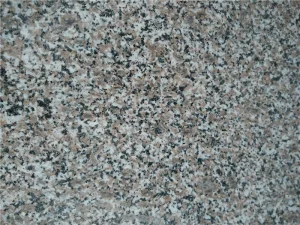 Seoul Bespoke China Other Colours Granite – Custom Orders Manufacturers, Factories
Frequently Asked Questions: Sourcing Grey Granite for South Korea
Essential guidance on certifications, logistics, technical standards, and lead-time optimization for purchasing managers.