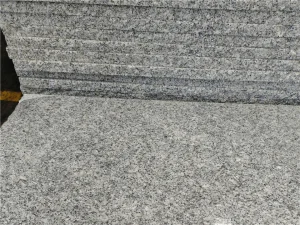
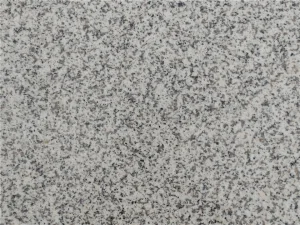
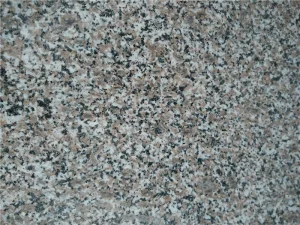
Sesame White · G602
High-precision dimensional granite fabrication, KS F 2530 compliant Sesame White (G603/G602/G3760) processing, and resilient Qingdao/Rizhao-to-Incheon/Busan bulk maritime logistics designed for Korean EPCs, landscape specialists, and commercial general contractors.
Direct quarry-extracted blocks engineered into precision-cut paving slabs, curbs, and architectural cladding calibrated for the climatic rigors and aesthetic demands of South Korea.
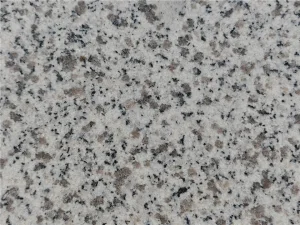
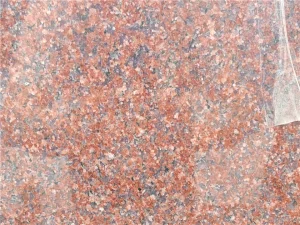
An empirical evaluation of tectonic architectural shifts, regulatory compliance under Korean Standard KS F 2530, and the logistical advantages bridging Shandong extraction clusters with Korean construction centers.
In contemporary architectural engineering and infrastructure execution throughout South Korea, natural white granite holds an irreplaceable supremacy. From the extensive metro transit transfer concourses across the Seoul Metropolitan Area (SMA) and the modern multimodal logistics hubs in Busan and Incheon, to ultra-dense high-rise residential complexes (*Apt complexes*) developed by tier-one Korean EPC conglomerates, dimensional white granite represents over 60% of all exterior hardscaping and stone curtain-wall envelopes specified nationwide.
Historically, South Korea relied on indigenous granites such as Pocheon White (*Pocheon-seok*) and Geochang White (*Geochang-seok*). However, decades of vigorous extraction combined with progressively strict domestic environmental protections, stringent mountainous forest preservation acts, and spiraling domestic labor overheads have led to the near-total shutdown or output capping of South Korean native quarries. Consequently, modern South Korean urban regeneration, Smart City projects (Songdo, Cheongna, Sejong), and large-scale redevelopment initiatives face severe structural supply voids.
Procurement managers and facade engineering consultants operating within the South Korean framework must operate strictly under KS F 2530 (Korean Industrial Standard for Natural Building Stone). Unlike generic export-grade stones distributed across less climatically demanding regions, granites supplied to Korea must withstand intense seasonal extremes: blistering, humid monsoon summers followed by sub-zero Siberian winter fronts where cycle-induced frost-wedging damages porous surfaces.
Under KS F 2530, building stone is classified categorically based on physical-mechanical integrity into Hard Stone (Granite/Diorite), Medium-Hard Stone (Marble/Limestone), and Soft Stone (Tuff/Sandstone). For exterior pedestrian walkways, curb profiles (*gyeonggye-seok*), and ventilated dry-hung curtain walls, natural white granite must pass non-negotiable threshold criteria:
How intelligent fabrication centers in Shandong Province achieve radical lead-time compression, continuous chromatic uniformity, and streamlined containerized exports directly into South Korea.
Traditional frame saws yield variable thickness tolerances (+/- 2.5mm), forcing expensive on-site leveling. Our automated diamond wire saw gangs achieve strict thickness calibrations within +/- 0.5mm across massive 20mm, 30mm, and 50mm slab runs, eliminating wet-mortar adjustments for Korean installers.
Chromatic deviation (*I-seok*) between phases can stall large-scale residential multi-phase turnkeys. By controlling massive private raw blocks in Rizhao and Fujian quarry reserves, we leverage AI-assisted surface optical scanning to pre-sort slabs by quartz-feldspar grain uniformity before packaging.
We do not simply sell bulk stone; our in-house engineering team translates Korean structural and landscape shop drawings directly into 5-axis CNC machining programs. Drop kerbs, curved radius boundaries, and pre-drilled ventilated facade anchors arrive on-site pre-numbered for immediate placement.
Geographic proximity serves as Shandong's crowning economic advantage over competing natural stone basins in India, Brazil, or southern Europe. The industrial stone corridor of Rizhao operates seamlessly between two major deep-water maritime conduits: Rizhao Port and Qingdao Port.
Standard scheduled container vessels operating short-sea transit lines between Qingdao/Rizhao and Korean discharge ports (Incheon, Pyeongtaek, and Busan) achieve typical open-water transit times of 24 to 36 hours. Consequently, emergency replacement slabs or accelerated project phase call-offs can be quarried, cut, finished, crated, and cleared through Korean customs within a total lead time of 7 to 10 working days—a competitive speed unmatched anywhere globally.
Tailored processing methodologies for standardized civil modules, residential landscape boundaries, and ventilated structural wall assemblies across South Korean construction zones.
| Korean Application Category | Common Local Term | Optimal Granite Material | Standard Dimension Specs | Specified Surface Finish |
|---|---|---|---|---|
| Sidewalk Paving Slabs | Bodo-block (보도블럭) | G603 / G602 Sesame White | 300×300×30/50mm, 300×600×50mm | Thermal Flamed (버너), Bush-Hammered |
| Road & Walkway Kerbstones | Gyeonggye-seok (경계석) | G603 Sesame White / G614 | 100×100×1000mm, 150×150×1000mm, 200×250×1000mm | Sawn Bottom, Split Face / Flamed Top & Bevel |
| Ventilated Exterior Curtain Walls | Geon-sik Seok-gong (건식석공) | G3760 Shandong White / G603 | 600×900×30mm, 800×1200×30mm | Polished, Fine Honed, Flamed + Brushed |
| Subway & Public Station Flooring | Cheoldo Yeoksa Badak (철도역사 바닥) | G602 / G603 Dense Crystalline | 600×600×20/30mm, 800×800×30mm | Anti-Slip Waterjet, Honed (High Traffic) |
| Interior Door Thresholds & Sills | Doldim-seok (돌디딤석 / 문턱) | G3760 White / G684 Black | Custom lengths × 120/150 × 20/30mm | High Gloss Polish with Chamfered Edge |
Within the South Korean civil landscaping sector, curbs are critical infrastructure elements classified meticulously under the Korean Land & Housing Corporation (LH) design directives. Korean standard kerbstones require precise chamfer beveling (typically 10mm to 30mm radius) on the road-facing edge to prevent vehicular tire abrasion while withstanding substantial lateral stresses from snow-clearing plows and utility vehicles.
Our automated factory lines utilize multi-head diamond bridge profiling machines specifically dedicated to continuous-run 1000mm standard lengths. Kerb bottoms are diamond-sawn or natural-split with precise keying grooves, enabling maximum bonding shear strength when set into C15/C20 wet structural bedding concrete on Korean municipal roadway foundations.
Leading the transition toward carbon-accountable natural building components in compliance with international ESG reporting and Korean Green Building Certification Criteria (G-SEED).
As South Korean general contractors expand environmental, social, and governance (ESG) reporting across their Tier-1 supply networks, material procurement can no longer rely on carbon-heavy, unmonitored processing facilities. Natural granite inherently presents a substantially lower embodied carbon footprint compared to energy-intensive synthetic alternatives like ceramic porcelain panels or architectural terracotta tiles.
Our processing facility in the Rizhao Stone Industrial Park incorporates closed-loop multi-chamber filter press sedimentation setups. 100% of diamond-saw lubrication water is recycled, and dehydrated stone slurry cakes are converted into stabilized road base aggregates.
To eliminate site cutting, silica dust emissions, and dimensional wastage within South Korean urban work zones, our plant imports Revit and AutoCAD stone facade shop files, cutting anchor kerfs and chamfers in our workshop with algorithmic nesting yields.
Monsoon humidity and alkaline mortar backing in Korea frequently provoke unsightly efflorescence (*baek-hwa* phenomenon). We provide optional factory-applied, six-sided organosilicon penetrating sealers that resist chemical moisture ascent without compromising cementitious bond strength.
Clarifications on custom duties under the China-Korea FTA, physical test verifications, packaging robustness, and supply chain continuity.
Under the bilateral China-Korea FTA, raw granite blocks and primary sawn granite slabs/tiles (HS Code 2516 and 6802) imported into South Korea qualify for preferential or zero-duty status upon submission of an official Certificate of Origin (Form F / China-Korea FTA CO). Our export department issues all required documentation seamlessly.
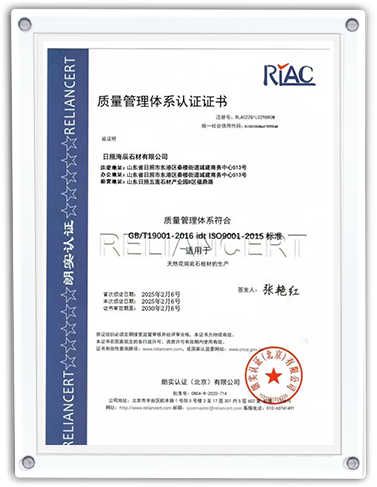
Our white granites undergo rigorous test verification per ASTM C615 and KS F 2530 standards. Water absorption is continuously certified below 0.35%, well beneath the 0.5% threshold. Dense quartz-feldspar interlocking matrices prevent capillary water migration, entirely eliminating spalling during freeze-thaw temperature drops.
For major turnkey projects, we designate specific quarry benches, securing all raw blocks prior to production commencement. Blocks are cross-checked under calibrated daylight spectrums. Factory dry-lay inspection services with high-resolution digital scanning guarantee color-matched transitions before container stuffing.
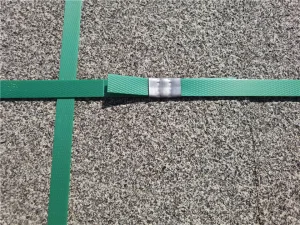
All timber packaging adheres strictly to IPPC ISPM 15 heat treatment and fumigation protocols. Slabs and heavy kerbstones are secured in heavy-duty pine crates reinforced with galvanized steel exterior banding, polyethylene weather-sheeting, and closed-cell EPE corner buffering to absorb marine vibration.
Explore our complete range of architectural granite selections engineered to satisfy diverse aesthetic accents, high-load paving, and bespoke exterior cladding projects across Korea.
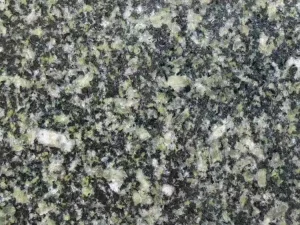
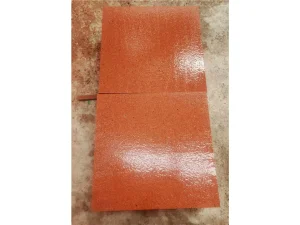

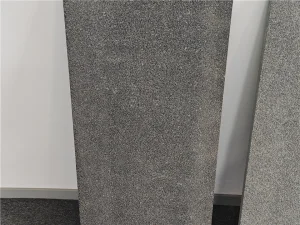
Direct access to dedicated Shandong quarry blocks, automated cut-to-size workshop schedules, full KS F 2530 laboratory test documentation, and accelerated CIF Incheon/Busan shipping schedules. Submit your project shop drawings or bill of quantities today.
Send Inquiry Now